Why tequila starts with blue agave
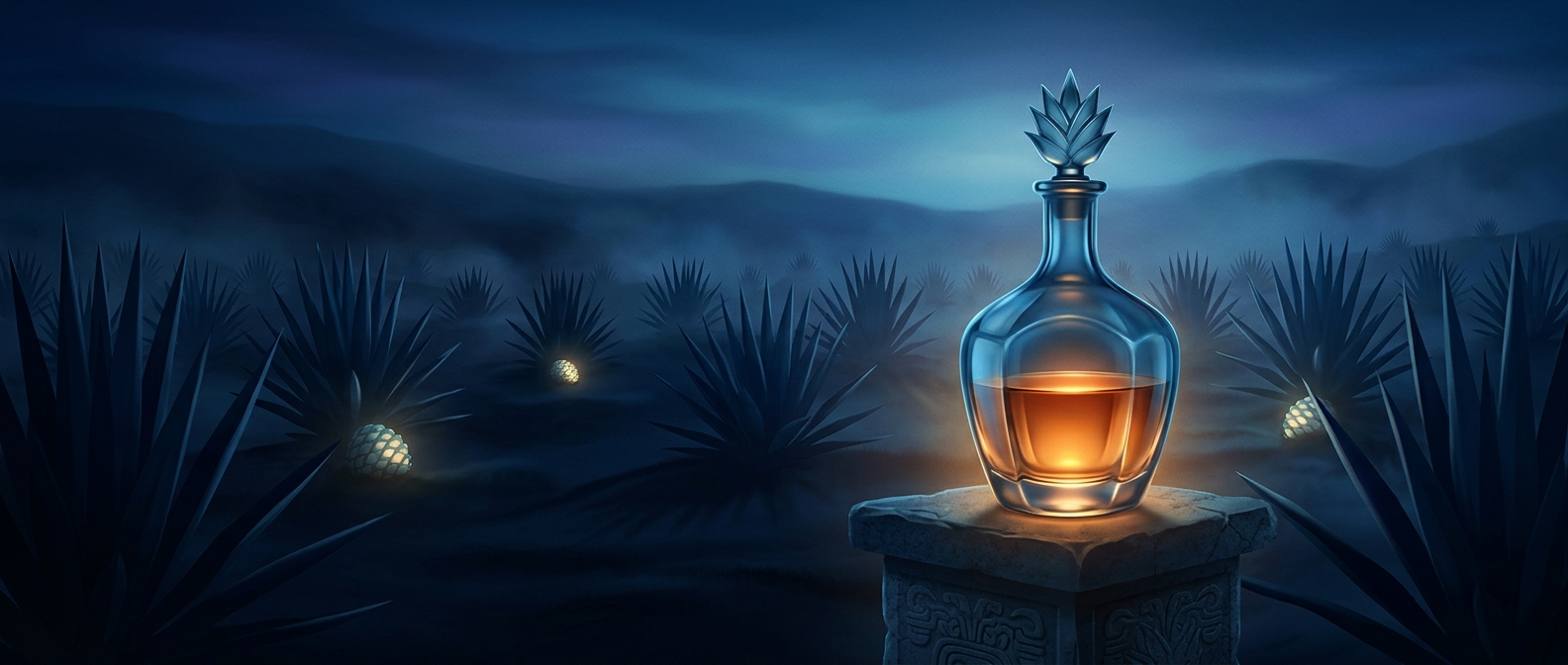
Blue agave is not just a flavor choice: it is the plant that defines tequila’s agave source. Its sturdy leaves capture sunlight, but the sugars needed for fermentation are stored mainly in the plant’s central core, called the piña because its shape resembles a pineapple. Harvesters remove the leaves to reach that core; the sharp spines are protection, not the part used to make the drink.
Cooking turns stored energy into fermentable sugar
The piña’s carbohydrates are largely stored as long-chain molecules that yeast cannot readily ferment. Cooking breaks those molecules into simpler sugars. The cooked core can then be crushed or otherwise processed to extract sweet liquid, which is mixed with yeast. As the yeast consumes the sugars, it produces alcohol and carbon dioxide—a process called fermentation.
The fermented liquid is distilled, meaning it is heated so alcohol-rich vapor can be separated and condensed. That step concentrates the alcohol and helps shape the spirit’s character. Each stage depends on first making the agave’s stored energy accessible: without cooking, much of it would remain locked away from the yeast.
A plant built for a slow harvest
Blue agave is a succulent, adapted to storing resources rather than yielding a quick crop. The piña must accumulate enough material before harvest, so producing tequila begins with a plant grown over years, not with a grain that can be harvested in a single season. That slow buildup is why the harvesters’ work centers on the core: it is both the plant’s reserve and the raw material that gives tequila its defining link to agave.