A God with a human body
For the Muggletonians, God was not an invisible force spread through everything. He was a person with a definite bodily form. That made descriptions of God’s hands, face, or voice more than poetic language: they could be understood as descriptions of an actual being.
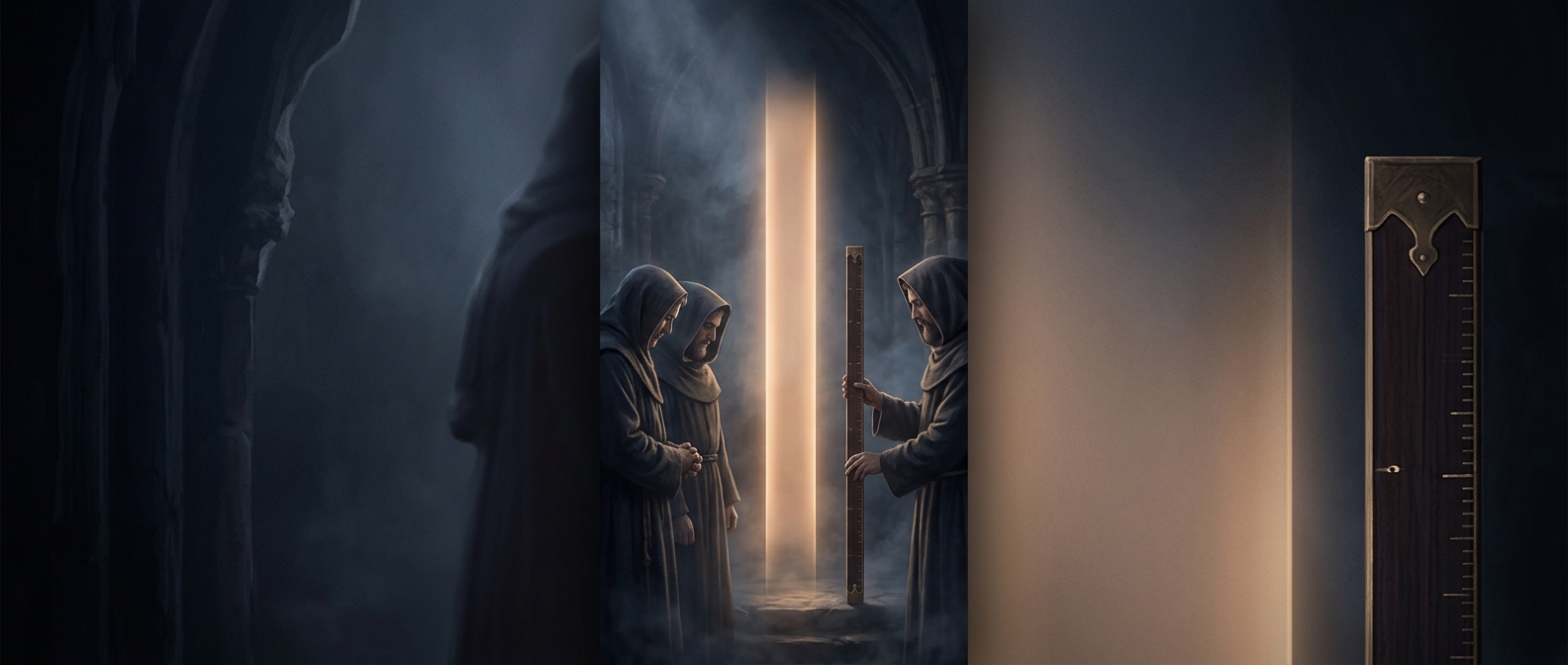
The sect emerged in seventeenth-century England, when religious disputes often turned on how literally to read the Bible. Muggletonians took its human descriptions of God as evidence that God had a human shape. Giving that shape a height made the claim unusually concrete: a divine being, in their account, had a measurable body rather than an unknowable, limitless spirit.
What that belief changed
This view also gave God a location. Instead of being present everywhere in the same way, God could be understood as dwelling in heaven, while the universe remained his creation. The distinction separated the creator from the world and rejected the idea that God was simply an invisible presence permeating it.
The six-foot detail is striking because it turns a theological argument into an image anyone can picture: not an abstract infinity, but a man-sized figure. It shows how far the Muggletonians carried their insistence that biblical language described physical reality.