A school built around deliberate discomfort
At his French estate near Fontainebleau, George Gurdjieff gathered students for what he called work on oneself. The aim was not simply to learn a doctrine. He believed people usually lived on automatic pilot, reacting to habit and emotion while imagining they were fully conscious. He described this condition as “waking sleep.”
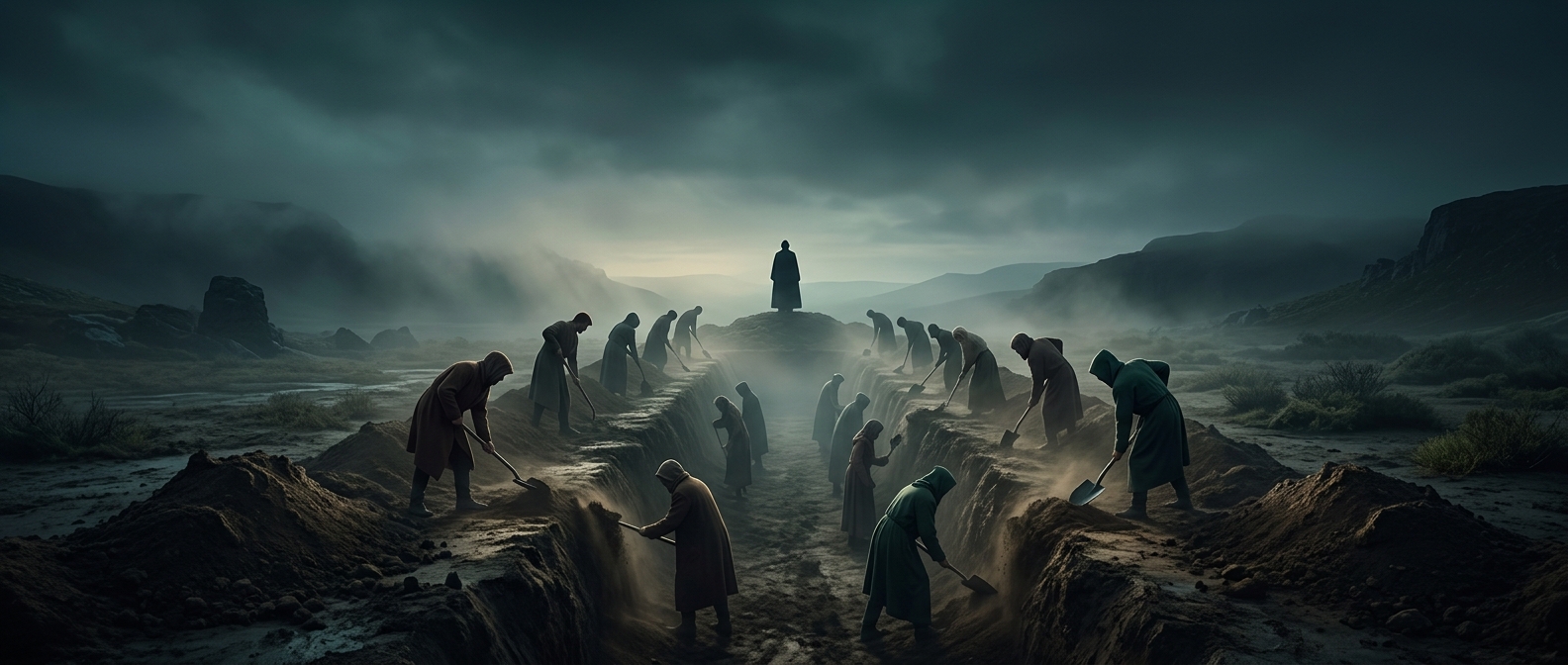
That idea shaped the school’s unusual routines. Physical chores, demanding exercises and abrupt changes of pace were meant to interrupt familiar habits and make students notice what they were doing. Digging a trench and then filling it in, for example, had no practical agricultural purpose: the task’s point was the strain and the chance to observe one’s impatience, resentment or urge to quit.
Why make the work so difficult?
Gurdjieff’s approach treated attention as something to practice under pressure. A person might feel composed while sitting quietly, he reasoned, yet lose awareness when tired, frustrated or hurried. Hard work could expose those automatic reactions in real time. Students were expected to watch themselves as they worked, rather than merely endure hardship for its own sake.
The school also used abrupt interruptions and intense social pressure. Shouting or being pushed beyond a comfortable routine could unsettle a student’s usual self-image. In Gurdjieff’s framework, the resulting discomfort was supposed to create an opening for self-observation—not to guarantee a spiritual breakthrough.
A demanding experiment, not a proven formula
This method depended heavily on Gurdjieff’s authority and on students accepting his interpretation of their experiences. Its exercises could be experienced as purposeful discipline, but also as exhausting and coercive. The school’s history is therefore difficult to separate from the questions its methods raise: who decides when discomfort is useful, and how can a student tell insight from simple obedience?
The striking premise was that ordinary habits concealed how little attention people paid to their own lives. At the estate, even a pointless ditch could become a test: not of how much earth someone moved, but of whether they noticed themselves doing it.