Turning a Childhood Feeling Into a Game
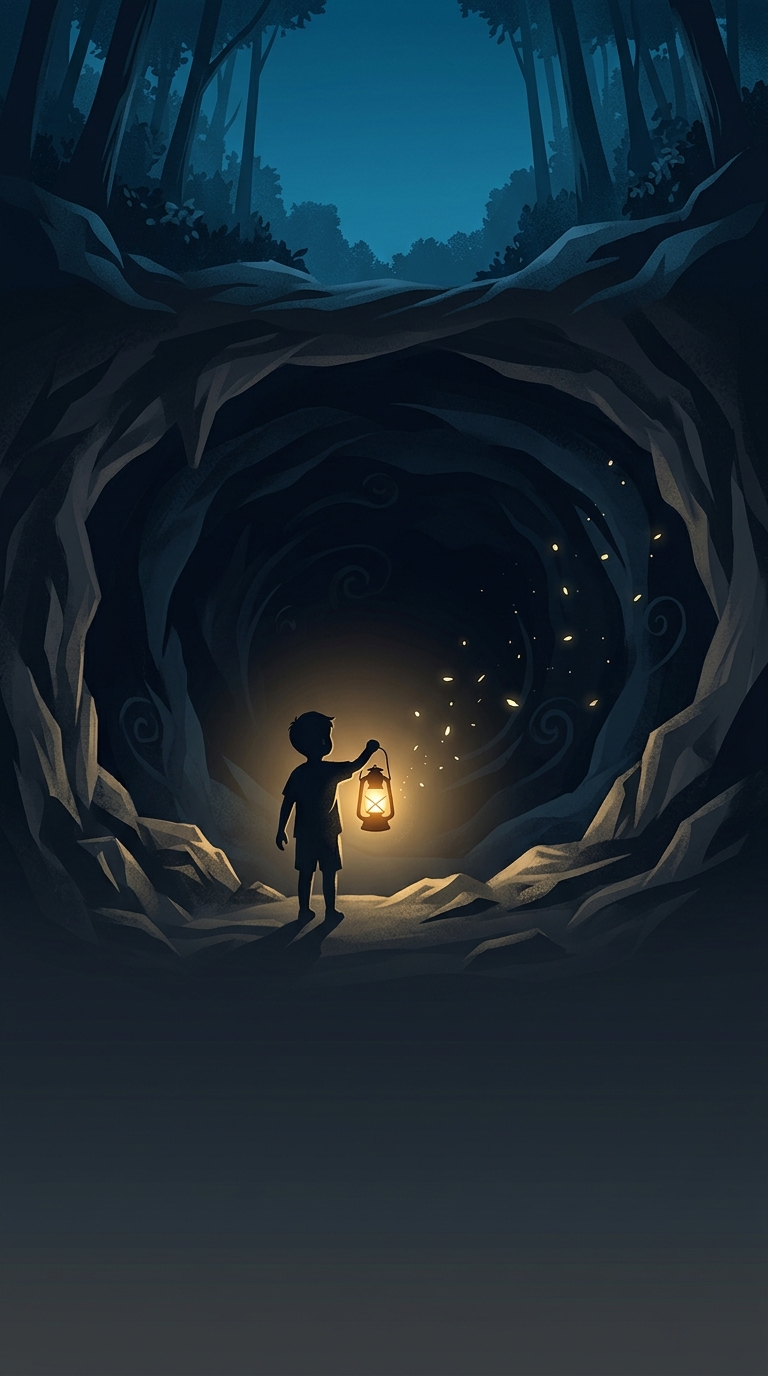
Miyamoto’s childhood explorations offered more than a setting. They gave him a particular emotional pattern to recreate: uncertainty, a little fear, and the reward of finding somewhere new. In a game, that feeling could be made repeatable. A player would not just hear about an unknown cave; they could decide to enter one, investigate it, and discover what lay inside.
The Player Becomes the Explorer
That shift changes the player’s role. Instead of following a story that explains every destination, the player has room to wonder what is beyond the next obstacle and to test possibilities. A cave can feel compelling precisely because its contents are not known in advance. Progress comes through attention and curiosity, not only through being told where to go.
The lantern matters as a detail of the memory: exploring had a small, practical source of light against the darkness. It made the unknown feel close and tangible, rather than safely distant. The game could not reproduce the physical sensation of wandering near home, but it could preserve the emotional contrast between a familiar starting point and a place that might hold a surprise.
Discovery Needs Room to Breathe
For that feeling to work, the game must leave some things unexplained long enough for players to find them themselves. Too much guidance would turn exploration into a checklist; too little would make the unknown feel arbitrary. The design challenge is to make curiosity seem worthwhile—to give the player reasons to look, experiment, and remember what they have encountered.
That is the durable idea behind the childhood inspiration: a small pocket of darkness can make the world beyond it feel larger. The player’s first step into an uncertain place becomes part of the adventure, not merely a passage to the next one.