A familiar shape with a different job
Larry Niven’s 1970 novel Ringworld imagined a vast artificial band encircling a star. Its inner surface served as a world, with daylight and open terrain stretching across an immense curve. Bungie drew on that striking premise for Halo’s ring-shaped setting—but the resemblance is a starting point, not the whole story.
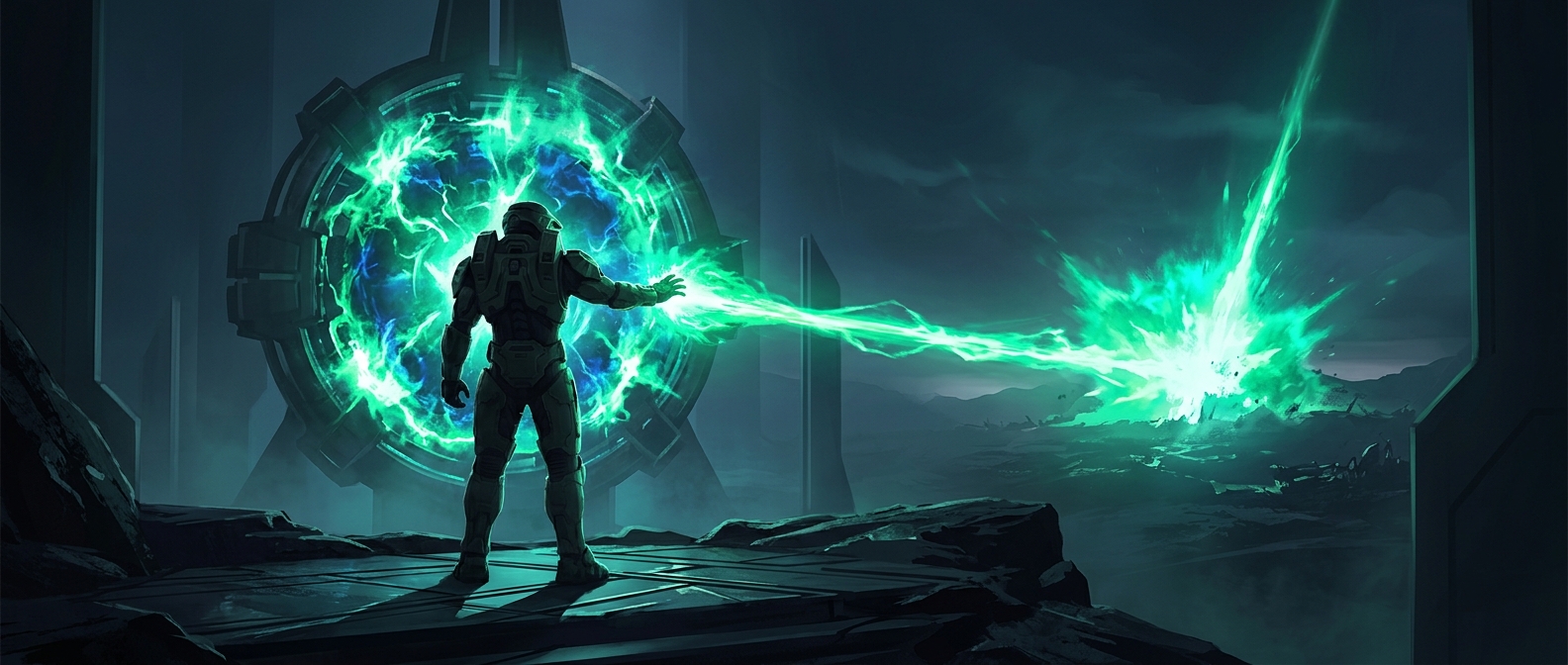
In Halo, the ring is a constructed landscape whose surface can hold forests, cliffs, water, and ancient structures. That gives the game a practical visual advantage: players can explore a world that feels broad and varied while the curved horizon keeps hinting that the terrain is part of something far larger than it first appears.
From habitat to weapon
The two stories give their rings very different purposes. Niven’s ring is chiefly a place to inhabit and explore. In Halo, the installations are ancient weapons, so the landscape carries a buried danger: what looks like a remote wilderness is also a machine with consequences beyond the people walking on it.
That shift turns the structure into more than impressive scenery. Its scale creates wonder; its artificial construction invites questions about who made it; and its hidden function gives exploration a plot-driven edge. Halo took the ringworld’s memorable geometry and made it part of the threat. The curve on the horizon is not just a vista—it is a reminder that the world itself has been built, and may be used.