Why the light seems worse at the mirror
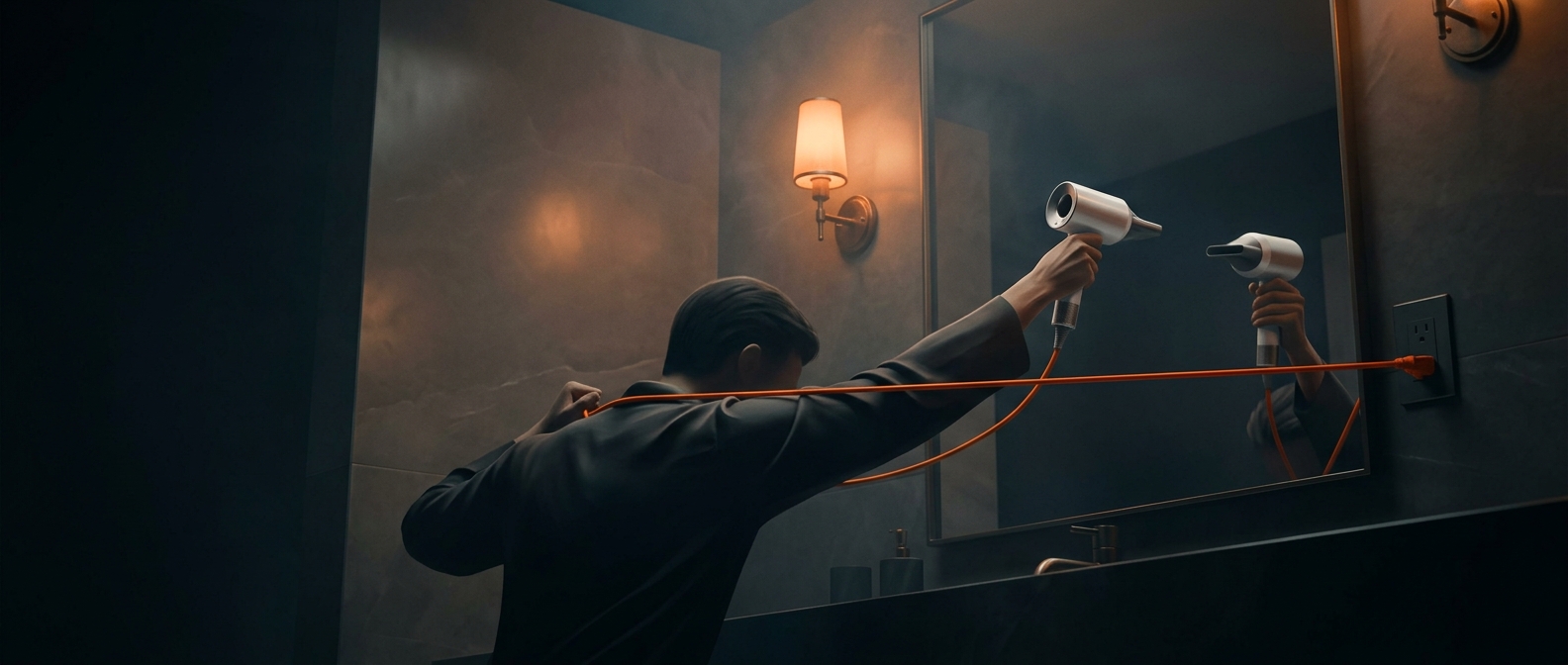
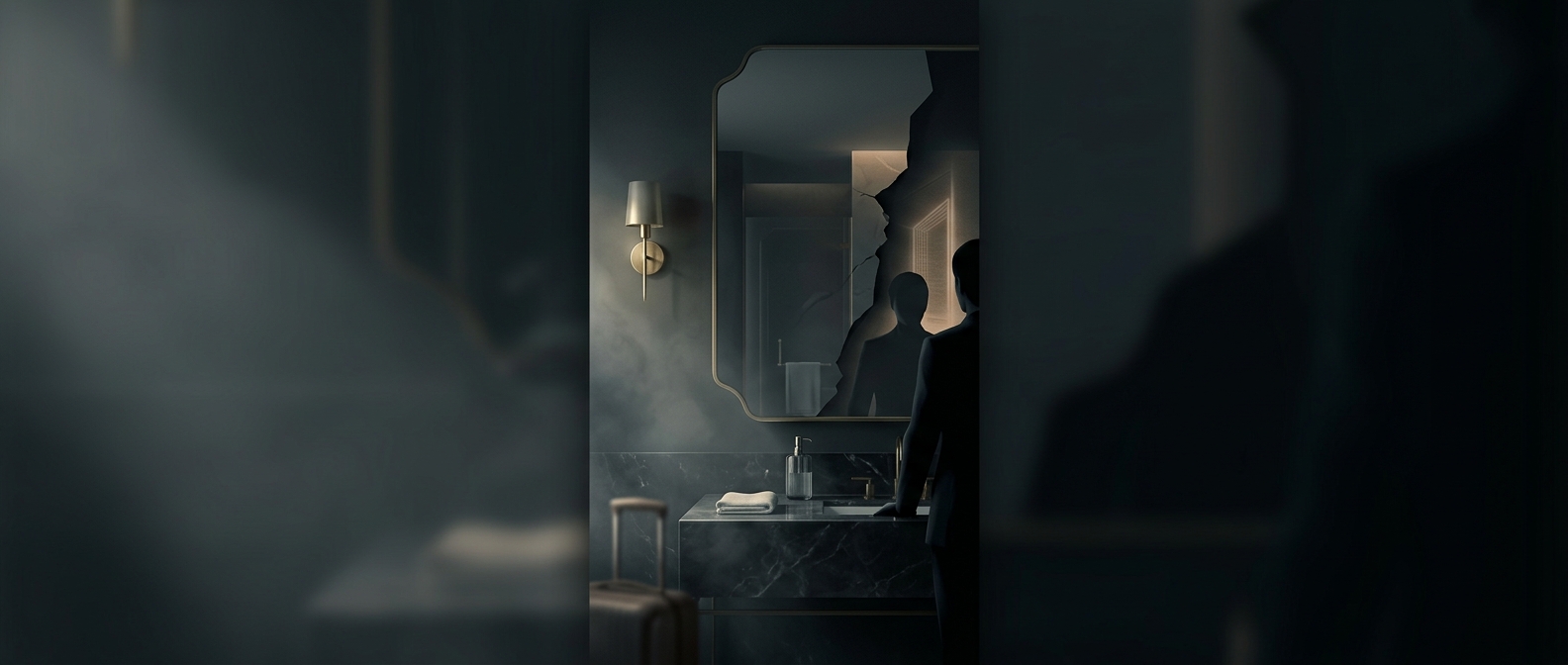
A face is a three-dimensional surface, but an overhead fixture lights it mainly from above. The brow, nose, and chin interrupt that light, leaving darker areas beneath them. For tasks such as shaving or applying makeup, those small shadows can hide edges and changes in skin tone that are easier to judge in even light.
The mirror itself is not the problem; it simply reflects the room’s lighting back to you. If the brightest source is above the mirror rather than beside or around it, moving closer may help you see more detail, but it does not change the direction the shadows fall.
A different setup for every stay
At home, people often get used to where the light falls and may have lamps positioned for close-up tasks. In a hotel, the mirror and fixture are fixed parts of the room, and the lighting may be intended to illuminate the bathroom generally rather than a face at the sink. That mismatch is especially noticeable when you need to see fine details.
A mirror with light coming from both sides tends to illuminate the face more evenly because the sources reach it from different angles. Without that, getting ready can turn into a small exercise in repositioning: leaning toward the sink or turning your face changes which parts catch the light, even though the room itself stays the same.