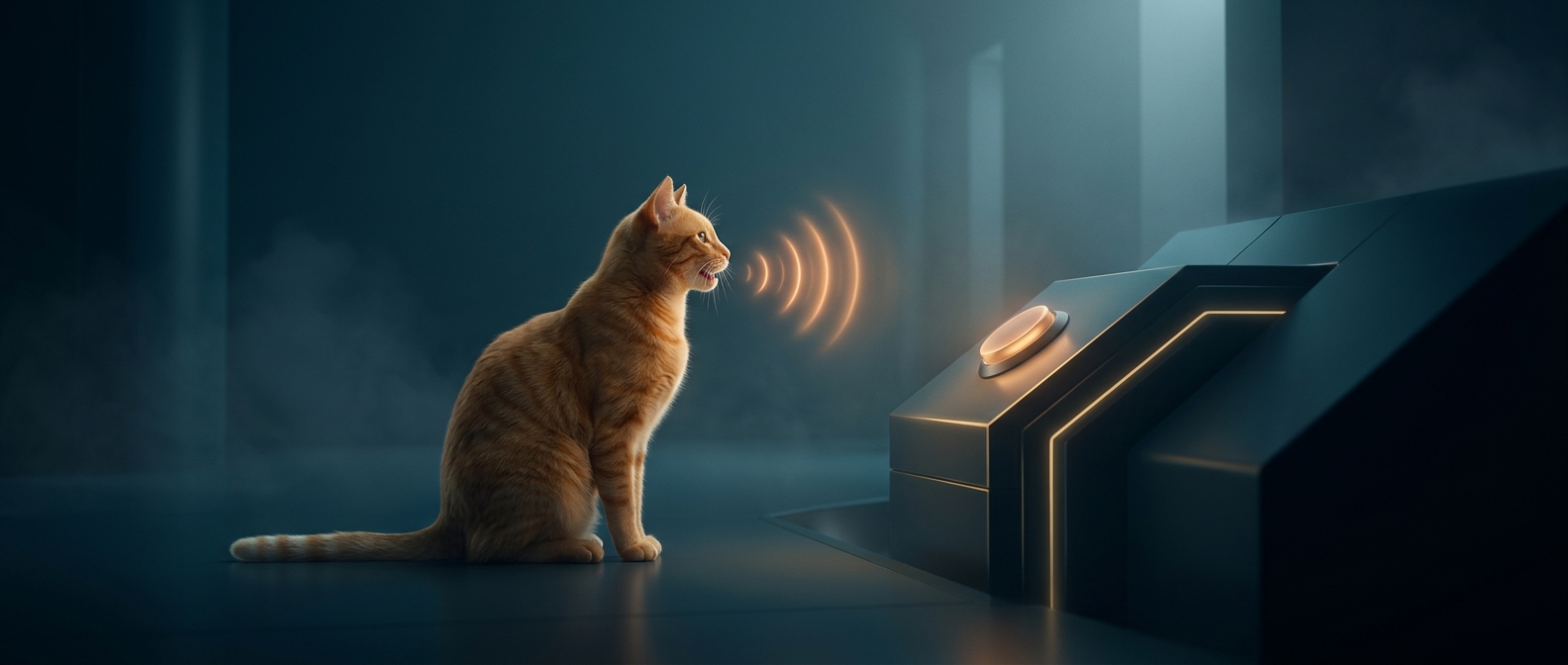
A small button makes the cat feel like a character
In many adventure games, a button is reserved for a practical task: opening a door, using an item, or advancing a conversation. Stray gives the player a simpler option: make the cat meow. The action does not need to solve a puzzle to matter. It lets players express the character’s presence in the city, one brief sound at a time.
That choice fits a story experienced from a cat’s perspective. Instead of speaking human dialogue, the protagonist communicates through movement, posture, and animal sounds. A dedicated meow input turns one of those sounds into a direct player choice, rather than leaving every vocalization to a scripted scene.
Expression without a conversation system
The design also makes the cat’s identity playable. Players can choose when to vocalize while exploring, so the city is not just a backdrop the character passes through; it becomes a place the cat can react to. The interaction is intentionally modest: it offers expression without requiring dialogue trees, explanations, or a human voice for the protagonist.
That distinction matters in a game where the character’s animal behavior is central. A meow button gives players a small, repeatable way to inhabit that role—and makes an ordinary cat sound part of the game’s controls.