A working toilet makes the world feel touchable
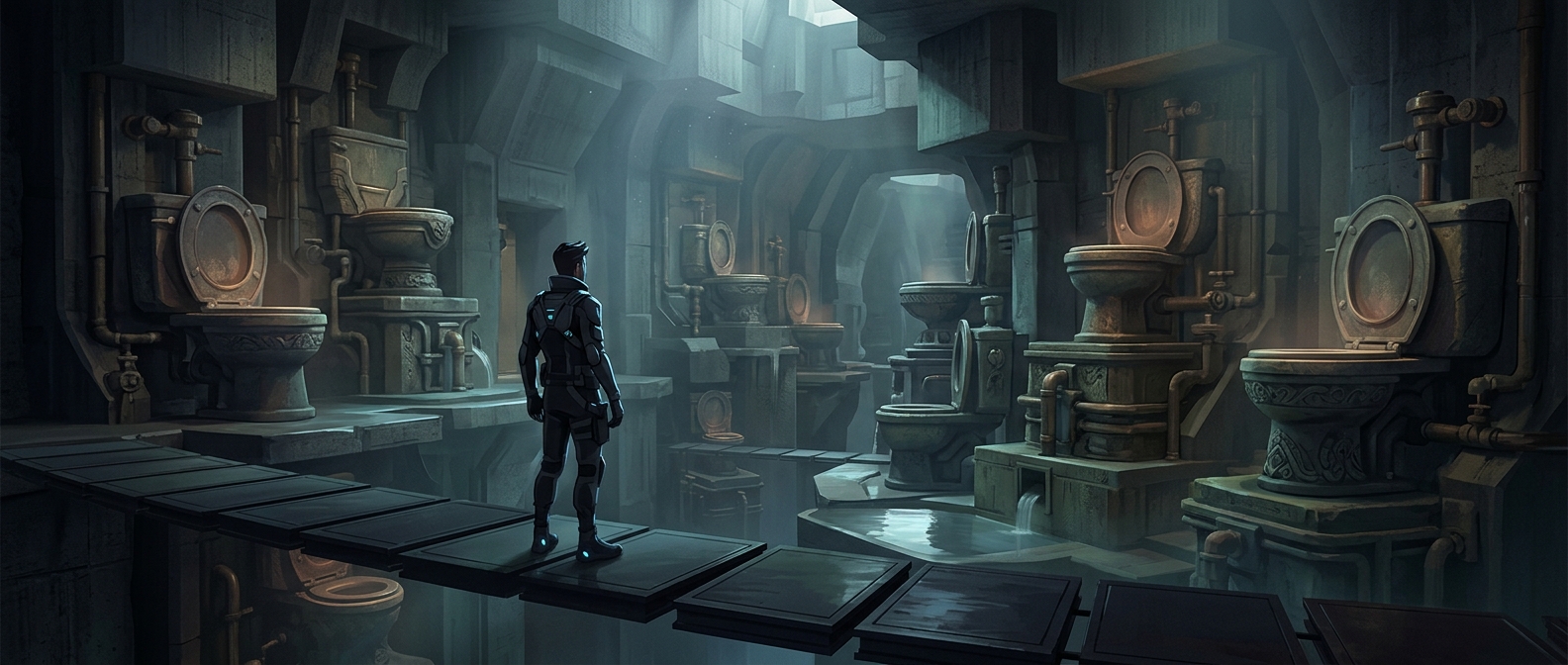
A virtual bathroom is more convincing when its fixtures behave like fixtures. If a player can approach a toilet but nothing happens when they interact with it, the object can feel like scenery rather than part of a place. A flush supplies a small, legible chain of cause and effect: the player acts, the handle or button responds, water moves, and a sound confirms the result.
That confirmation matters because games teach players to test their surroundings. When a door opens or a drawer yields an item, players learn that nearby objects may respond too. A toilet that flushes pays off that expectation, even though it does not help complete the mission. The reward is not tactical advantage; it is a moment of believable feedback.
Tiny interactions signal a larger design choice
Making the fixture work takes more than placing a toilet-shaped object in a room. The game needs an interaction, a response players can perceive, and rules for what happens when they try it again. Designers must decide whether the water animation repeats, whether the sound plays, and how much detail the moment deserves alongside systems that matter more to the game.
The flush is therefore a small example of environmental interaction: optional actions that make a space feel responsive without changing the main objective. Players may remember it precisely because it is unnecessary. In a world built from tasks and rewards, a toilet that simply does what a toilet should is a surprisingly clear sign that someone considered how the room would feel to inhabit.