A phone designed around a game screen
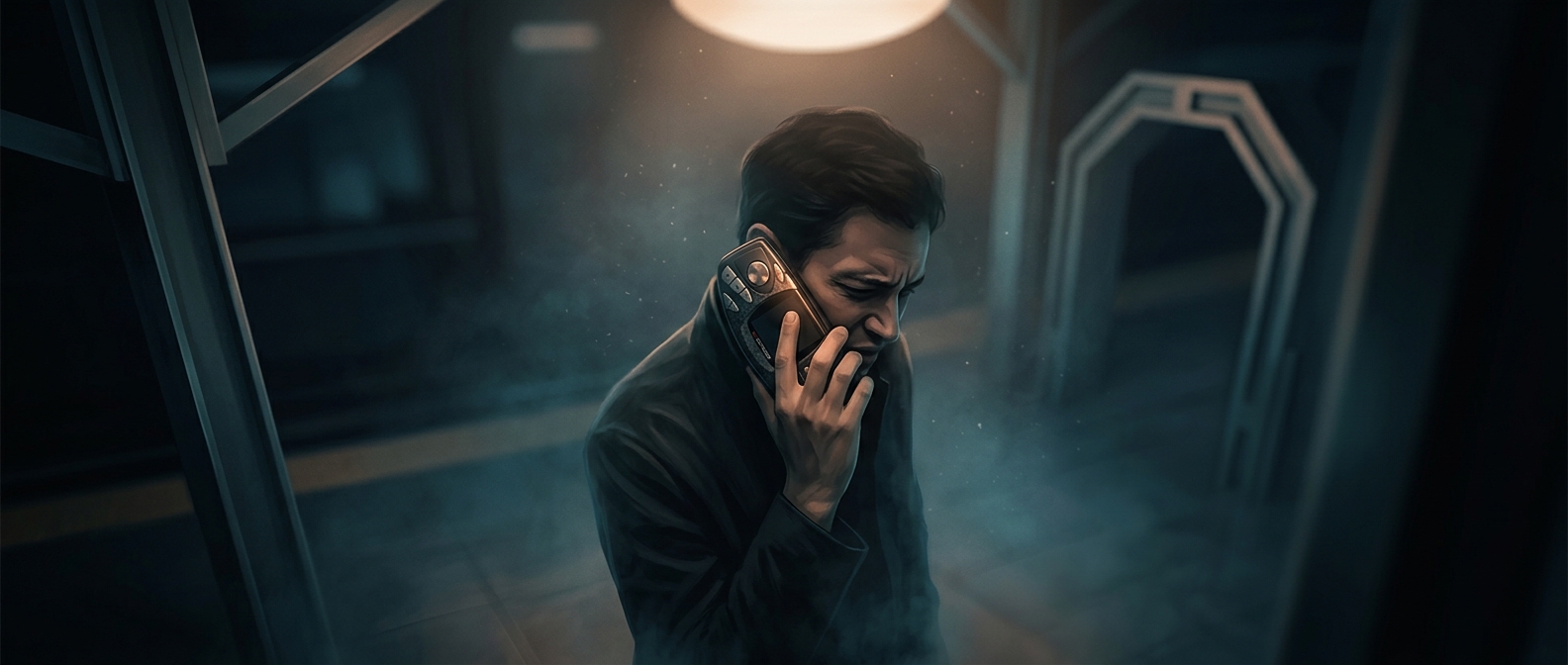
Nokia’s original N-Gage was built to play games held horizontally. Its screen and gaming controls made sense in that orientation, but a phone call usually meant turning the device upright and holding its broad face to your head. The N-Gage’s earpiece and microphone were instead placed along a narrow edge. To use them, callers had to press that edge against their ear and mouth.
The result was a mismatch between two familiar ways of holding a device: the posture that worked for gaming looked strange when used for a call. That awkward pose became known as “sidetalking,” turning a small hardware-layout decision into the phone’s most memorable visual gag.
A design problem made visible
The joke pointed to a practical tradeoff, not just an unusual silhouette. The N-Gage tried to make one handheld device serve as both a game machine and a mobile phone, but the controls and screen favored one grip while calling favored another. Because the phone had to be held visibly differently, the compromise was hard to overlook.
Nokia’s later N-Gage QD put the earpiece and microphone on the front, so callers could hold it more like a conventional phone. The change made the lesson concrete: when a device combines jobs, its layout has to work in the hand for each one—not merely fit the features onto the same shell.