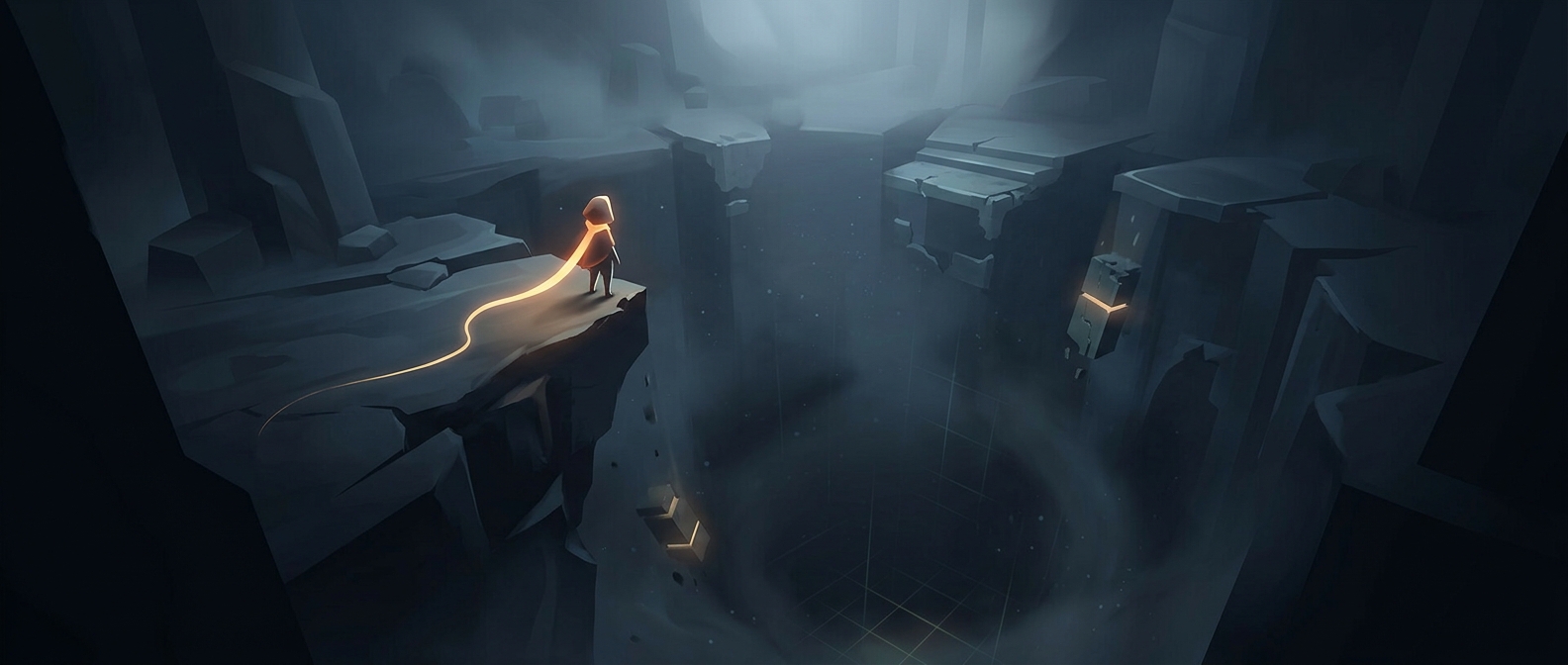
Why a Fall Can Ignore Armor
In many platform games, a bottomless pit is not treated like an ordinary attack. Armor usually reduces damage from something the game models as a hit; falling out of the playable area instead triggers a fail state. Once the character crosses the level’s boundary, there may be no surface or recovery route for the game to place them on. The result is defeat, not a gradual loss of health.
That distinction makes the pit a rule of the level rather than a weapon with a strength the character can withstand. More armor may help against enemies, but it cannot protect against a missing floor.
A Jump Becomes a Risk Calculation
Pits turn movement into a decision with visible stakes. The player has to judge the gap, the character’s momentum, and where the next safe landing begins. A jump that falls just short can end a run even if the character was otherwise powerful, so the environment can threaten progress without needing a stronger enemy.
Designers can make that risk feel fair by giving players enough information to read the gap: a clear edge, a visible landing area, or a chance to learn the jump’s timing. When those cues are hard to read, the same pit can feel less like a test of skill and more like a surprise reset.
Why the Reset Matters
A fall is especially costly when it erases progress made since the last checkpoint—the point where the game most recently saved the player’s place. That cost changes how people approach the next jump: they may slow down, choose a safer route, or hesitate rather than move at full speed.
So the pit’s power comes less from physical force than from what it can take away. It turns a simple gap into a boundary between the progress the player has secured and the progress they may have to earn again.