A Pit Can Do the Work of a Mountain
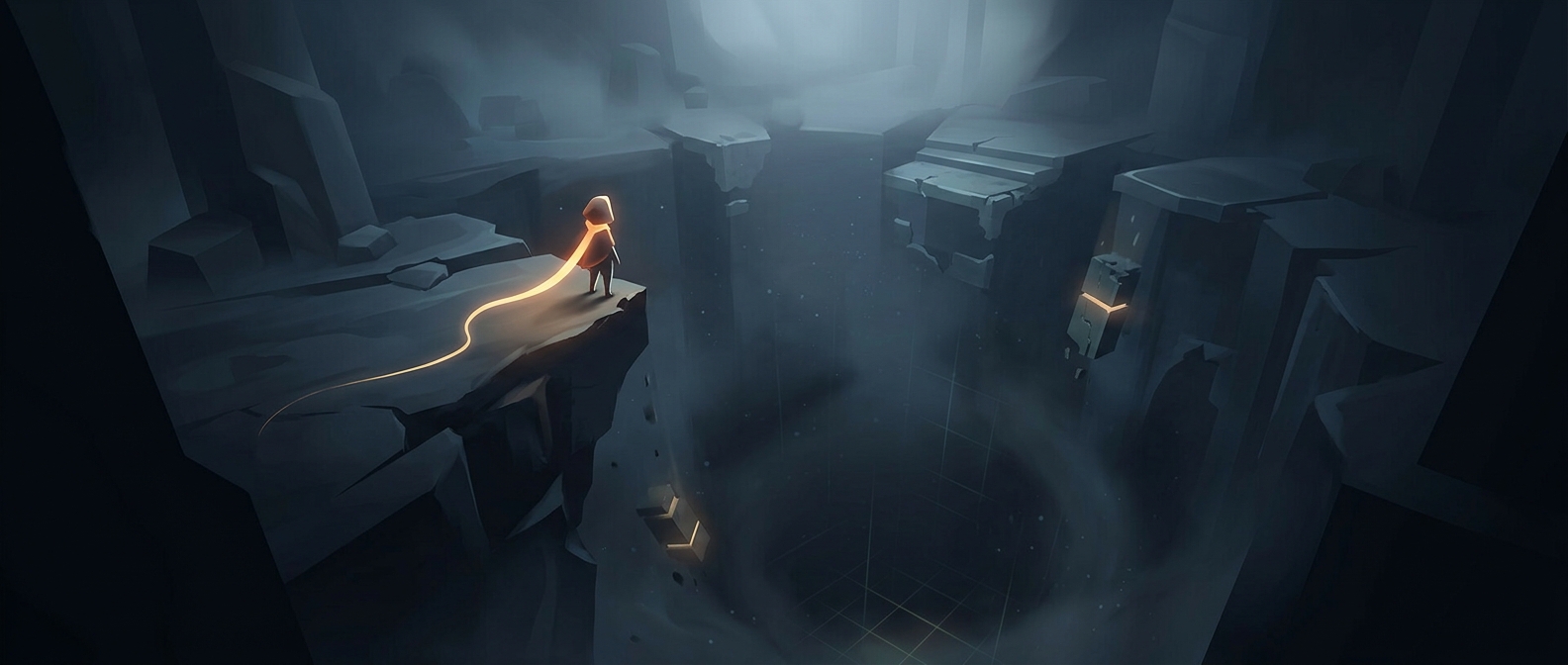
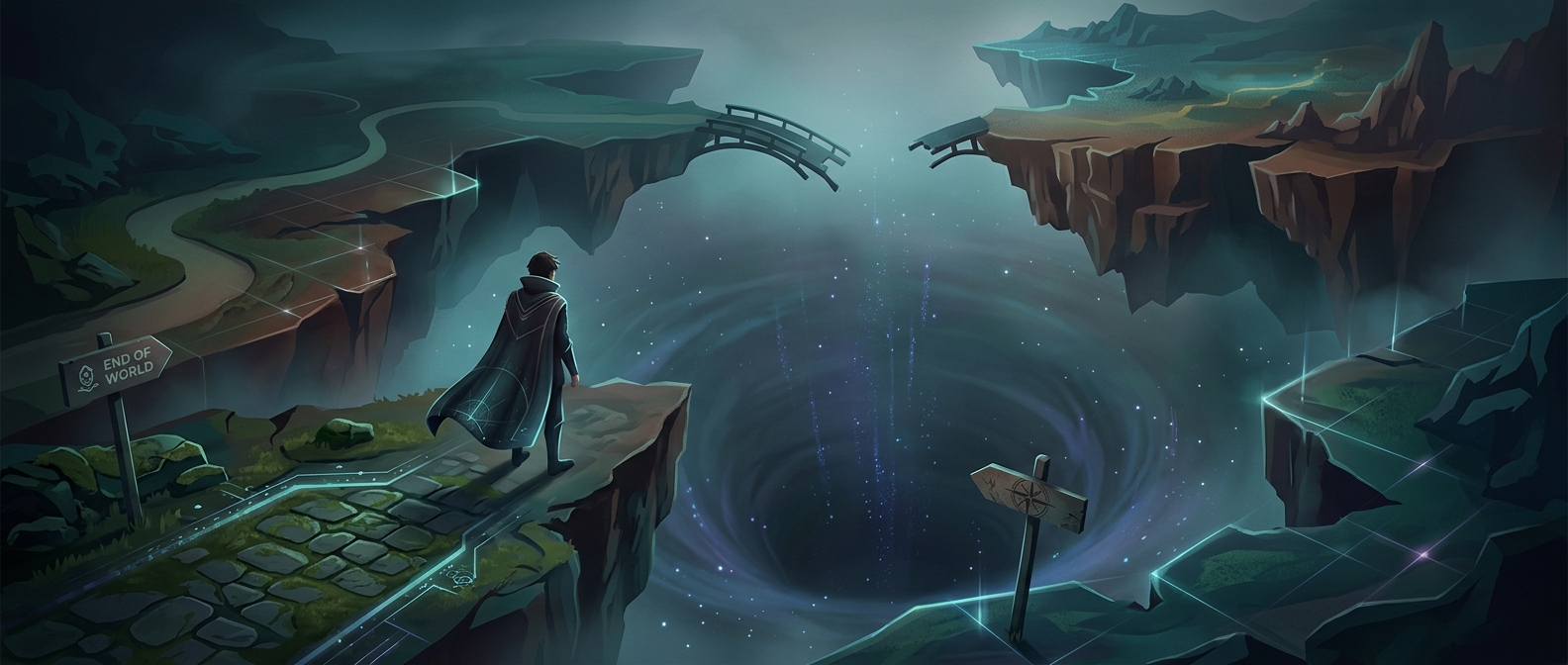
A convincing mountain range takes more than a jagged outline. The game must show believable slopes, keep the player from climbing places they should not reach, and handle what happens when they wander off the intended route. A bottomless pit solves several of those problems at once: the world can end at a sharp edge, and falling supplies an unmistakable consequence.
That makes the pit a practical boundary as well as an obstacle. Instead of building terrain that gradually blocks every possible route, designers can use a gap to mark where play is allowed. The same space can separate platforms, interrupt a path, or make a jump feel risky. Its emptiness is doing level-design work.
A Simple Rule Players Understand
Pits also communicate danger without much explanation. A player sees the drop, recognizes that the surface is missing, and can infer that a misstep matters. This clarity is useful when a game needs to challenge the player quickly: the hazard does not need a new creature, a complicated mechanism, or a long tutorial.
The fall can also make movement more consequential. A narrow ledge or a long jump asks the player to judge distance and timing; a fatal drop gives that judgment weight. Designers can tune the challenge by changing the width of the gap, the approach to it, or the room available to recover from a mistake.
The Empty Space Is Still Designed
A bottomless pit is not necessarily a literal hole in a finished landscape. It is a controlled absence, shaped around the camera, the player’s movement, and the level’s boundaries. The game may hide what lies below or end the fall before the player reaches anything visible. What matters is that the edge reads clearly and the consequence is predictable.
So the pit is more than a shortcut for avoiding mountain scenery. It turns an invisible limit—“you cannot go farther”—into something the player can see, fear, and plan around.