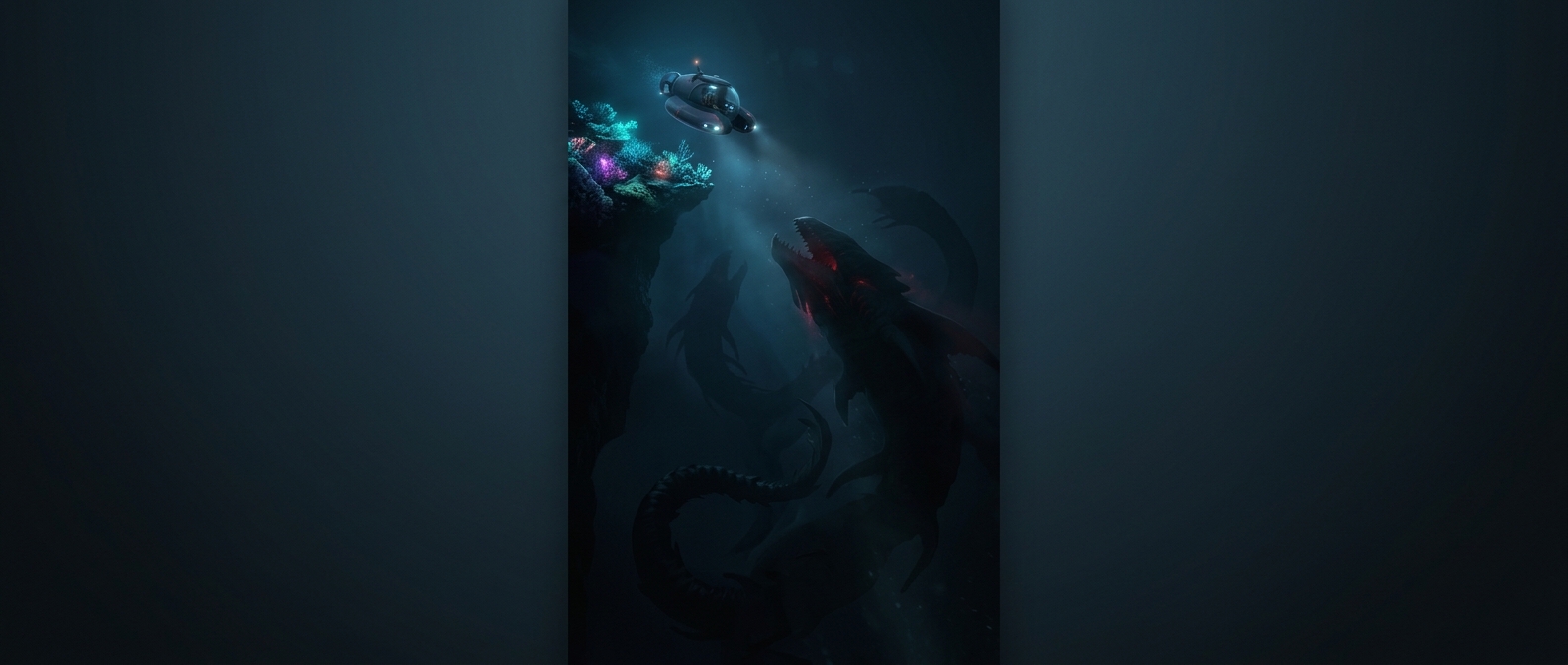
A Boundary That Feels Like Part of the Ocean
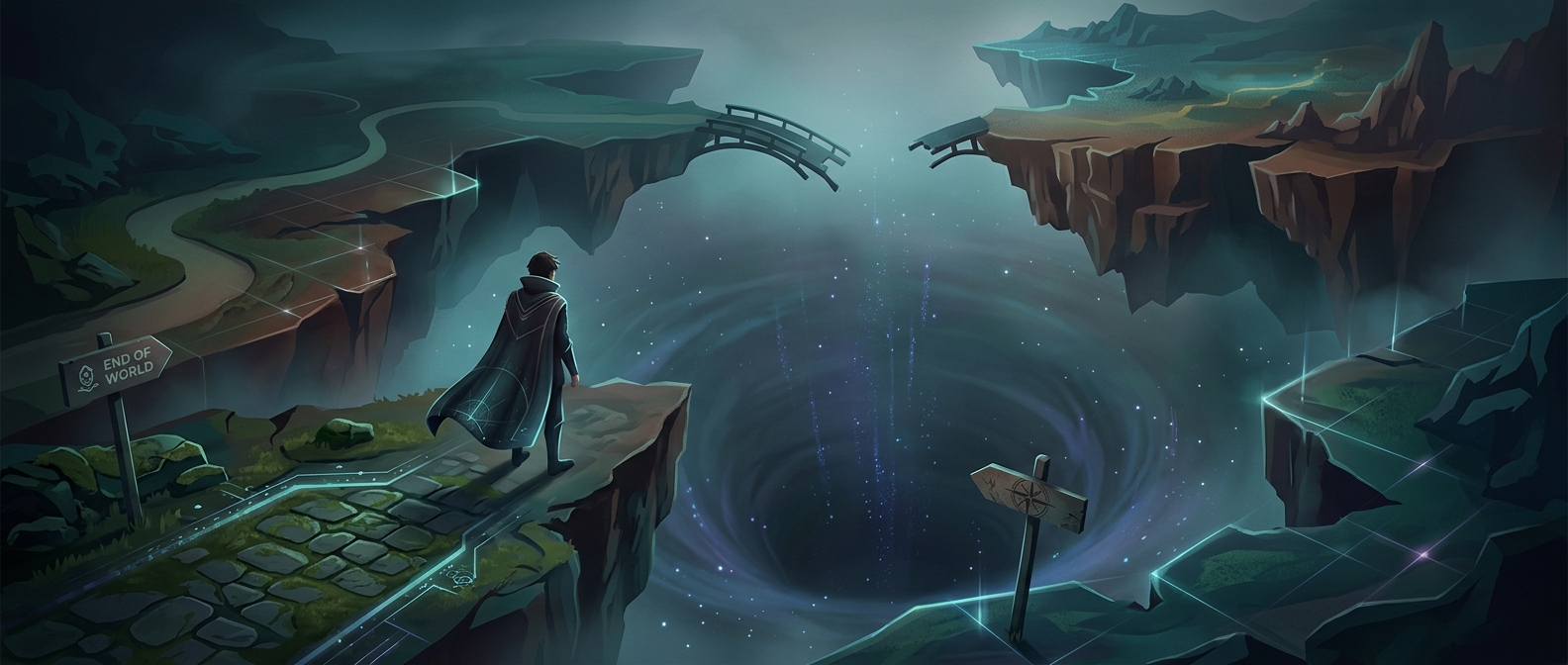
An invisible wall would stop a submarine abruptly, but it would also break the illusion that the player is exploring an open sea. Subnautica makes the map’s edge feel like a place instead: the Ecological Dead Zone, where the familiar environment gives way to darkness and danger.
That change turns a technical limit into an in-world warning. Instead of colliding with an unseen border, players can recognize that they have crossed into a hostile region and decide whether to continue.
Escalating Danger Does the Work of a Wall
The predators are not merely obstacles guarding a doorway. Their increasing presence raises the cost of pressing farther into the darkness, while the lack of anything to discover beyond them removes the usual reason to take that risk. The player is free to keep going, but the world makes the likely outcome increasingly clear.
That combination matters: danger alone might invite players to fight through, and emptiness alone might seem like unfinished space. Together, they make turning back feel like a response to the environment rather than obedience to a boundary marker.
The Edge Becomes a Choice
This approach preserves the feeling of exploration without requiring the playable world to extend endlessly. The boundary is still firm in practice, but players encounter it as a survival problem—how far can I go, and is there any point in doing so?—rather than as a rule imposed from outside the fiction.
The result is a map edge players can remember as an expedition that went wrong, not a wall they simply ran into.