How Sarcasm Can Change an Argument’s Rhythm
In a heated exchange, people often respond not only to the point being made but also to its emotional force: an insult invites a defense, and a sharp defense invites another counterattack. The conversation starts to run on a familiar track, with each reply carrying forward the previous one’s anger.
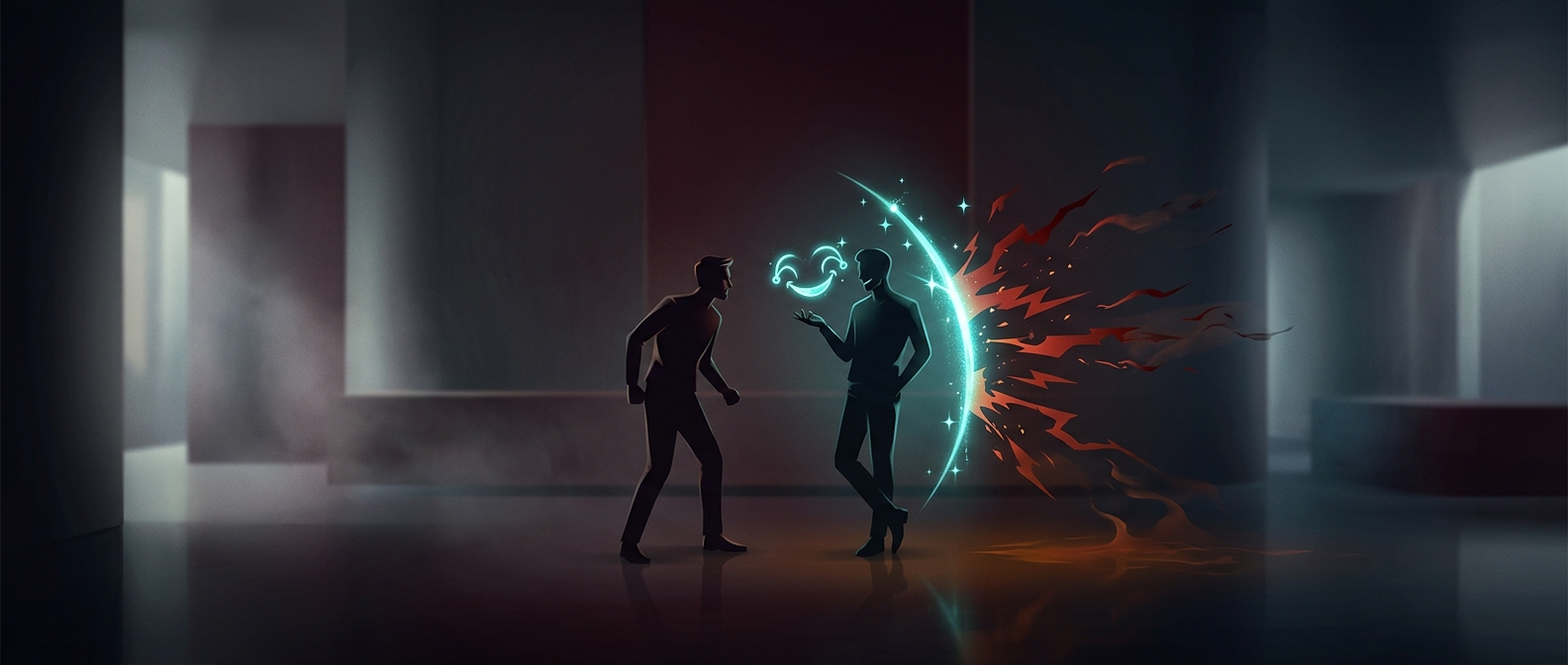
A sarcastic remark can briefly make that track visible. By pairing a serious disagreement with an obviously exaggerated or unexpected comment, the speaker changes the exchange’s tone. The listener may need a moment to work out whether the remark is meant literally, what it implies, or how to answer it. That moment can interrupt the automatic rush to retaliate.
The pause is the useful part
If the remark strikes the listener as absurd rather than humiliating, surprise or laughter may loosen the tension. The argument has not been settled, but the next turn is no longer as tightly dictated by the last insult. Someone can ask what the other person means, return to the original issue, or simply wait instead of firing back.
That shift matters because escalation often depends on speed: a person feels attacked and answers before considering a different response. A brief break gives them a chance to choose one.
Why the same tactic can backfire
Sarcasm is easy to misread, especially when people are already upset. A cutting joke can sound like contempt, making the other person feel mocked rather than invited to step back. In that case, it adds another sting to answer and gives the argument fresh momentum.
The difference is not just whether the line is funny. It is whether both people can recognize the exaggeration without hearing it as a new personal attack. When it lands that way, sarcasm can create a small opening—not a resolution, but a chance for the next reply to be something other than another blow.