Tiny pegs made the picture possible
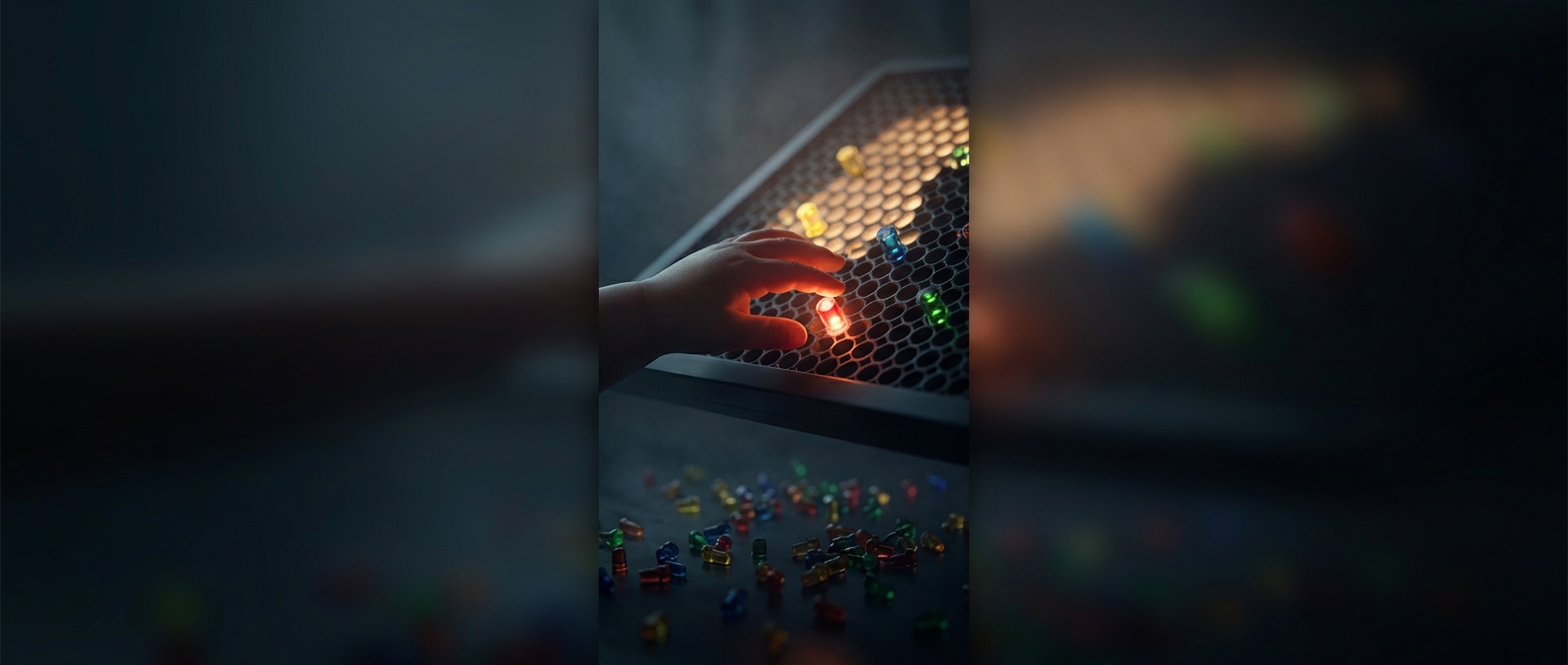
Lite-Brite worked like a simple, illuminated mosaic. A child pressed translucent plastic pegs through a sheet of dark paper, and light from behind shone through the pegs. Each peg became a bright colored dot; together, the dots formed a picture.
Small pegs let many dots fit into a compact design. That meant a drawing could include curves, outlines, and color changes without requiring a separate, bulky piece for every part of the image. Because the pegs could be pulled out and moved, the same board and pieces could be used to make a new picture again and again.
The tradeoff behind the play
The feature that made the toy versatile also created a safety risk: a loose peg was small enough to pose a choking hazard for young children. In other words, the pieces had to be tiny to serve as individual points of light, but that same size made them unsuitable for every age group. The toy’s appeal depended on children handling many separate parts—placing them carefully, then removing them when they wanted to start over.
The board’s dark paper and light source completed the effect, but the pegs were the key design compromise: small enough to build a detailed, reusable picture, and small enough to require care around little children.