A new voice without an orchestral seat
Adolphe Sax designed the saxophone in the 1840s to combine the projection of a brass instrument with the reed and fingering system of a woodwind. It could carry over a large ensemble and shade its tone from smooth to brassy—qualities that made it useful, but also made it difficult to tuck into an orchestra whose instrumentation was already established.
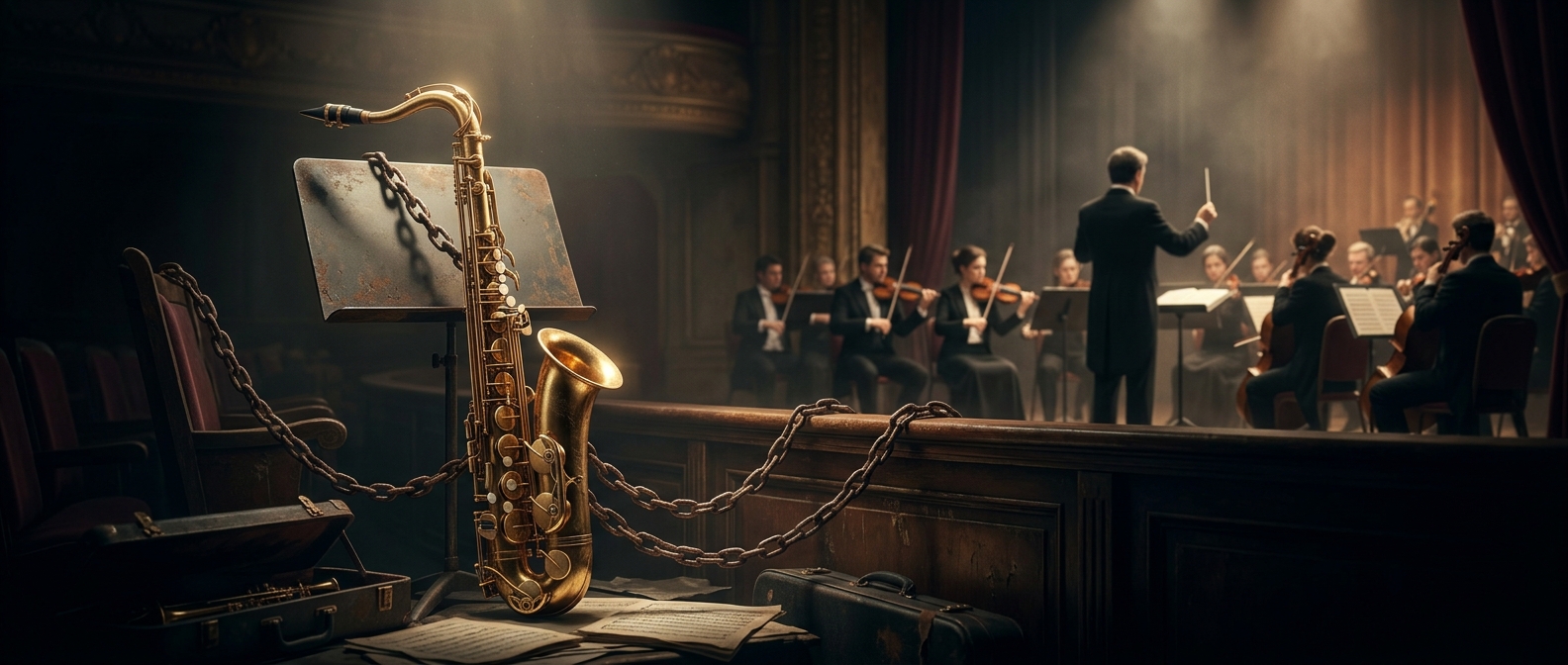
The problem was not simply that classical musicians thought the instrument sounded bad. Orchestras relied on familiar groups of strings, woodwinds, brass, and percussion, and composers and performers built their work around those conventions. A new instrument needed parts written for it, players trained to perform them, and a lasting place in concert practice. The saxophone never secured that routine role.
Respect did not guarantee acceptance
Some prominent musicians admired the saxophone, and composers occasionally used it. But praise and isolated appearances were not enough to make it a standard orchestral instrument. Its strong, distinctive tone could seem out of place beside the established woodwind section, while its growing presence in bands and popular entertainment gave it associations that concert traditionalists did not always welcome.
That divide mattered: an instrument’s reputation can shape where it is taught, performed, and commissioned. The saxophone could be treated as too coarse or too closely tied to popular music for the concert hall, even as those same qualities made it vivid and practical elsewhere.
Jazz made its difference an advantage
In jazz, a penetrating sound, flexible phrasing, and the ability to bend notes helped the saxophone cut through a band and sound expressive in a solo. Those strengths did not erase its classical uses, but they gave it a public identity far more powerful than its uncertain place in the orchestra. The saxophone was not rejected because it lacked musical possibilities; it struggled because classical institutions had little room for an instrument that did not fit their established sound and social boundaries.