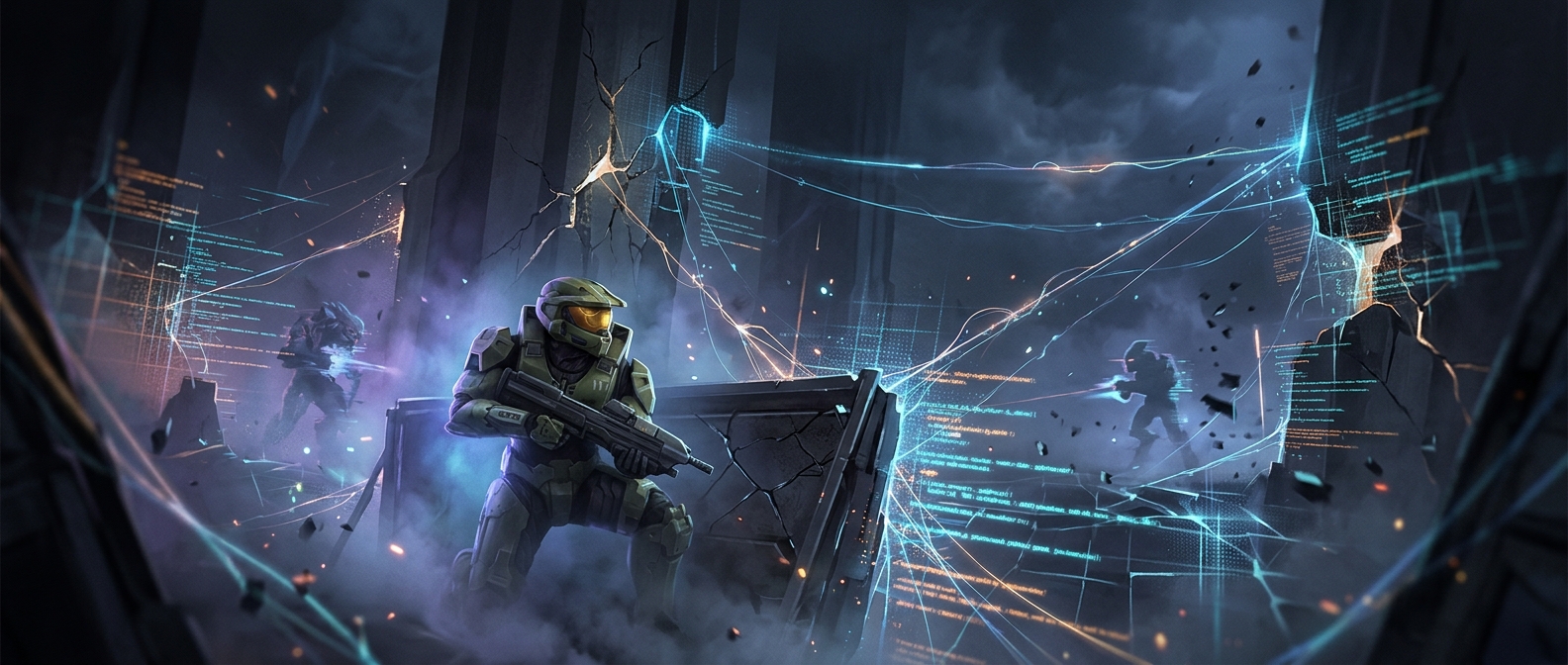
Why Halo 2’s multiplayer needed a last-minute patchwork
A multiplayer game is more than a collection of maps and weapons. Beneath each match is a framework that has to coordinate players, game rules, and the flow of information between consoles. If that underlying structure is unreliable, problems can spread: a feature that seems separate may depend on the same systems as several others.
That helps explain the urgency behind the developers’ description of Halo 2’s code as fundamentally broken weeks before launch. Rebuilding the framework so close to release could have meant reopening large parts of a game that was nearly finished. The practical alternative was to hold the existing structure together well enough for the essential experience to ship.
What “duct-taping” software really means
The phrase is figurative. Developers do not literally tape code together; they work around weaknesses with targeted fixes, limits, or replacement paths. Those measures can make a system usable without making its underlying design clean or robust. They also leave less time to test how changes interact, because a repair in one place can expose trouble somewhere else.
For Halo 2, the account points to a release shaped by that tradeoff: preserve the multiplayer experience under a hard deadline rather than attempt a risky overhaul. A game can feel seamless to players even when the software underneath it is being held together by carefully chosen compromises.