A trigger can send more than a click
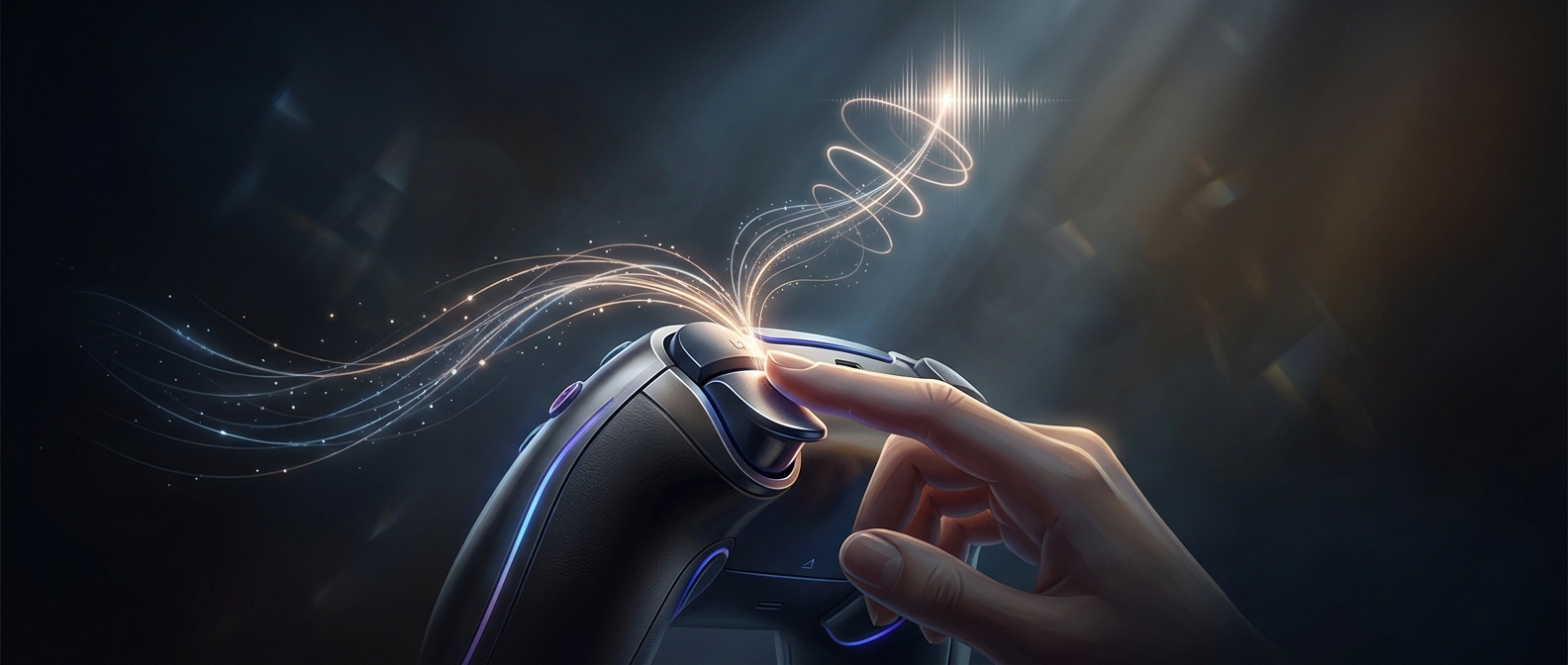
A conventional button gives a game a simple signal: pressed or not pressed. An analog trigger instead reports how far it has moved through its travel. Inside the controller, a sensor tracks the trigger’s position and turns it into a changing input value. Players often describe this as measuring how hard they squeeze, though the controller is usually sensing movement rather than directly measuring finger force.
That range gives developers room to make the response gradual. The game can treat a small pull as a little throttle and a full pull as maximum acceleration. The trigger’s spring supplies resistance, while the game decides what each degree of movement means.
Why the middle of the pull matters
In a racing game, a player may want to accelerate without immediately applying full power. With an analog trigger, easing into the pull can produce a gentler response; releasing slightly can reduce acceleration without cutting it off altogether. That makes fine adjustments possible using one finger, rather than repeated taps.
The same input can serve different purposes in different games—such as controlling a vehicle or varying the strength of an action. The important design choice is how to map the trigger’s travel to the game’s response. A small movement might have a subtle effect, or the game might make the response more sensitive near the start. The trigger supplies a sliding scale; the game determines what that scale lets the player control.