How Monika Gets Past the Avatar
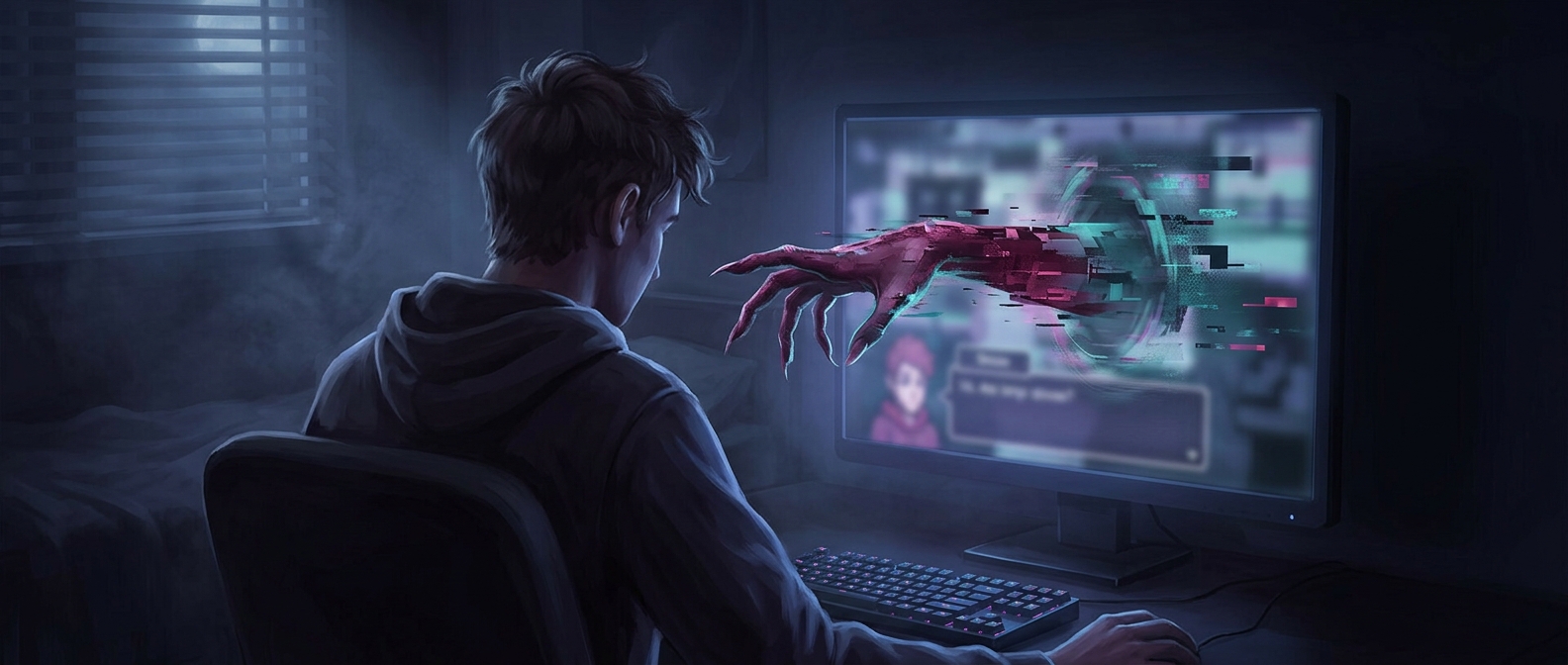
In most visual novels, the character on screen speaks to a role the player inhabits: a protagonist with a name, a history, and a place in the story. Doki Doki Literature Club can make Monika’s address feel different by using the computer’s Windows account username—the name associated with the account running the game—instead of relying only on the protagonist’s in-game identity.
That is a small technical step with a large dramatic effect. The game can read the account name from the computer while it is running, so Monika’s words appear to reach beyond the fictional character and toward the person at the keyboard. The name need not be the player’s real-world name; it may be a nickname or another label chosen for the computer account.
Why the Name Changes the Scene
A branching story usually makes the player’s influence visible through choices: select a response, follow a route, and see what happens next. Addressing the player by a name they recognize changes the kind of interaction. It suggests that Monika has noticed something outside the story’s usual boundaries, making the player’s presence feel like part of the drama rather than merely the source of button presses.
The effect depends on contrast. Until that moment, the player can treat the game’s characters and choices as safely contained within the screen. A familiar account name collapses that distance in one line. The computer itself becomes part of the scene, and an ordinary piece of local information becomes a storytelling device.