Small differences make every move a judgment call
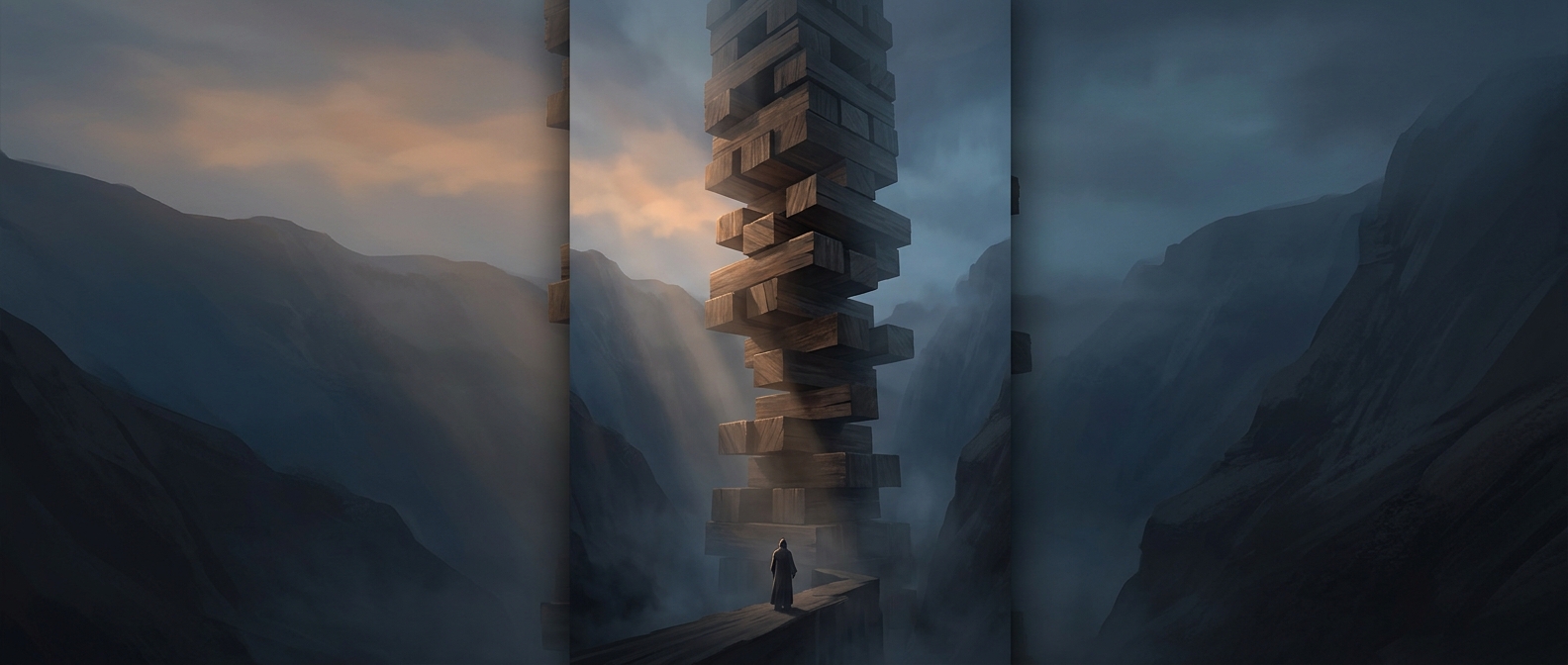
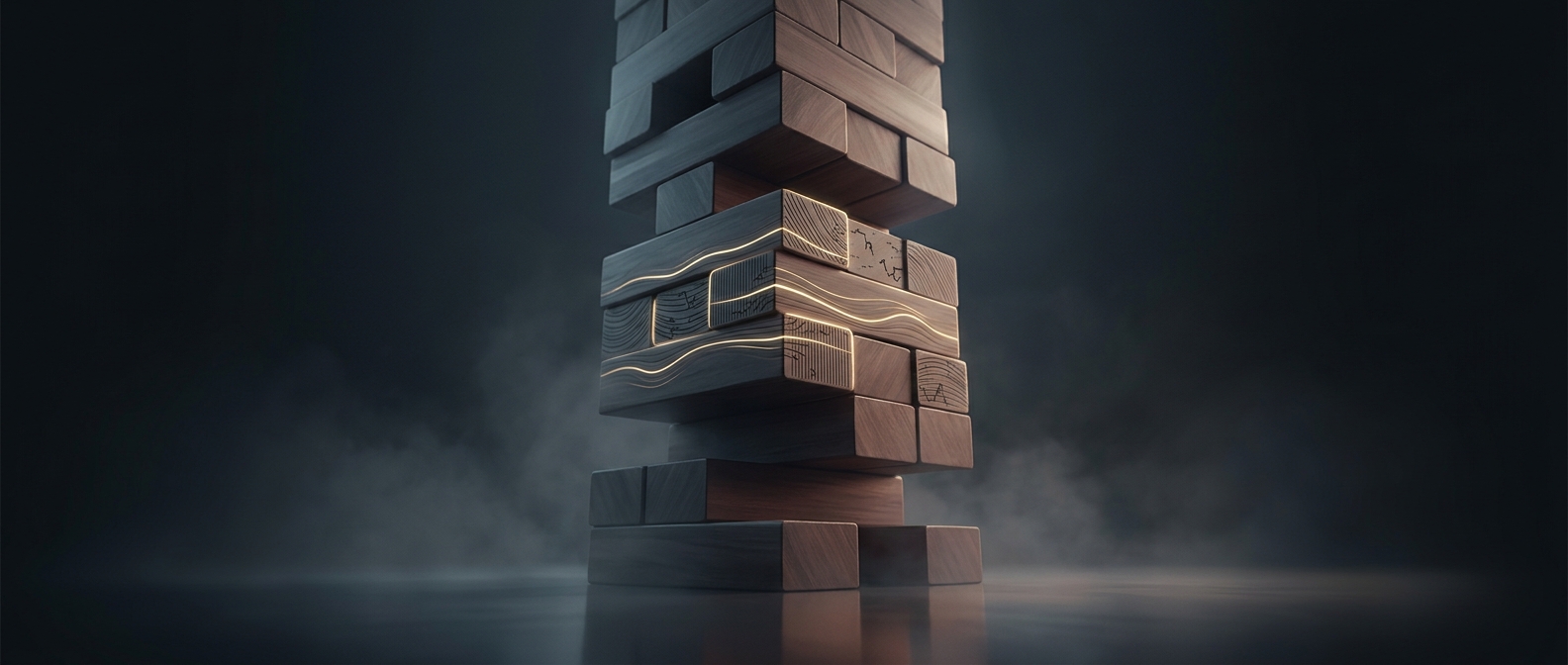
Jenga’s blocks are not perfectly uniform: slight differences in thickness and weight mean that a block that slides out easily in one turn may resist the next. The variation changes how tightly neighboring pieces press together and how much their surfaces catch. As the tower rises, those small differences make its balance harder to predict.
Why a perfectly even tower would play differently
If every block fit identically, players could rely more on repeatable patterns: a familiar push might produce a familiar result. Uneven blocks disrupt that certainty. Players have to test pieces gently, notice which ones shift, and judge whether removing one will leave enough support for the layers above. Even a block that moves smoothly can alter how the remaining pieces bear the load.
The wobble turns skill into suspense
The tower’s instability is not just a risk at the end; it shapes decisions throughout the game. A player may choose a piece that seems easy to remove but leaves a precarious arrangement, while a more difficult block might preserve a steadier stack. The slight manufacturing variations make those choices difficult to calculate in advance—and keep the tower from feeling like a mechanical puzzle with one reliable solution.