Jacks Turns One Bounce Into a Moving Deadline
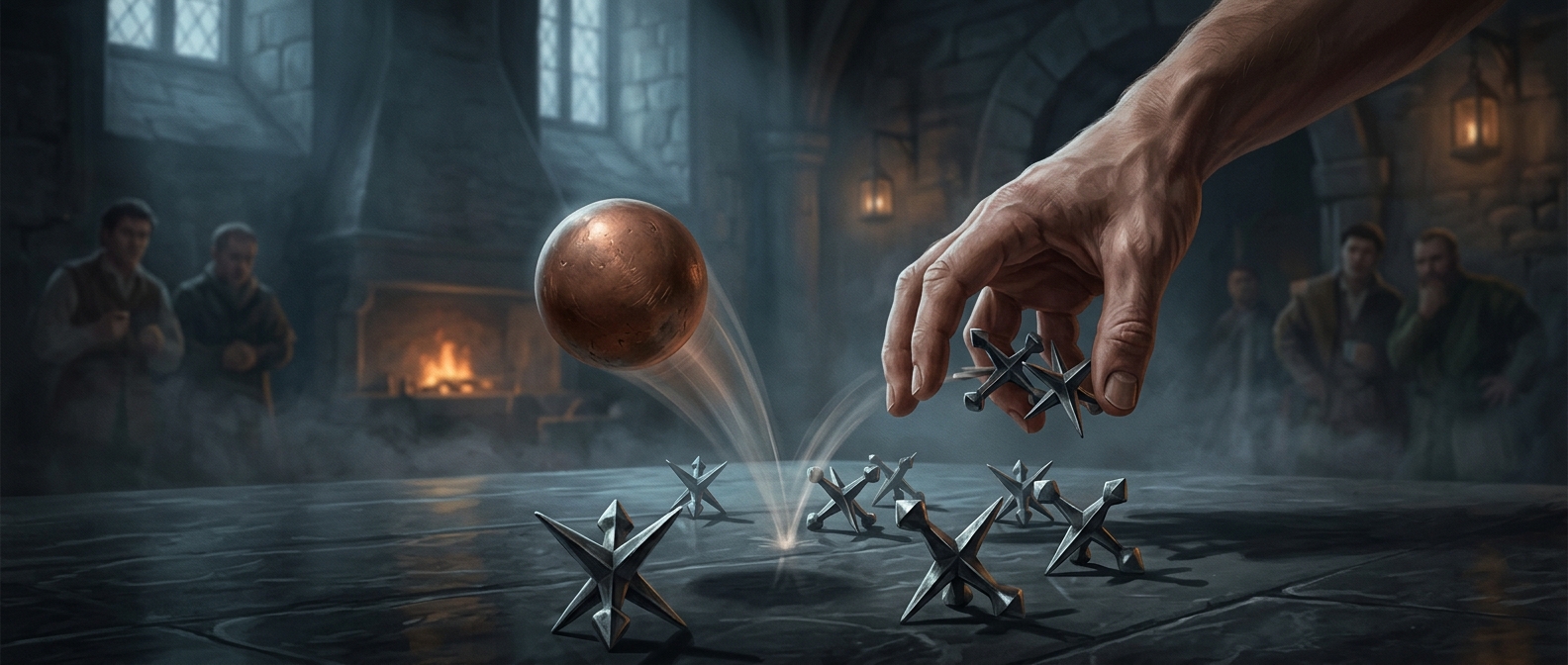
The ball is not just a prop; it is the game’s clock. As it rises after hitting the floor, a player has to redirect attention from tracking that moving target to finding and grabbing the right jacks, then bring the hand back in time to catch the ball. The catch depends on the whole sequence: a slow search or clumsy scoop leaves less time for the return.
The Challenge Is Coordination, Not Just Speed
A successful turn combines several small skills. Players judge where the ball is headed, choose which pieces to pick up, and control their fingers well enough to gather them without scattering the rest. At the same time, the catching hand must stay ready. Because the ball keeps moving while the player reaches, even a brief hesitation can upset the rhythm.
The bounce also makes the deadline less predictable than a simple count. A ball’s height and path depend on how it is thrown and how it rebounds, so players must adjust their timing from one turn to the next rather than rely on a fixed interval.
Each Round Raises the Hand’s Workload
In the familiar progression, players collect pieces in increasingly demanding groups. That changes the task: the hand must gather more objects in a single reach, while the ball still completes its bounce. The difficulty grows because the player has to do more during the same moving window. Jacks turns an ordinary pickup into a test of timing, precision, and a steady throwing rhythm.