Why a Car Can Turn in Midair
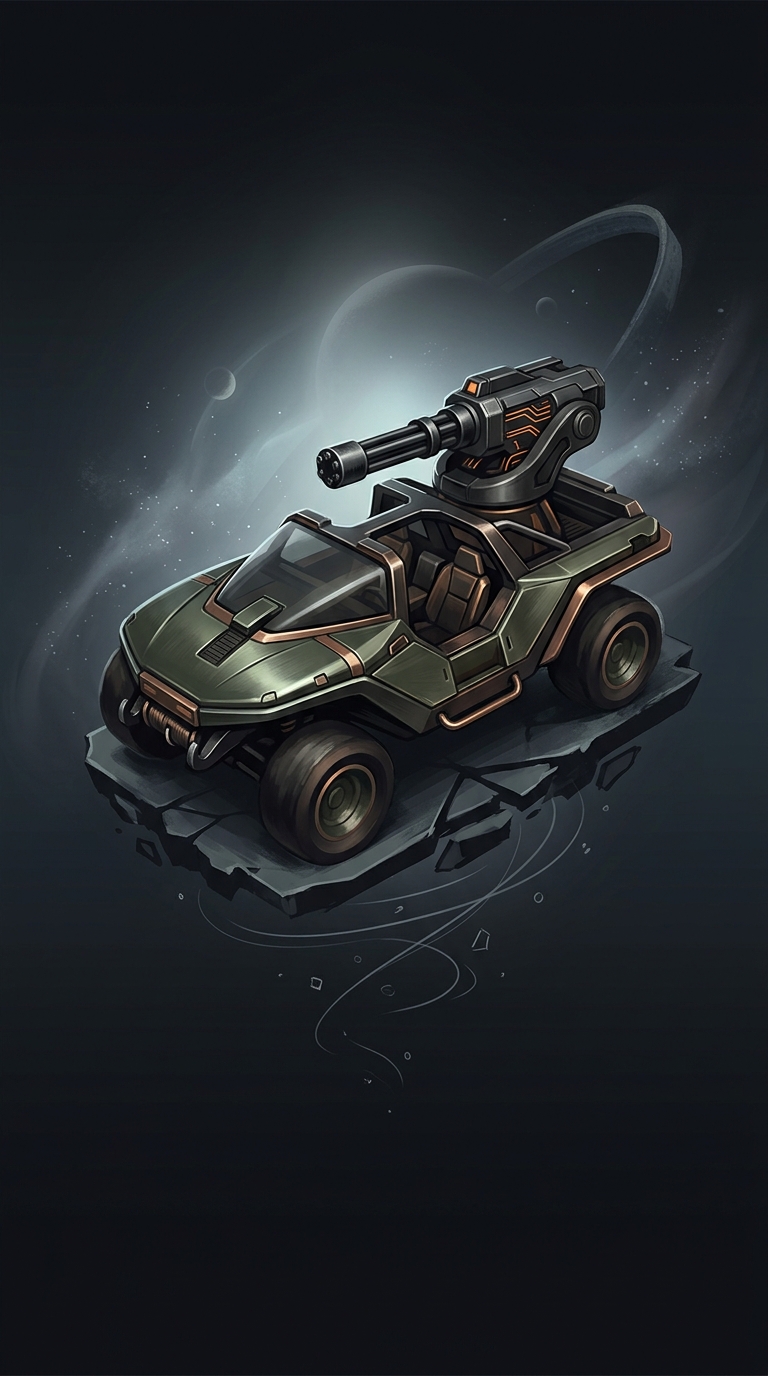
Once a ramp-launched car leaves the ground, its tires can no longer push against the road to steer it. Yet the car is not necessarily locked into the angle it had at takeoff. In many driving games, the driver can still adjust its pitch—the nose-up or nose-down angle—and sometimes its roll or yaw, the rotation around other axes.
A game can make this happen by giving steering, throttle, or braking a direct airborne effect. That effect may be an intentionally simplified control rule rather than a complete simulation of real vehicle physics. It gives players a way to correct a crooked launch, line up with a landing, or deliberately rotate for a stunt.
The Physics Behind the Trick
There is a real, subtler effect that helps explain the idea. The wheels keep spinning in flight, and changing their speed with the throttle or brakes can influence the car’s pitch. This is a consequence of angular momentum: rotating wheels resist changes to their orientation, and changing their rotation can produce a small reaction in the vehicle body.
That influence is limited. A driver cannot use the steering wheel in midair as if the tires were still gripping pavement; without that contact, ordinary steering has little leverage. Games often amplify or simplify the available rotation so that the car remains controllable and the player’s input matters.
The practical payoff is that airtime becomes part of the drive, not just a pause between takeoff and landing: a small correction can determine whether the car touches down wheels-first or crashes sideways.