From exploration buggy to battlefield ride
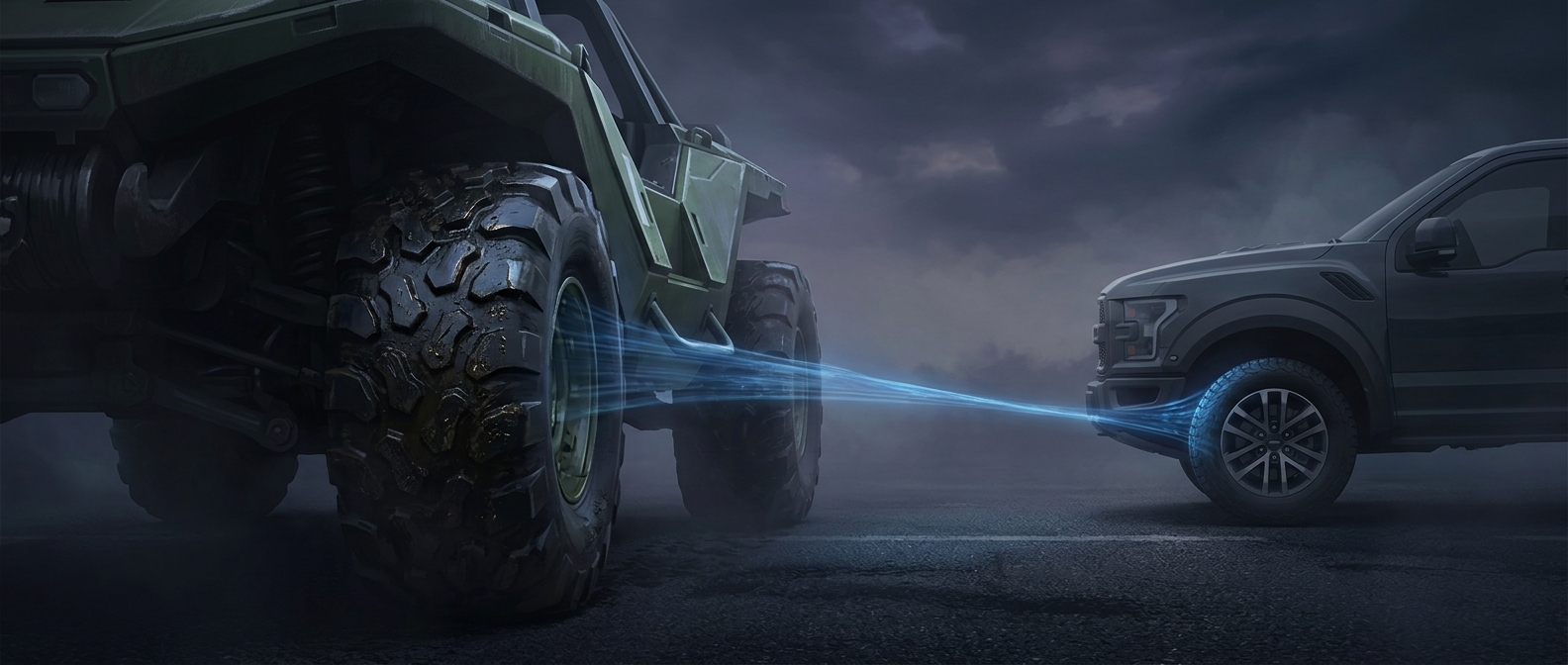
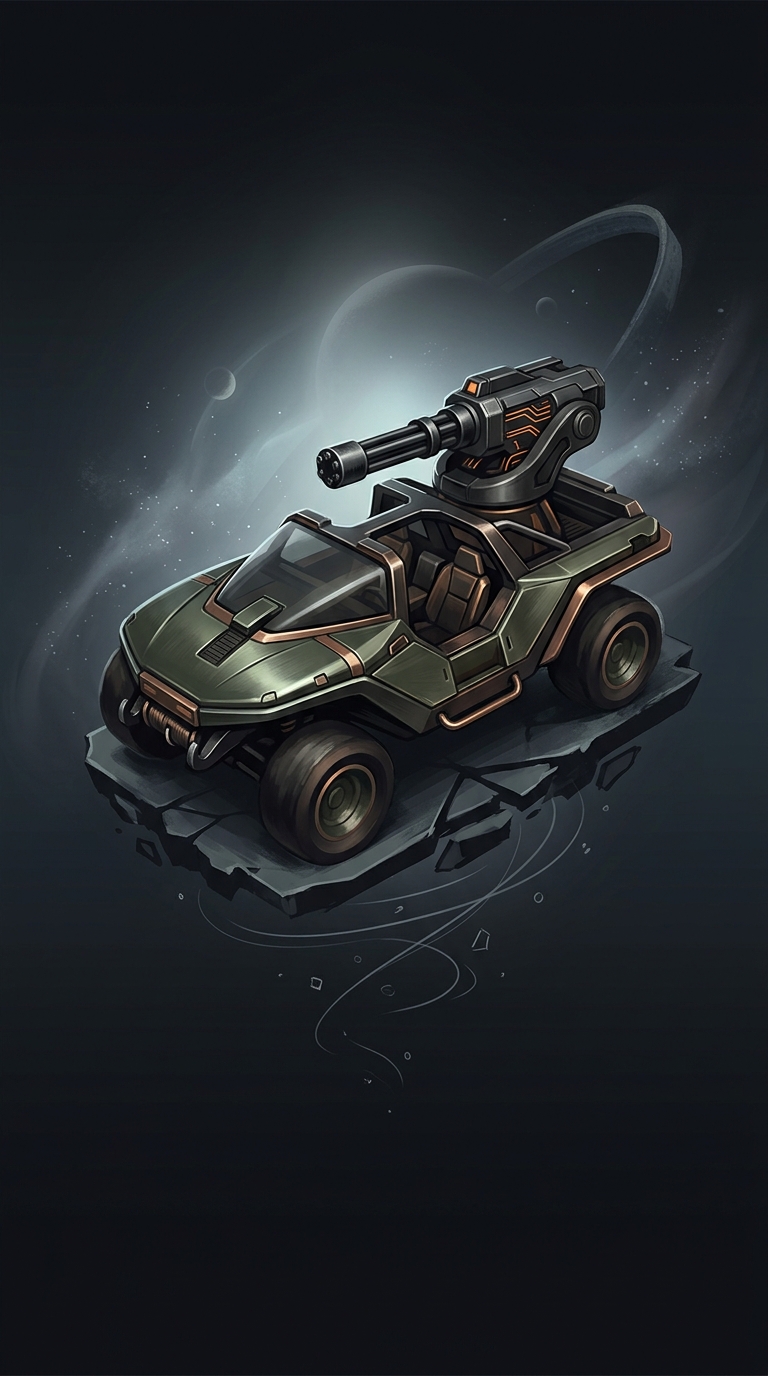
The Warthog’s change of purpose did not require a new silhouette. Its low, open body and oversized tires already suggested a vehicle meant to cross rough ground, so the same basic design could carry players through Halo’s alien landscapes. The shift was in what the buggy did: a chain gun turned a means of getting around into a mobile weapons platform.
That conversion suited a shooter built around movement through large outdoor spaces. On foot, a squad advances at walking speed and has to handle threats one at a time. In the Warthog, one player drives while another operates the gun, letting the team cover ground and fire as it moves. The open seating makes that cooperation visible—and leaves riders exposed if they rush into danger.
Why the old idea still fits
The vehicle’s civilian origins help explain why it feels more like a rugged utility buggy than a sleek tank. Its shape communicates mobility first; the weapon is an addition that changes the stakes without erasing the original purpose. That blend gives the Warthog a distinctive role in Halo: it is both transport and a risk-taking combat tool.
The result is a small example of how a game’s design can pivot without discarding earlier work. A vehicle conceived for exploration became memorable not simply because it gained a gun, but because its original promise—getting across a strange world—remained intact.