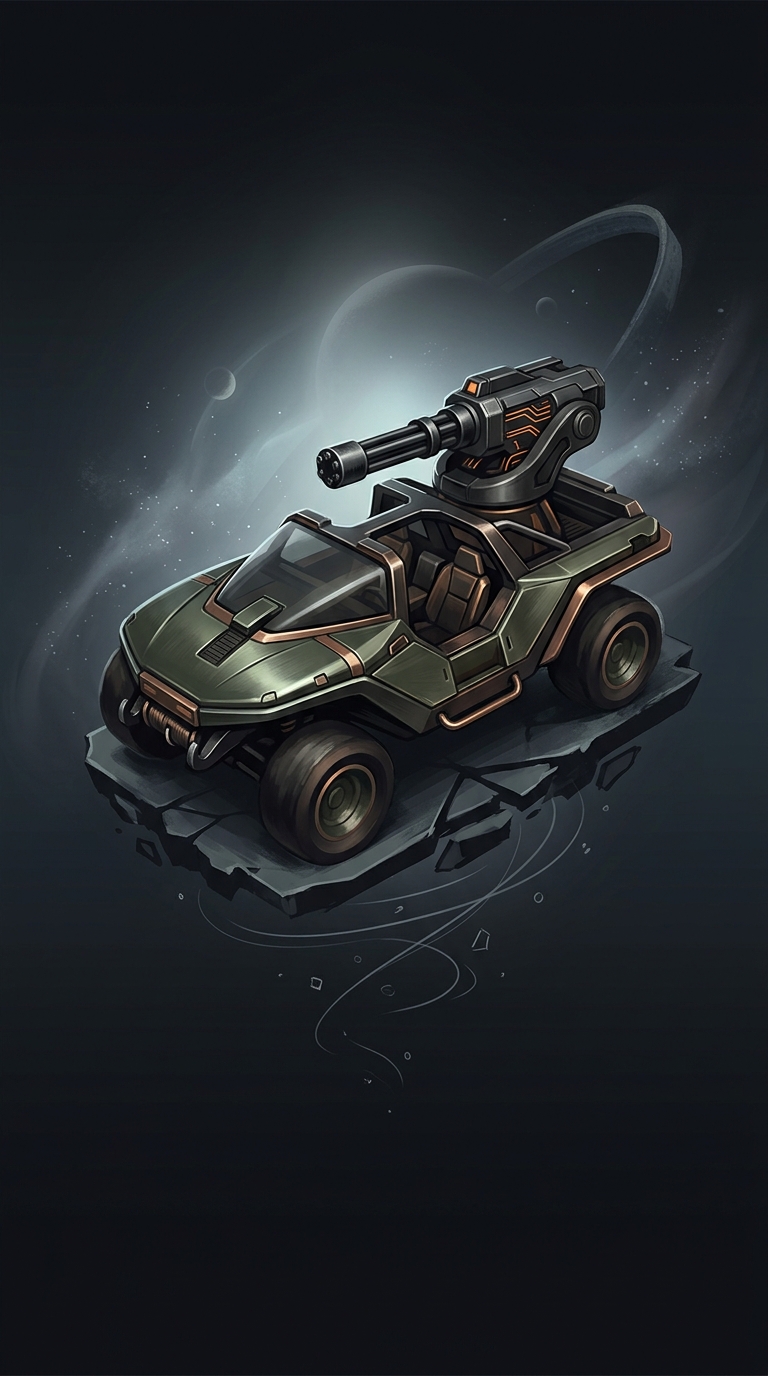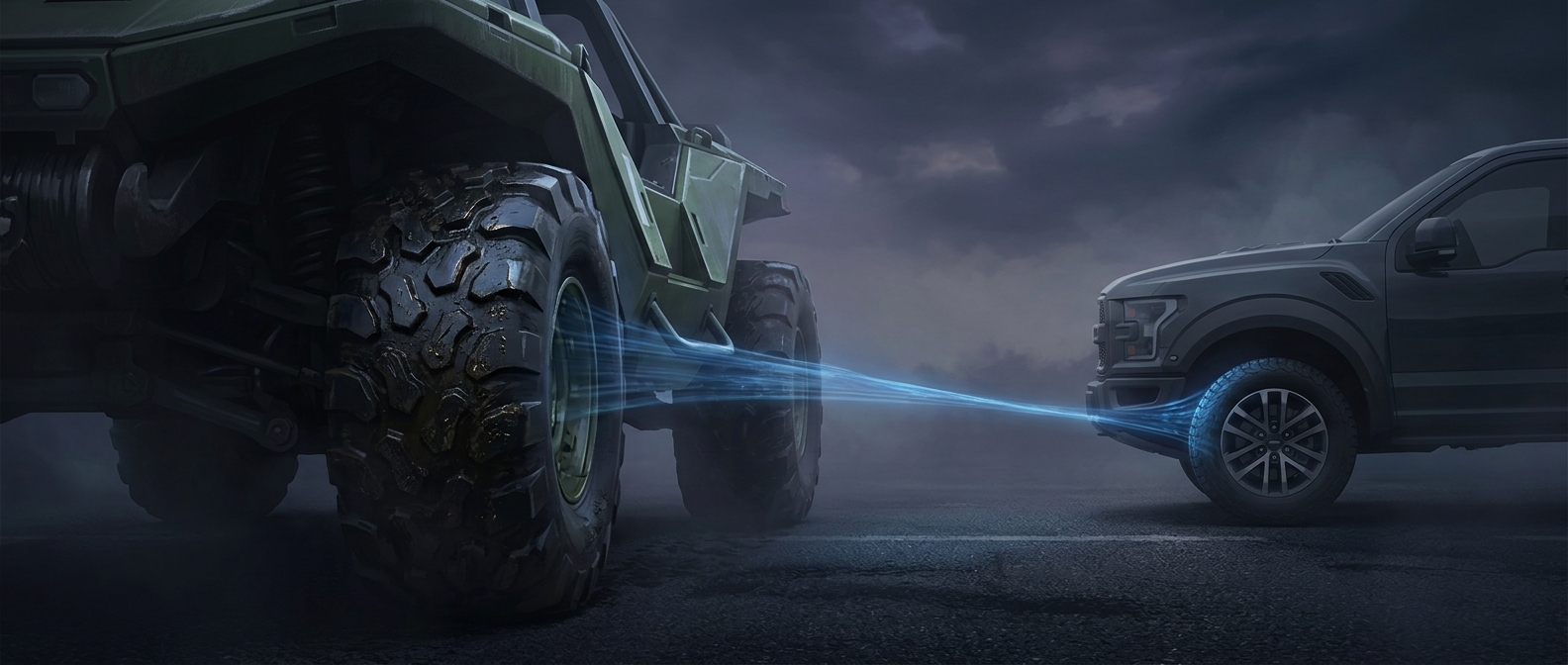
A familiar pattern on an unfamiliar vehicle
The Warthog belongs to a science-fiction battlefield, but its tire tread looks like something you might see on an off-road truck. That resemblance gives the vehicle a foothold in the real world: the eye recognizes a practical, rugged design before registering the futuristic bodywork around it.
Tread is the pattern of raised rubber blocks and grooves on a tire. On real off-road tires, those grooves help the tire bite into loose ground and give mud a way to move out from under the contact surface. A tread pattern is therefore more than decoration on a working vehicle—it signals what sort of terrain the tire is meant to handle.
Why that detail changes the Warthog
In a game, a tread can do visual work even when players never inspect it closely. It makes a large vehicle feel assembled from plausible parts, rather than designed only to look futuristic. The Warthog’s familiar pattern also quietly supports its role as a heavy, rough-terrain vehicle: its tires look built for dirt, not a polished road.
That does not by itself tell us how the game simulates traction, or whether the virtual tires behave like real ones. It is a small piece of visual design, not a technical specification. But it is the kind of detail that helps a fantasy machine feel drivable: the galactic war may be imaginary, while the tread is legible from everyday experience.