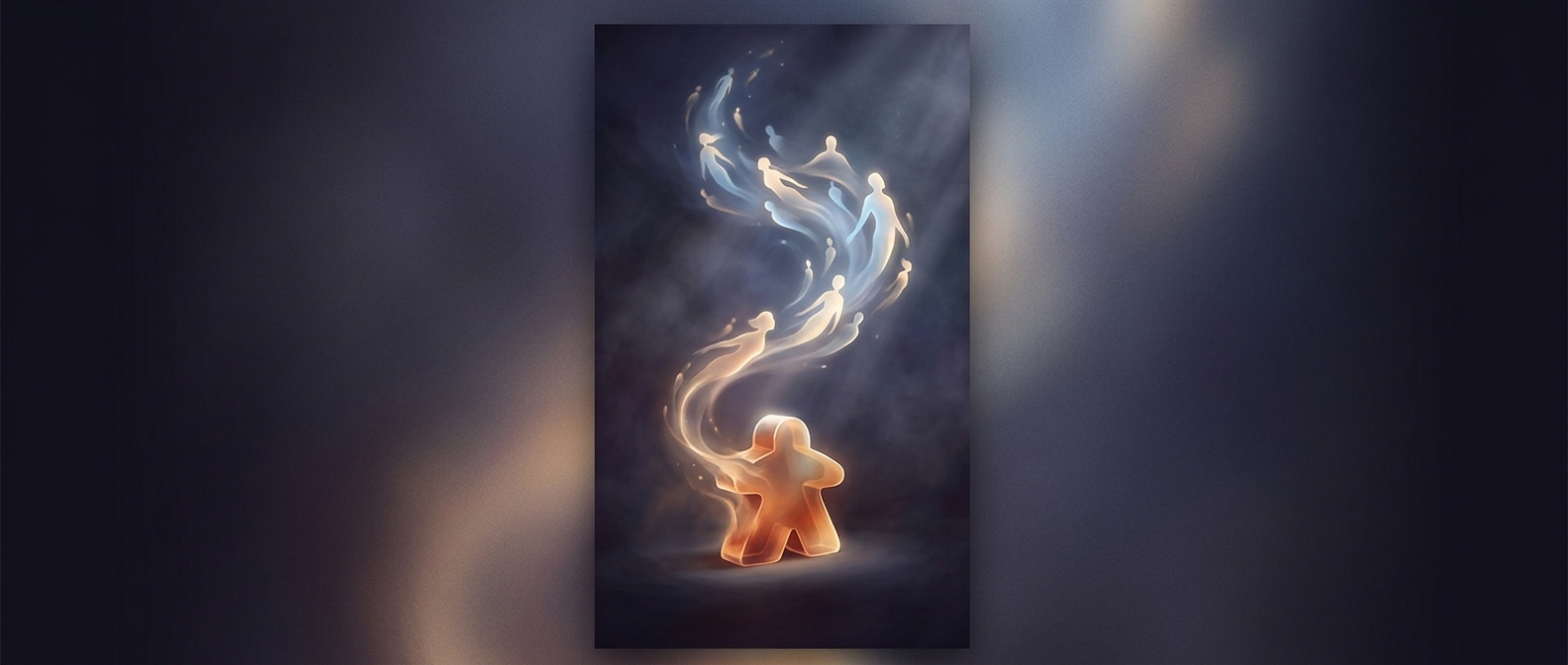
From “my people” to a board-game staple
“Meeple” is a blend of “my” and “people,” coined by board-game player Alison Hansel while playing Carcassonne. The game asks players to place small wooden figures—followers—on the map to claim features such as roads, cities, and fields. The nickname gave those simple pieces a memorable collective identity.
A name that traveled beyond one game
The word caught on because the figures are easy to recognize and recur across many games: usually small, person-shaped wooden tokens that players place, move, or commit to particular spaces. Once players had a handy name for them, “meeple” could describe similar pieces outside Carcassonne, not just that game’s followers.
That broader use also reflects how board-game language grows. A term coined around a specific component can become shorthand for a familiar kind of piece, even when different games give it different jobs. A meeple might represent a worker, a traveler, or a resident; the shared name points to the little figure, while the rules determine what it does.