How a Hit Turns Trapped Air Into Lift
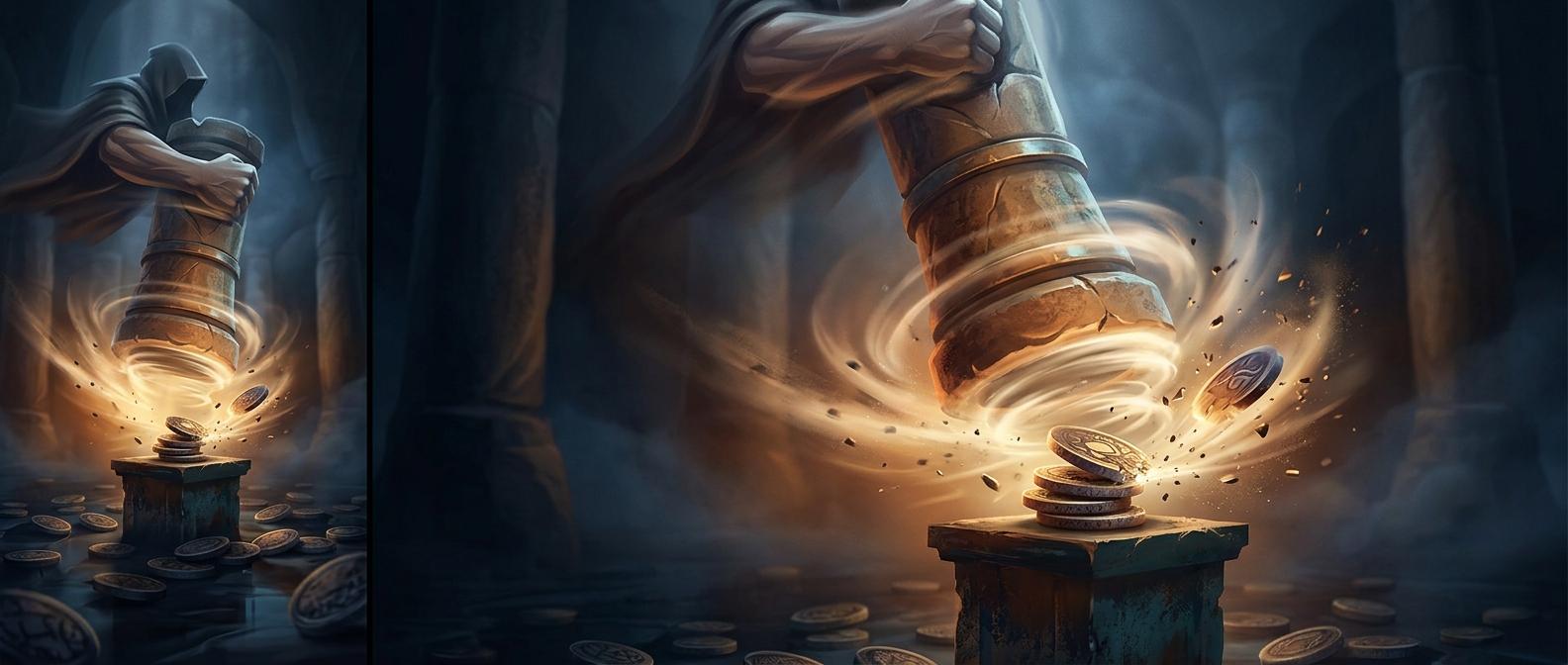
A cardboard milk cap looks too light and floppy for air pressure to matter. But when it lies against a smooth surface, a quick strike can briefly squeeze the thin layer of air underneath it. The cap flexes downward, reducing the space available to that air, and pressure rises before the air can escape.
That pressure pushes back on the cardboard. As air rushes out from beneath the cap, its force can give the cap an upward kick. The effect lasts only an instant, but a light object does not need much force to leave the ground.
Why Direction Matters
The burst has to escape in a way that lifts the cap rather than simply leaking away. If the cap is pressed flat all around, the air may have little room to vent; if the strike opens a gap on one side, the escaping air and uneven pressure can tip or twist the cap as it rises. That spin is part of what makes a flip look dramatic.
So the useful hit is not just the hardest one. It is the one that briefly compresses the air and gives it a route that helps lift the cardboard. The surface matters, too: a rough or uneven one lets air leak out sooner, weakening the pressure pulse.
The surprising part is that the cap is not being launched by a mysterious hidden mechanism. For a split second, it acts like a tiny flexible lid over a pocket of air—and the strike turns that pocket into a spring.