Why a tiny movement can ruin a turn
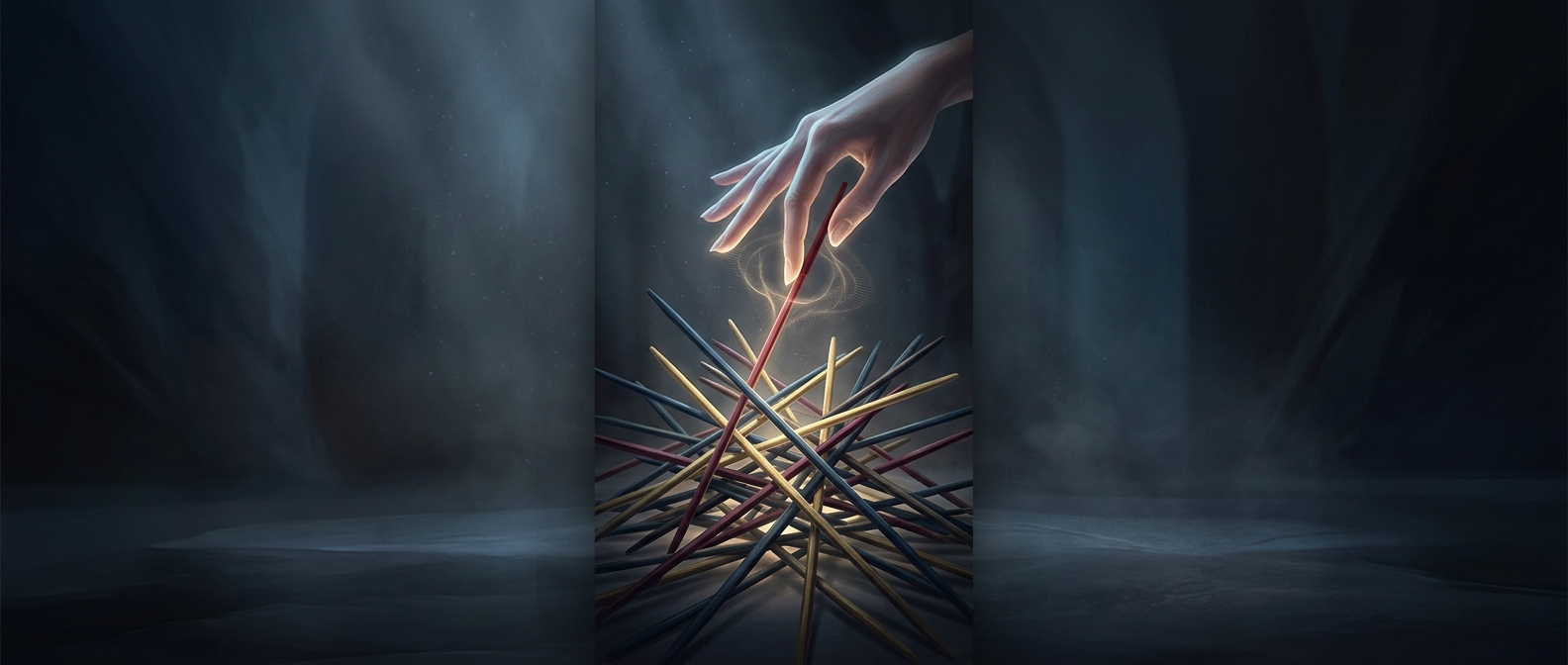
In pick-up-sticks, the challenge is not simply to grab a piece. A player must lift one while leaving every other piece in the heap apparently still. That makes the game a test of controlled force: too much pressure, a poor angle, or a quick tug can transmit movement through the pile and give the turn away.
With wheat straws, the pieces are light, so even a small brush can shift them. A player has to judge which straw is easiest to free, then move fingers carefully enough to lift it without nudging its neighbors. Watching the pile closely matters as much as steady hands: a straw that looks separate may be resting against another farther down.
The pile turns touch into strategy
Each successful pickup changes the arrangement. Removing one straw can expose a loose piece—or leave the remaining straws balanced in a less forgiving tangle. Players therefore face a choice: take an easy piece now or attempt a harder one that may be worth more under a particular version’s rules.
The game’s simplicity is what makes the hand movement so visible. There is no elaborate equipment to hide the skill involved; the player’s fingers, the pile, and the consequences of a slight disturbance are all on display. A single straw lifted cleanly can feel like a precise maneuver, while one careless touch can undo the whole attempt.