A family game became a test of touch
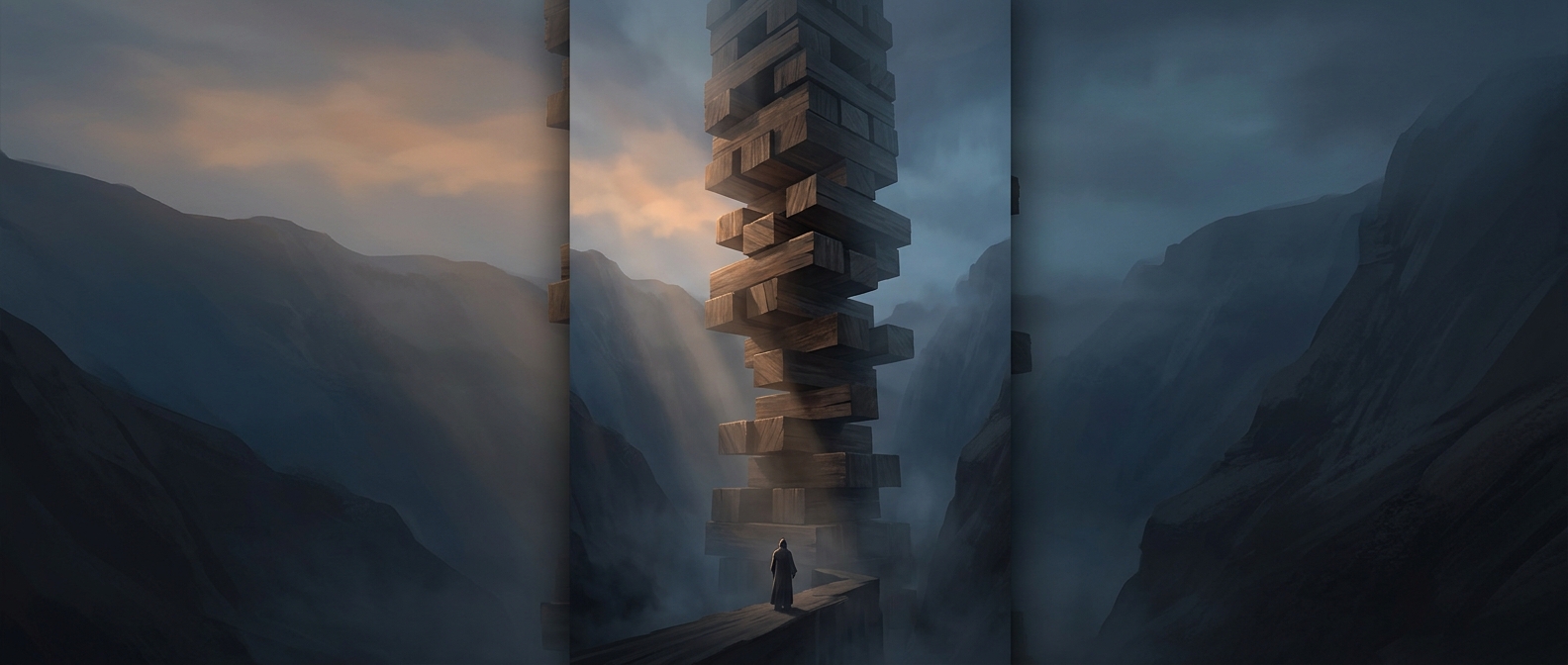
Jenga’s key design choice was to make a tower from ordinary wooden blocks rather than give players a board, dice, or a set of special pieces. Leslie Scott adapted a stacking game her family played with standard building blocks. That simple material creates the challenge: every move changes the tower itself, so players must judge not only which block to pull but how the remaining structure will respond.
Why the rules make tension
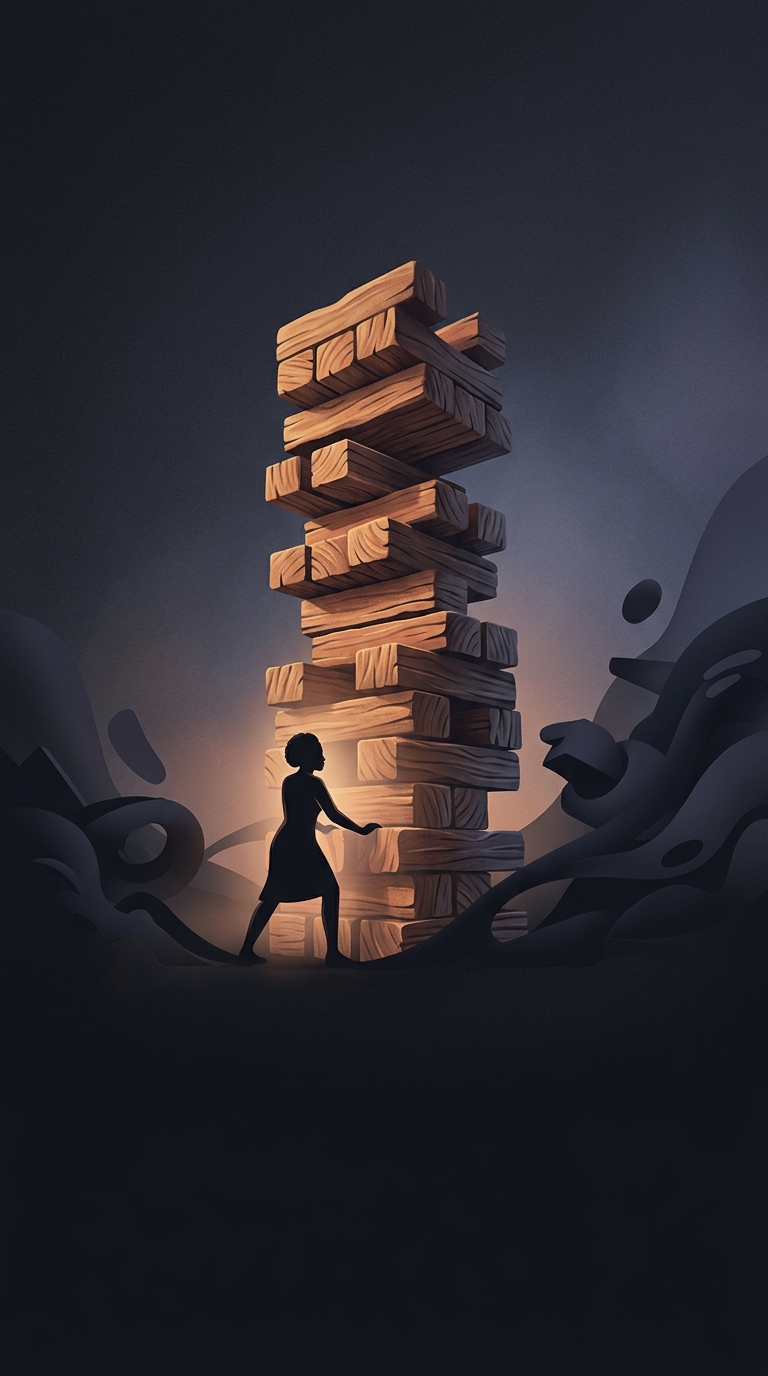
A player removes one block from the tower and places it on top, then passes the turn. The stack grows taller and less stable as pieces are taken from lower levels. A block that slides free may be safe to move; one that catches or shifts its neighbors warns that the tower’s balance is changing. The game turns small observations—how tightly pieces fit, where the weight rests—into decisions with immediate consequences.
Because the blocks are standardized building pieces, the suspense comes from handling and judgment, not from hidden information or elaborate equipment. Everyone can see the tower, but no one can know exactly how much movement it will tolerate until a block is tested.
A name that carried its origins
Scott called the game Jenga, using a form of the Swahili word for “build.” The name connected the commercial game to the kind of construction at its heart, even though toy executives urged her to choose something more familiar. Its success did not depend on explaining a complicated fictional world: the title and the tower both point back to the same basic action—building, then carefully taking apart.