How a Jenga Tower Can Stand With Its Middle Missing
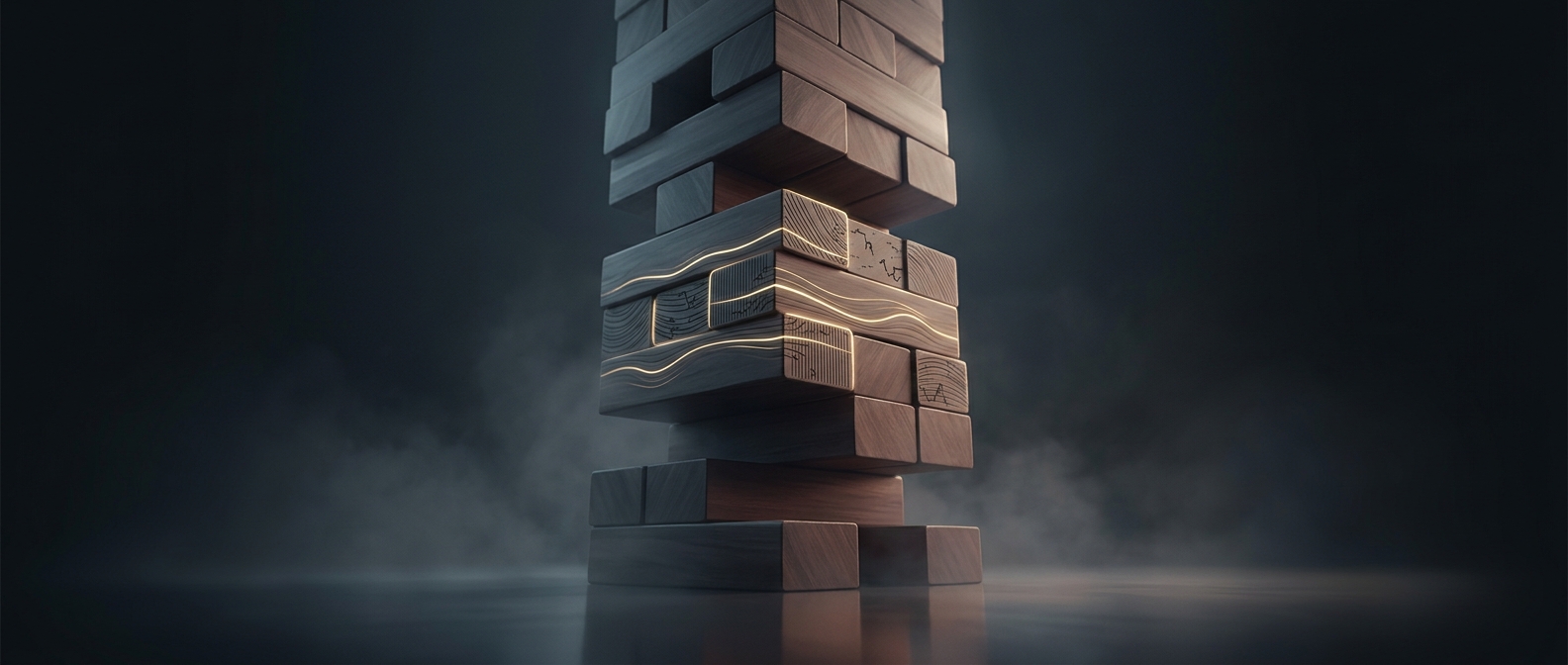
A Jenga tower is not a solid column. Each level has three blocks laid side by side, and the next level turns crosswise. That alternating pattern creates several possible paths for the weight of the levels above to reach the table.
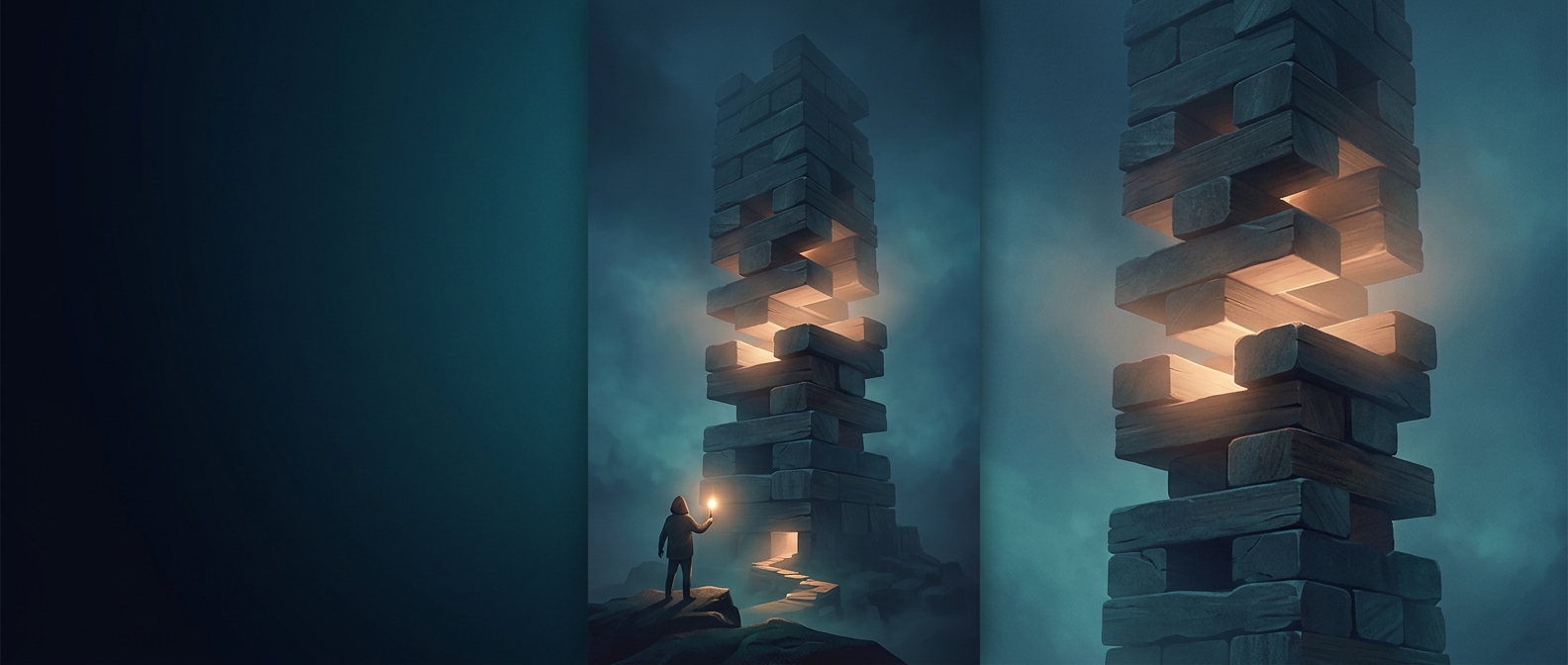
When a middle block is pulled from a lower level, the two blocks left beside it can still support much of the stack. The level above spans across them, helping pass the load around the gap. That is why removing a block from the middle can leave room to keep building upward instead of immediately bringing the tower down.
The Load Finds Another Route
The weight does not vanish when a block comes out; it shifts. Blocks may press more heavily on the remaining supports, and the spanning blocks above may bend slightly. A tower can therefore remain upright while becoming less forgiving: the structure has fewer paths for carrying its load.
The blocks also rely on friction—the resistance that keeps touching surfaces from sliding past one another. Small differences in how tightly blocks fit, or how level the stack is, can change which pieces bear the most weight. A pull that works in one tower may disturb another block in a seemingly similar tower.
Why Height Makes the Risk Grow
Adding levels increases the weight pressing down and raises the tower’s center of mass, making a sideways wobble more consequential. As gaps accumulate, a bump or a shifting block can send forces through a narrower set of supports. The tower’s weakness is not simply that it has holes; it is that the remaining blocks must carry weight while resisting sliding and tipping.
That is the game’s structural gamble: each successful removal demonstrates that the load has found a way around the gap, but also leaves fewer safe routes for the next move.