A game piece begins as a tree
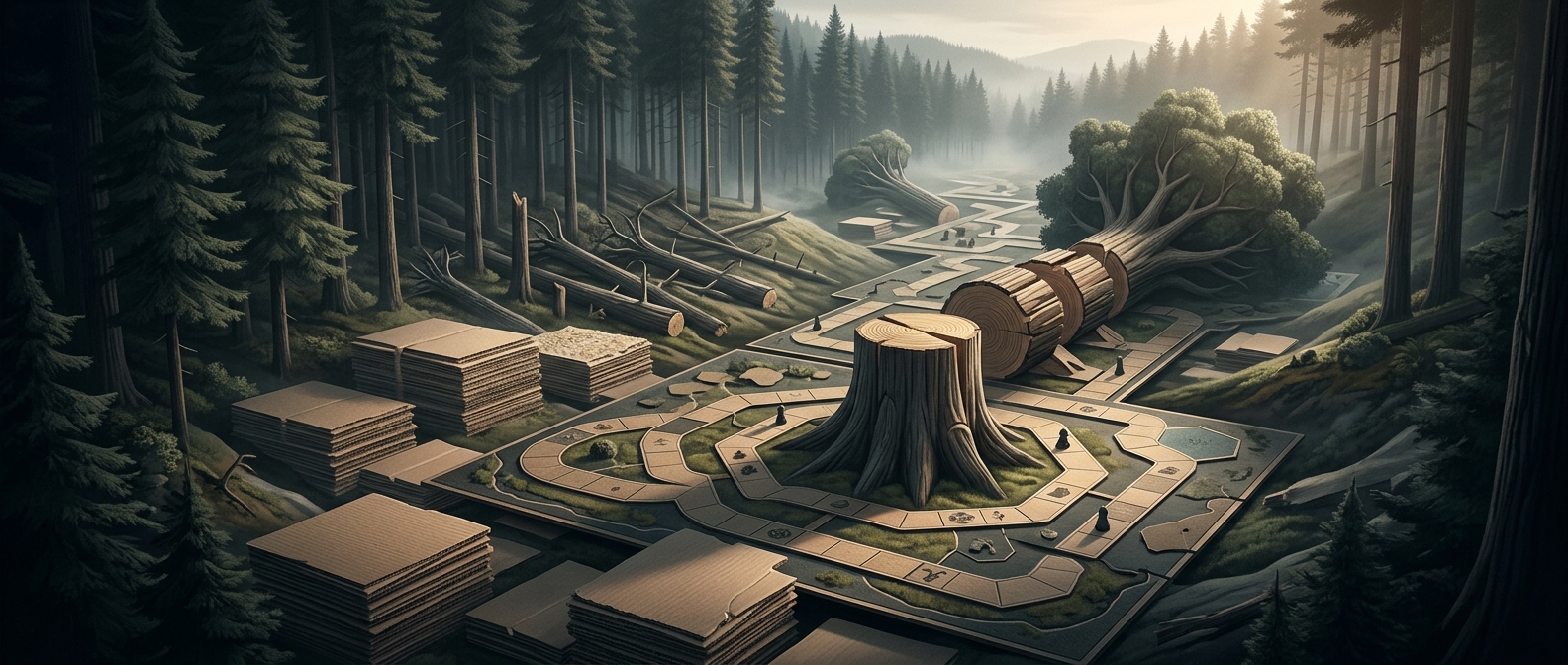
A wooden meeple is the last, tiny step in a much larger material chain. Trees are harvested for timber, and their trunks are cut at a mill into boards or smaller blanks. Those pieces are dried to reduce moisture, which helps keep the wood from warping or cracking as it becomes a game component.
The forest is not necessarily cut down just to supply board games. Meeples use little material, and manufacturers can make small parts from lumber produced for many purposes. But each piece still depends on wood that was grown, harvested, milled, and transported.
Turning timber into a shape that fits
A maker cuts or machines the dried wood into the familiar person-like silhouette, then smooths the edges. The exact method varies: pieces may be shaped with cutting tools or produced in batches using industrial machinery. Their simple outline is practical as well as recognizable—it makes them easy to handle and lets them stand upright on a board.
Small pieces also impose constraints. Wood grain can affect how cleanly a blank cuts, while uneven moisture can make finished pieces less consistent. Manufacturers therefore need material that behaves predictably at a small scale, not just a design that looks right on paper.
The forest behind the game box
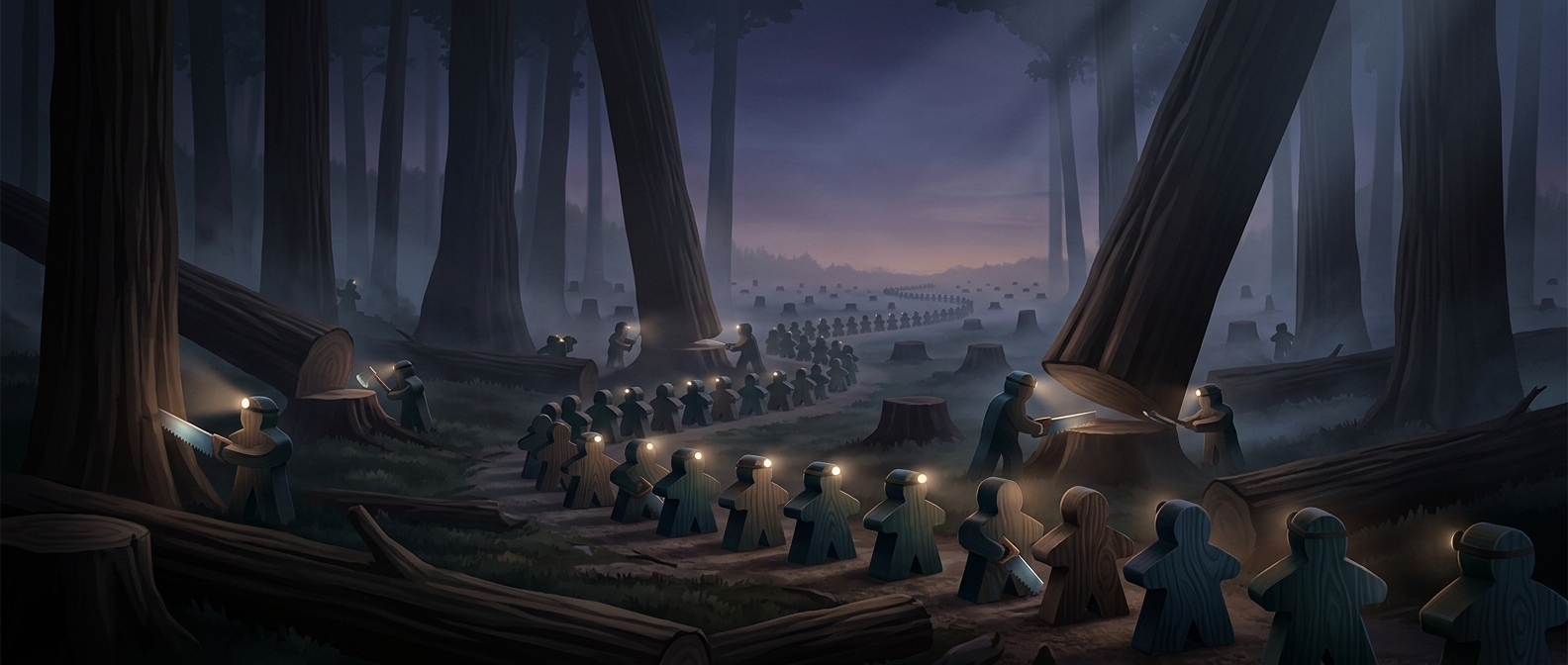
Because a meeple is so small, its individual share of a tree is modest. The broader point is that “wooden” is a supply-chain choice, not a purely decorative feature: it ties a tabletop component to forestry and timber processing. When a player moves one across a board, the piece is carrying a sliver of that much larger chain—from forest to mill to game table.