A family crest becomes a fantasy relic
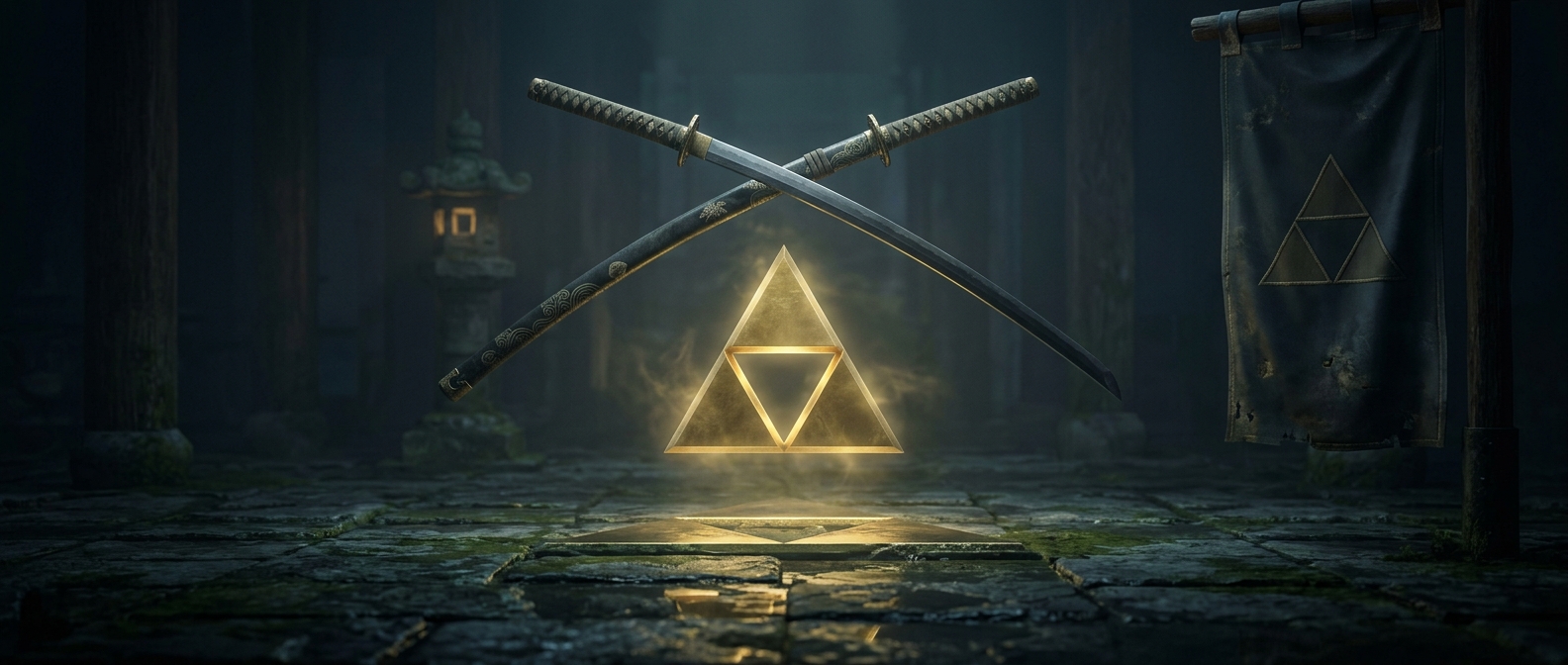
The Triforce’s geometry has a real-world visual ancestor: the Mitsuuroko, or “three scales,” crest associated with Japan’s medieval Hojo clan. A mon—a Japanese family emblem—had to remain recognizable when used as a compact mark on clothing, objects, or banners. Three simple shapes make a design that can be identified at a glance.
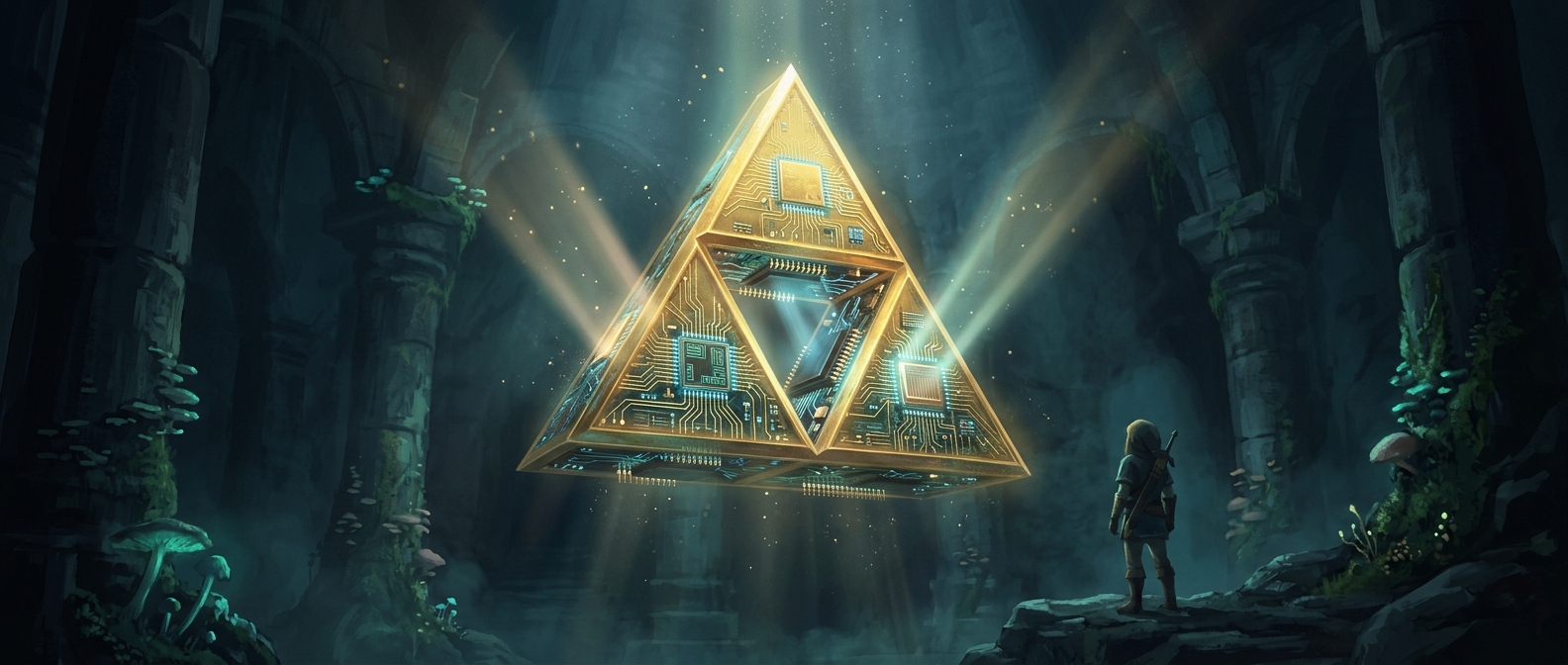
In The Legend of Zelda, that spare arrangement becomes more than decoration. The three triangles form a single larger figure while remaining visibly separate, a shape that can suggest both unity and division. The games turn that visual tension into a story: the Triforce is a powerful relic whose pieces embody courage, wisdom, and power.
Why the shape suits the story
The emblem communicates its role before a player knows its history. Its symmetry gives it the air of an ordered, sacred object; the gaps between the triangles hint that it can be broken apart or possessed in pieces. That makes the symbol useful across the series: it can appear as an image of a whole relic, a mark tied to one of its parts, or a sign of the larger conflict surrounding it.
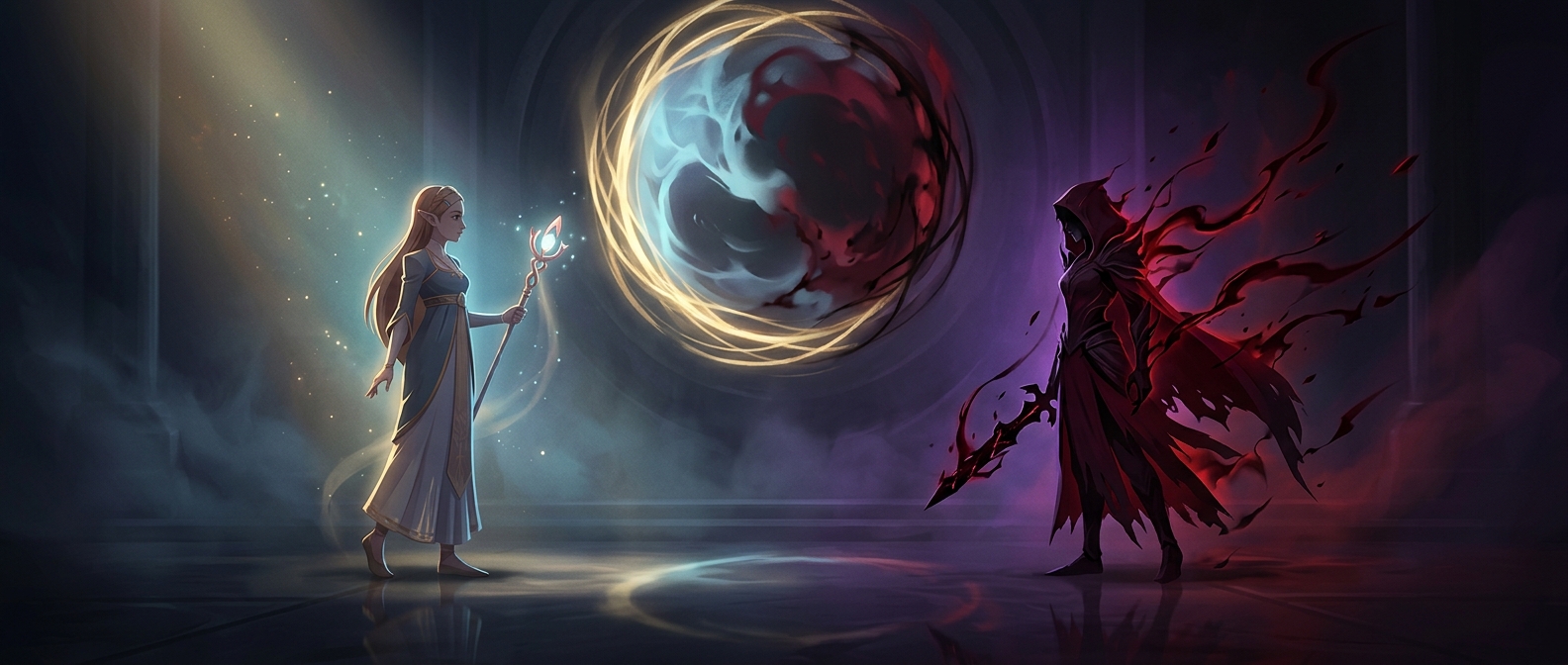
The virtues also give the three-part design a narrative structure. Link, Zelda, and Ganon are associated with courage, wisdom, and power, respectively. Their roles are not simply three labels: they frame the conflict as a clash among different kinds of strength and judgment. A medieval family emblem thus becomes a compact piece of game-world storytelling—its shape helps explain the mythology before a character says a word.