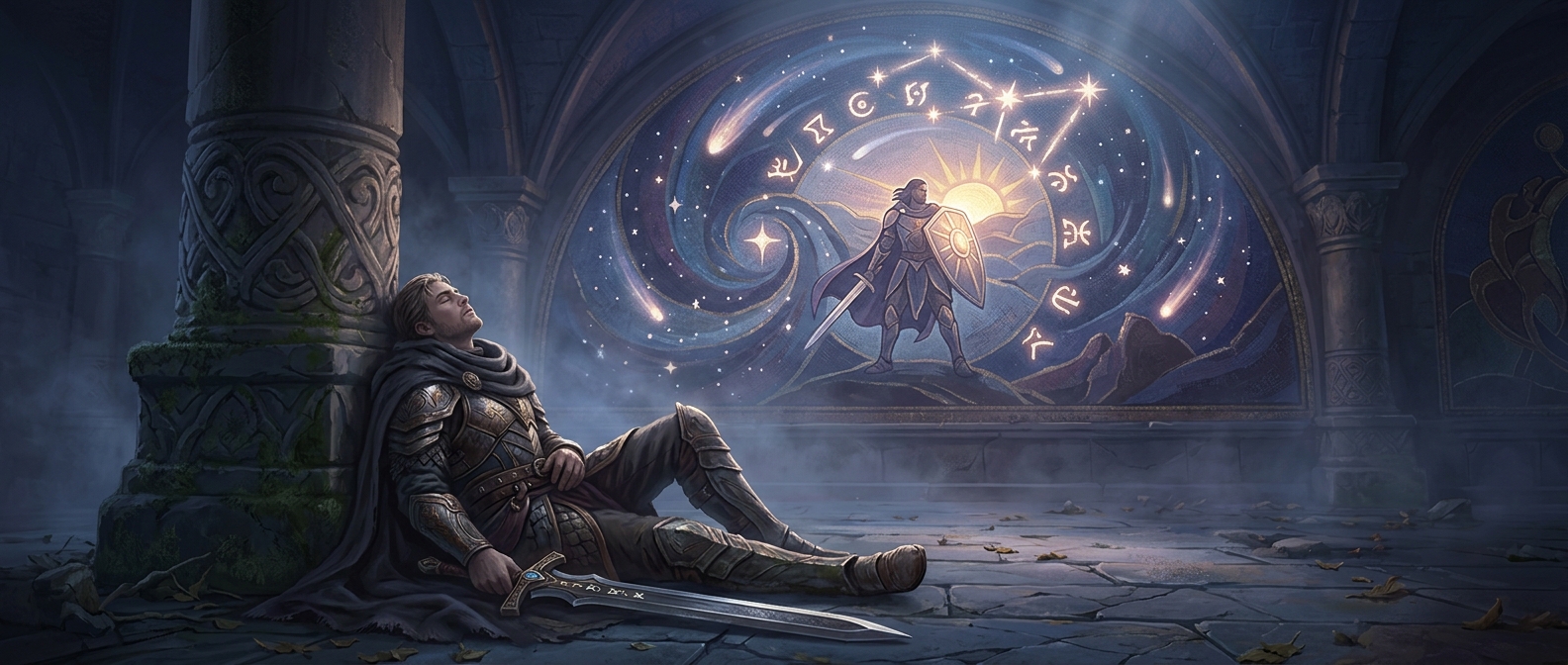
A sleeping hero gives the adventure a clear first step
In many Legend of Zelda games, Link does not begin as a battle-ready champion. He starts in a familiar, private place—often asleep—and the first interruption draws him into a crisis. That small transition turns a large fantasy premise into an easy-to-follow sequence: someone needs help, Link wakes, and the player takes control.
The contrast also makes the danger legible. A threat that reaches a bedroom or home has crossed a boundary between ordinary life and adventure. Link’s initial unawareness gives the player a moment to discover the situation alongside him, rather than arriving after the emergency is already underway.
Waking up can double as a tutorial
A quiet opening gives a game room to introduce movement, characters, and nearby places before asking the player to face a major threat. The wake-up call supplies a reason to leave the starting area; the route outward can teach basic controls and point toward the next objective. A fairy, family member, or other messenger can also deliver essential information naturally, as part of the interruption rather than as a detached explanation.
This is useful in an adventure game built around exploration. The player needs to know not only that danger exists, but where to go and what to try first. A familiar morning routine can provide that foothold before the world widens into dungeons, puzzles, and distant regions.
The ordinary beginning makes the quest feel larger
Link’s sleep is not just a joke about a hero missing the alarm. It marks the gap between the life he has been living and the role the story is about to demand of him. The adventure begins by making the extraordinary arrive at home. When he finally leaves, the player has a concrete sense of what is being disrupted—and a simple first step into a much larger journey.