When Link’s Sword Hand Became a Control Problem
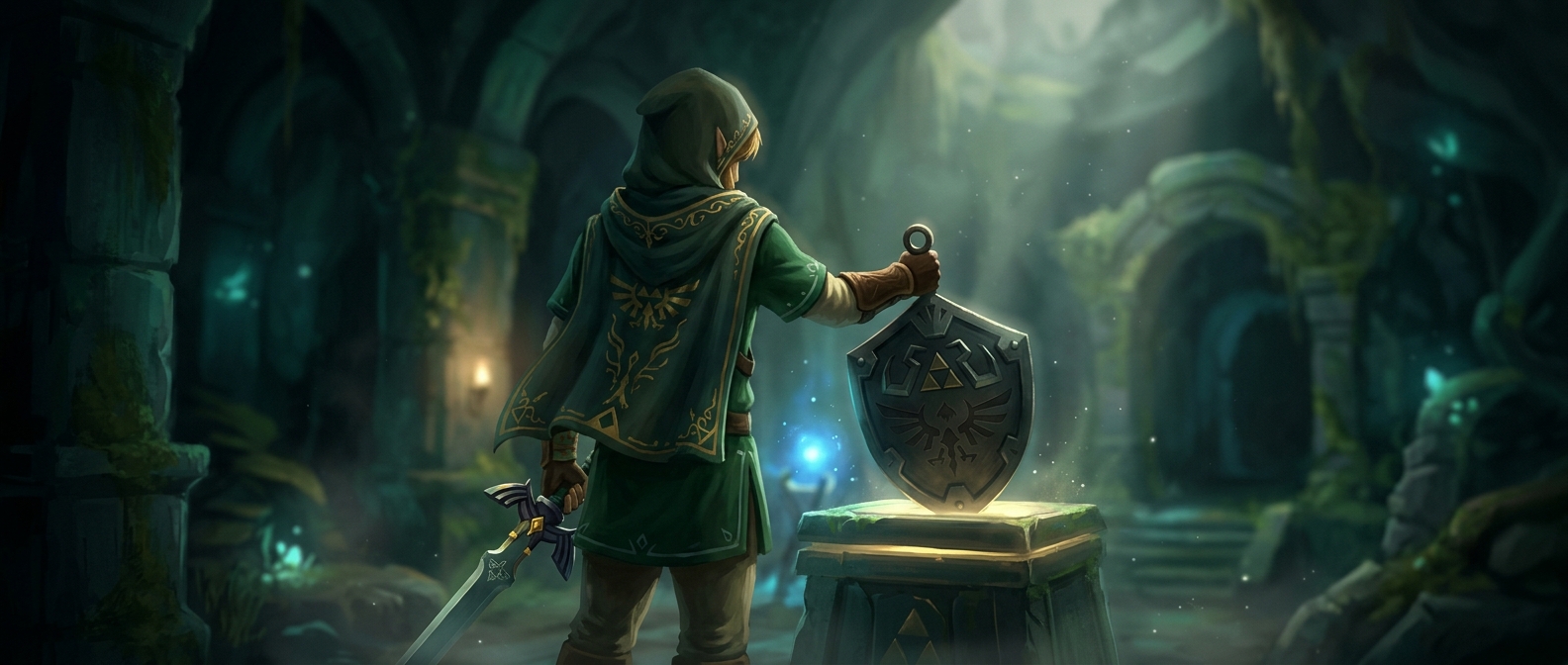
In early Legend of Zelda games, Link was commonly drawn holding his sword in his left hand. That choice gave the hero a distinctive visual trait, but it had little effect on play: pressing a button made him attack, whether the player was left- or right-handed.
Motion controls changed the equation. In the Wii version of Twilight Princess, players swung the Wii Remote to mimic a sword strike. Most players held that controller in their right hand, so keeping Link left-handed could make his on-screen swing feel like a mismatch with the player’s movement.
Mirroring the Game to Match the Player
The adaptation was more than a change in sword hand. The Wii release mirrored the game world, placing locations and landmarks on the opposite side from their positions in the original version. That let Link’s sword arm line up with the right-handed motion most players were making, while preserving the intended relationship between the player’s gesture and the action on screen.
Later games generally showed Link as right-handed, including titles built around motion-based swordplay. Once the character’s handedness became part of how the controls felt—not merely how he looked—the old left-handed design was no longer the obvious fit.
The shift is a small example of how a new controller can reshape a familiar character: a detail that once lived only in the artwork became part of the physical connection between player and game.