A fantasy built faster than the event
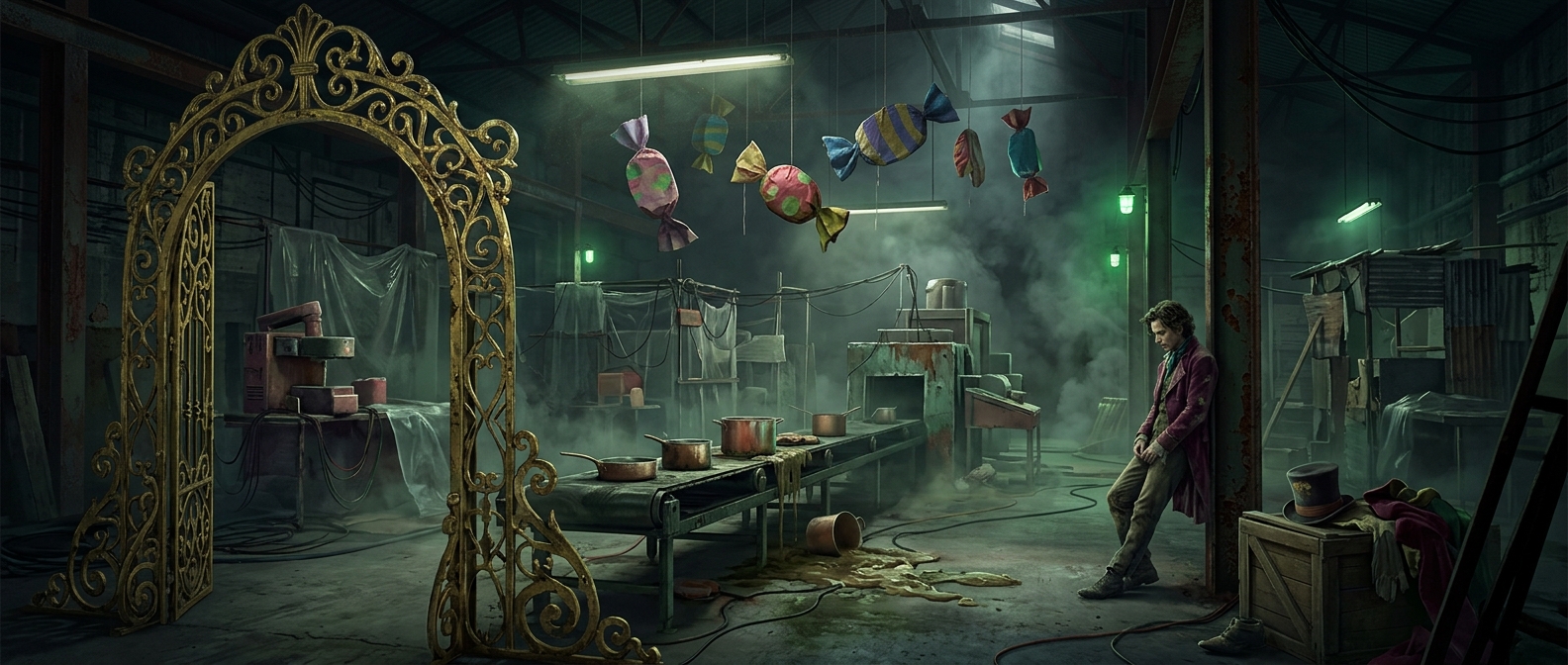
The Glasgow attraction marketed as Willy’s Chocolate Experience was sold as an immersive adventure: visitors would enter a fantastical chocolate world, meet costumed characters and enjoy treats. But the venue was a largely bare warehouse, dressed with a handful of decorations and props. The distance between the elaborate promise and the sparse setup was the event’s central failure—not simply a shortage of chocolate, but a breakdown in turning an advertisement into a real experience.
When the pictures set the wrong expectation
Promotional imagery presented a colorful, dreamlike setting, while the event itself offered little comparable scenery or activity. That mismatch mattered because families were not buying a standard ticket to a room with sweets; they were paying for an imagined sequence of surprises. Once children arrived, the empty space made the shortfall immediately visible, and staff had few attractions with which to bridge the gap.
The event’s name and chocolate-factory premise also invited comparisons with a familiar fictional world. Yet a recognizable theme can only carry an attraction so far: visitors still expect the venue, performers, activities and treats to support the promise together.
A public failure, not just a disappointing visit
As complaints grew, organizers ended the event early, and police were called amid the upset. The episode became a cautionary example of how quickly an experience can unravel when marketing raises expectations beyond what production can deliver. Refunds may address the ticket price, but they cannot undo the moment a child walks into a supposed fantasy and finds a mostly empty warehouse.