Color Is Set as a Hair Forms
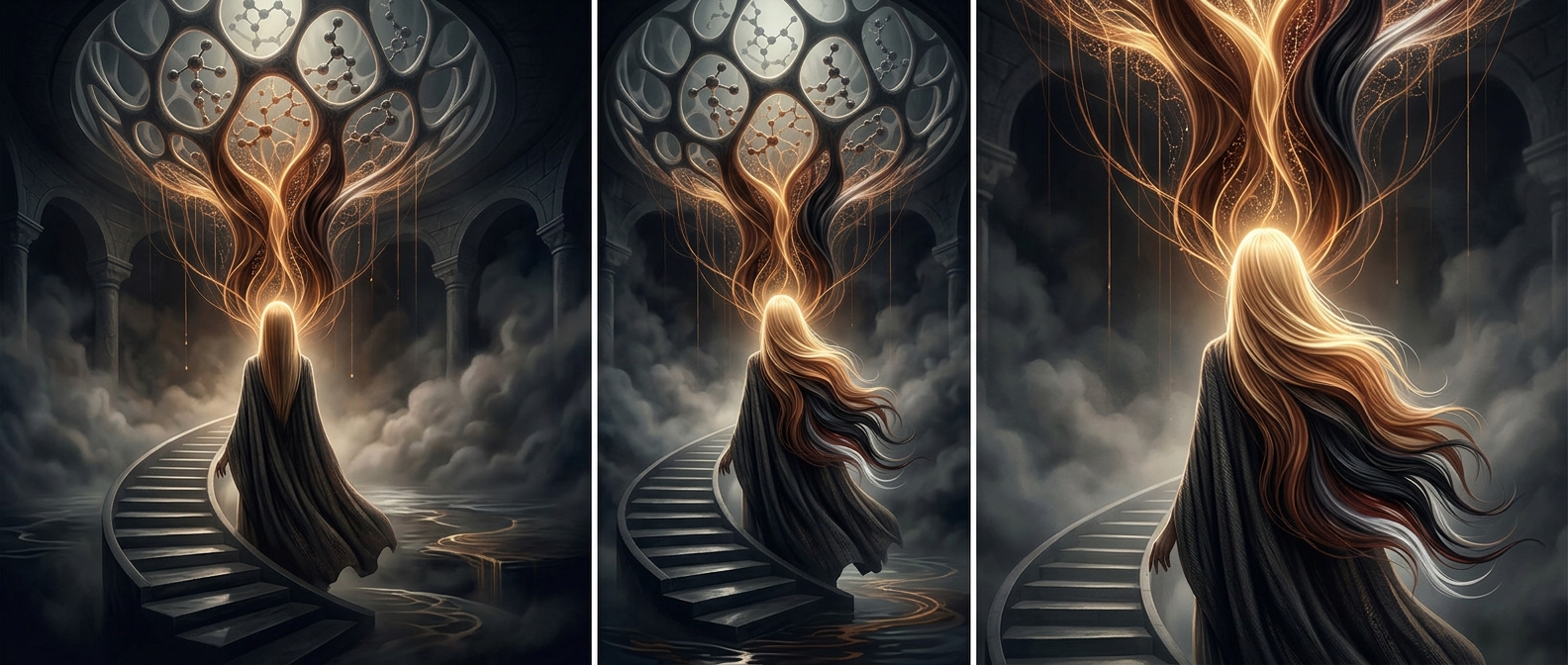
At the base of each growing hair, pigment-making cells called melanocytes supply melanin to the cells that build the hair shaft. As those cells move upward and harden into the strand, they carry pigment with them. The visible color is therefore established inside the follicle—not painted onto the finished hair.
The two pigment types are eumelanin, which appears brown to black, and pheomelanin, which appears yellow to reddish. A strand’s shade depends on how much pigment is made and the balance between the two. Inherited differences in pigment production help explain why people’s natural hair colors vary, even though their follicles use the same basic process.
Why Color Can Change
Pigment production can shift over a person’s life. With age, follicles may make less melanin or stop supplying it to new strands, so hair grows in gray or white. Existing hair does not turn gray from the root outward: the unpigmented portion grows in as the follicle produces it, while the older, pigmented length remains until it is cut or shed.
That also means a change in hair color usually reflects a change in what the follicle is putting into new growth. The root can reveal that change before the rest of a long strand catches up.