A vision expressed as physical closeness
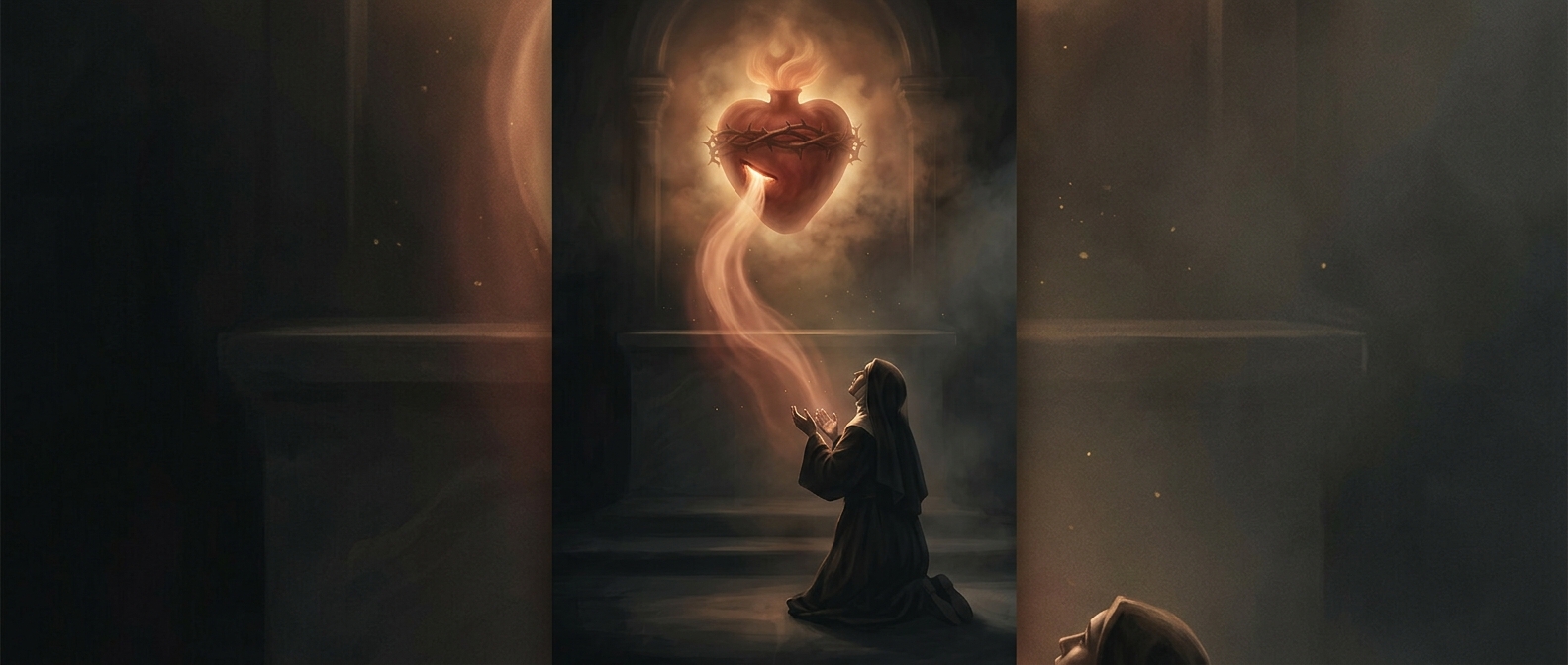
Margaret Mary Alacoque, a French nun whose reported visions helped shape devotion to the Sacred Heart of Jesus, described an encounter in which she was invited to put her mouth to the wound in Christ’s side. The image is startling because it turns an inward religious experience into an intimate bodily act: devotion is pictured not at a distance, but as contact.
What the wound represented
In Christian imagery, Christ’s side wound recalls the Crucifixion. In Sacred Heart devotion, the heart stands for Jesus’ love and compassion; the wound makes that love seem exposed and vulnerable. Drinking from it can be understood within this devotional language as receiving that love—an image of closeness and spiritual nourishment, not a claim about an ordinary physical event.
That kind of vivid, sensory expression is characteristic of mystical writing, which often describes spiritual experience through the body: seeing, touching, tasting, or being embraced. Such language makes an abstract relationship with the divine imaginable, while its intensity can unsettle readers who expect religious devotion to be less physical.
Why the detail endures
The episode compresses the emotional logic of the devotion into one image: the wound is both the mark of suffering and an opening through which divine love is received. Its force lies in that reversal—what signifies injury becomes, in Margaret Mary’s vision, a source of intimacy and nourishment.