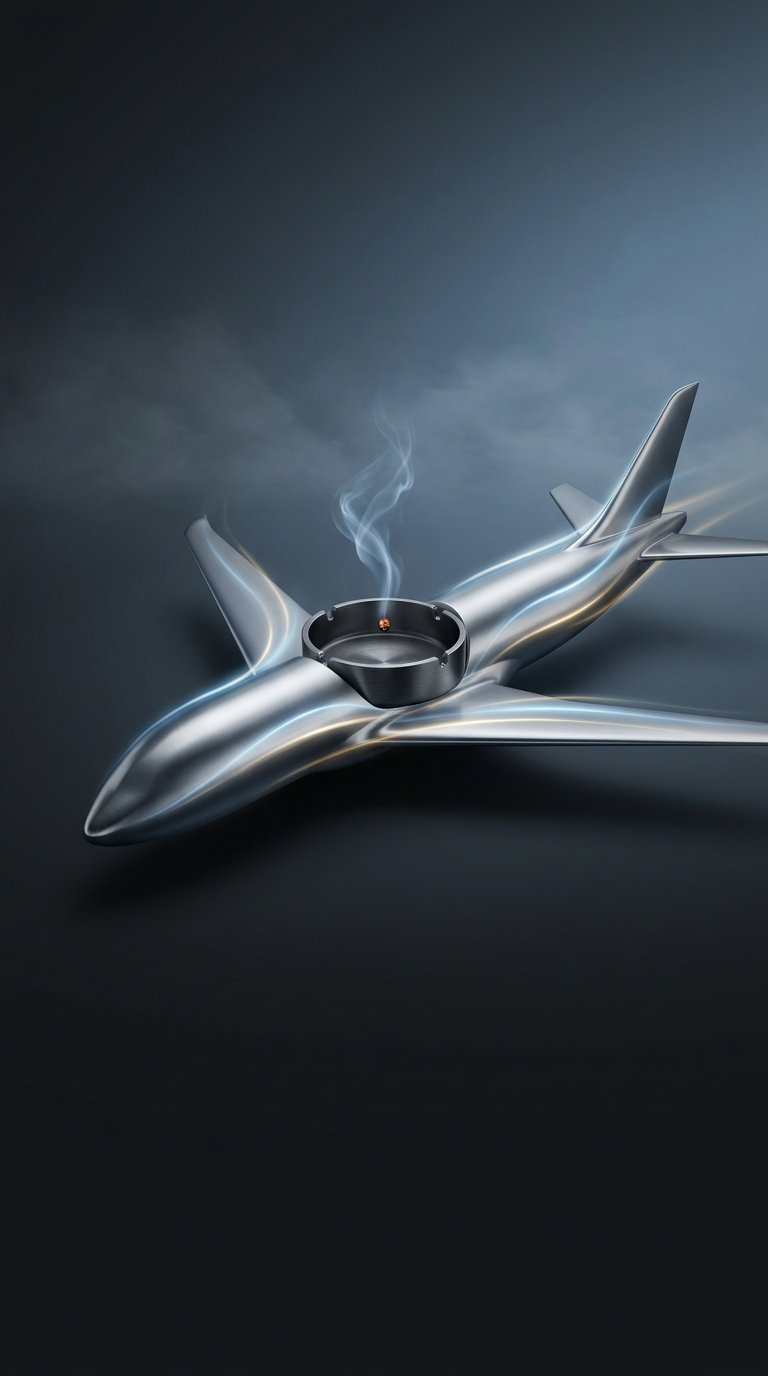
Why Airplane Lavatories Still Have Ashtrays
An ashtray on a lavatory door is a fire-safety measure for a rule-breaking passenger, not permission to smoke. Aviation standards require the fixture because a ban cannot guarantee that nobody will light a cigarette. Designers have to account for foreseeable misuse as well as normal operation.
The Dangerous Alternative Is the Trash Bin
A lavatory waste bin may contain paper towels and other easily ignited rubbish. Drop a lit cigarette into it and an ember can start a fire inside a confined compartment, where it may be harder to spot immediately. A purpose-built ashtray gives the smoker a designated place to stub out and contain the cigarette instead.
That does not make smoking safe or acceptable: the ashtray is a last-resort safeguard against a more dangerous way of disposing of a burning cigarette. The aircraft still relies on its other fire protections, including waste-bin design and lavatory smoke detection.
A Small Fixture With a Narrow Job
The ashtray’s presence reflects a basic principle of safety engineering: plan for likely human mistakes, not just ideal behavior. Its job is limited but consequential—keep a lit cigarette out of combustible waste. Even on an aircraft where smoking is prohibited, that small bowl remains there in case someone ignores the prohibition.