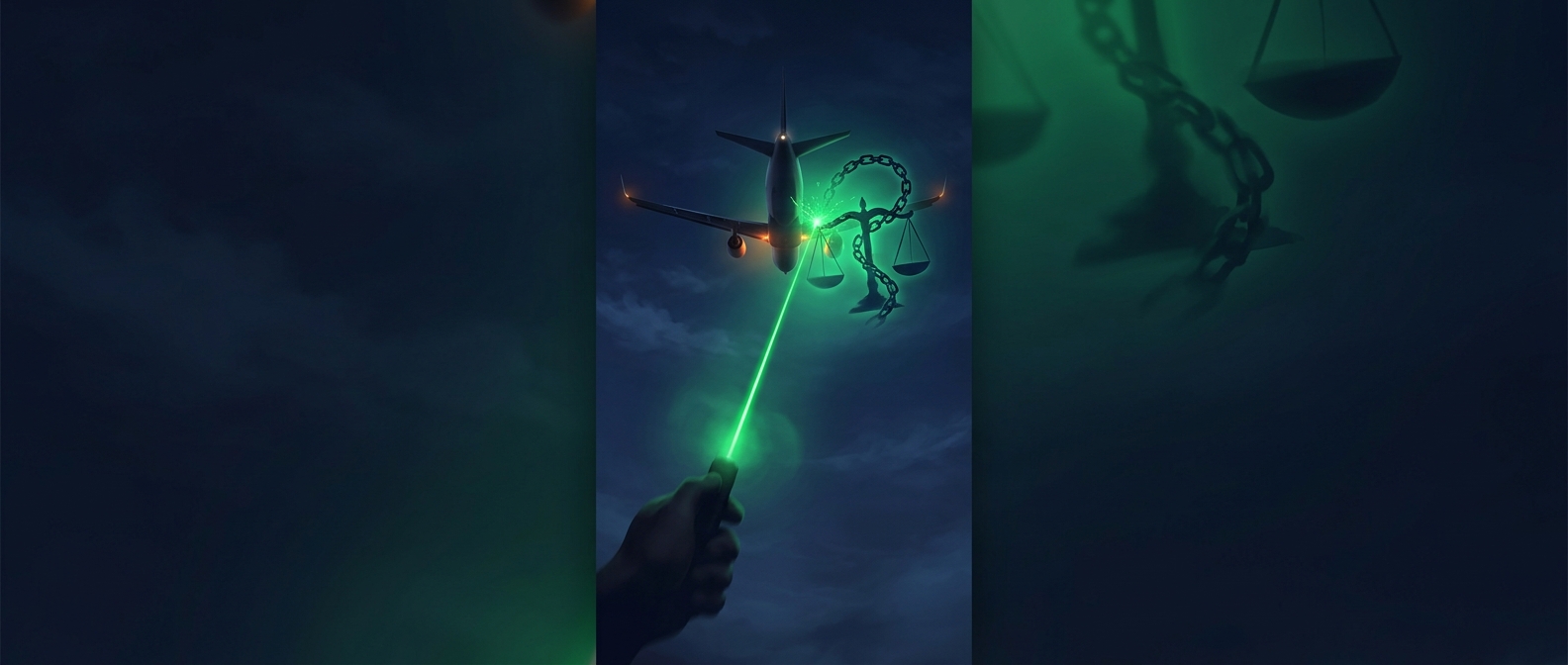
Why a Small Beam Can Disrupt a Flight Deck
A laser does not have to physically touch an aircraft to create a hazard. Its light can enter the cockpit through the windshield and scatter inside the eye, producing glare that briefly makes it harder to see. A bright exposure may also leave an afterimage—a lingering patch of light that obscures part of a pilot’s view even after the beam has moved away.
The risk depends on where the aircraft is in its flight, how bright the beam is, and how long the cockpit is illuminated. During takeoff or landing, pilots are closely monitoring the runway, instruments, and other traffic. A sudden flash can interrupt that visual work and demand attention at a moment when there is little spare time.
Why Authorities Treat It as an Aviation Offense
Aircraft are moving targets, and a person on the ground may not know exactly where the beam will land as the plane passes. Even a handheld pointer can reach a cockpit from far away; the danger comes from the light entering pilots’ eyes, not from the device being powerful enough to damage the aircraft itself.
U.S. federal law makes knowingly aiming a laser pointer at an aircraft a crime. The rule reflects a practical distinction: pointing a laser at an aircraft is not merely a nuisance to someone on the ground. It can interfere with the people responsible for keeping a moving aircraft safely on course, especially during the most demanding parts of a flight.