Why a Service Cart Can Hit So Hard
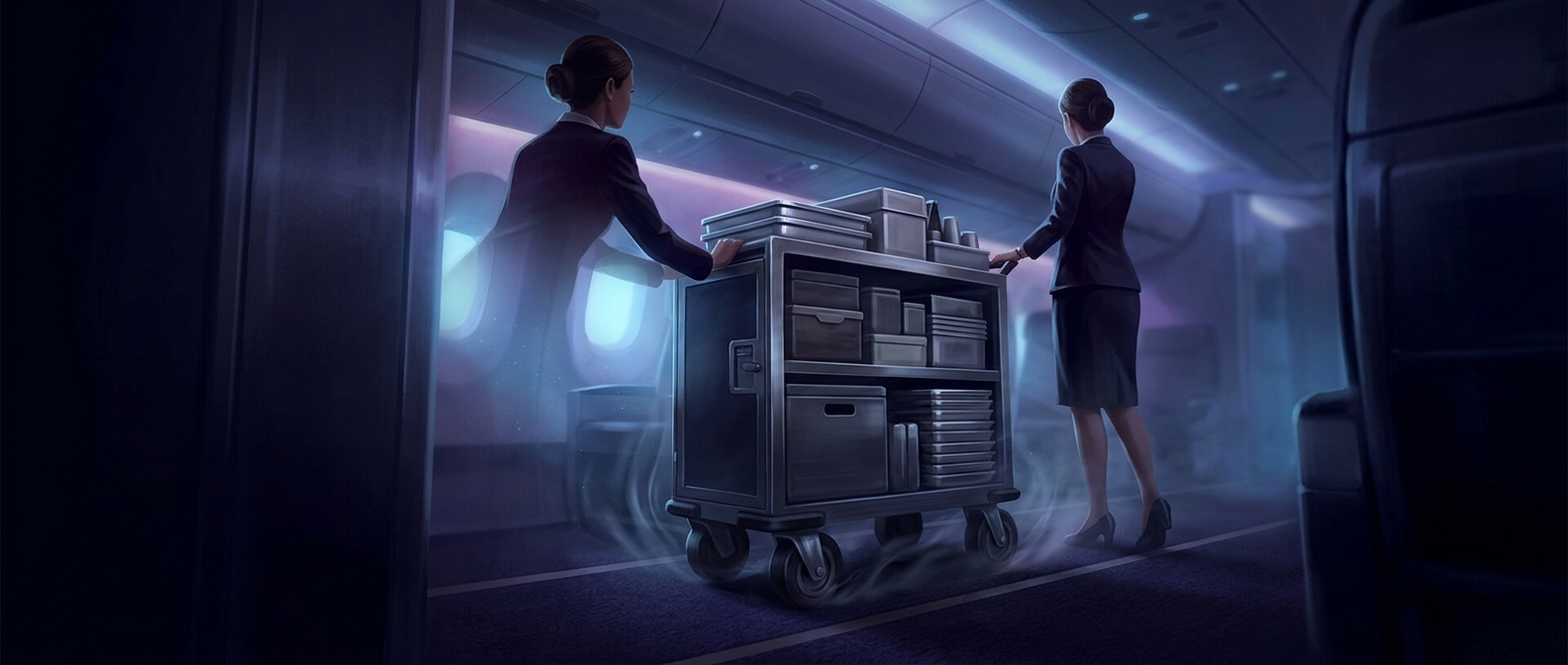
An airplane’s snack cart is light enough to maneuver when empty, but its contents add up: drinks, ice, and packaged items all ride on a small frame with wheels. At full load, the cart can weigh around 200 pounds. That mass matters most when the cart is moving. If it rolls into a passenger’s foot, it carries more momentum than its size suggests—and the tight aisle leaves little room to step aside.
The Aisle Is a Moving Work Zone
Cabin crew push the cart while navigating around seated passengers, armrests, and other obstacles. The cart’s wheels make it easier to move, but they also mean it can keep rolling if it is not held or secured. A quick stop, an unexpected jolt, or a slope in the aircraft floor can make control harder; the cart’s weight does not disappear just because the plane is cruising smoothly.
That is why carts are handled as equipment, not simply as rolling cupboards. Crew members keep them under control during service and secure them when they are not in use, especially when the cabin must be prepared for takeoff, landing, or turbulence. The same compact design that lets a cart pass down a narrow aisle concentrates a substantial load in a narrow space—so a small collision can hurt, even without a dramatic crash.