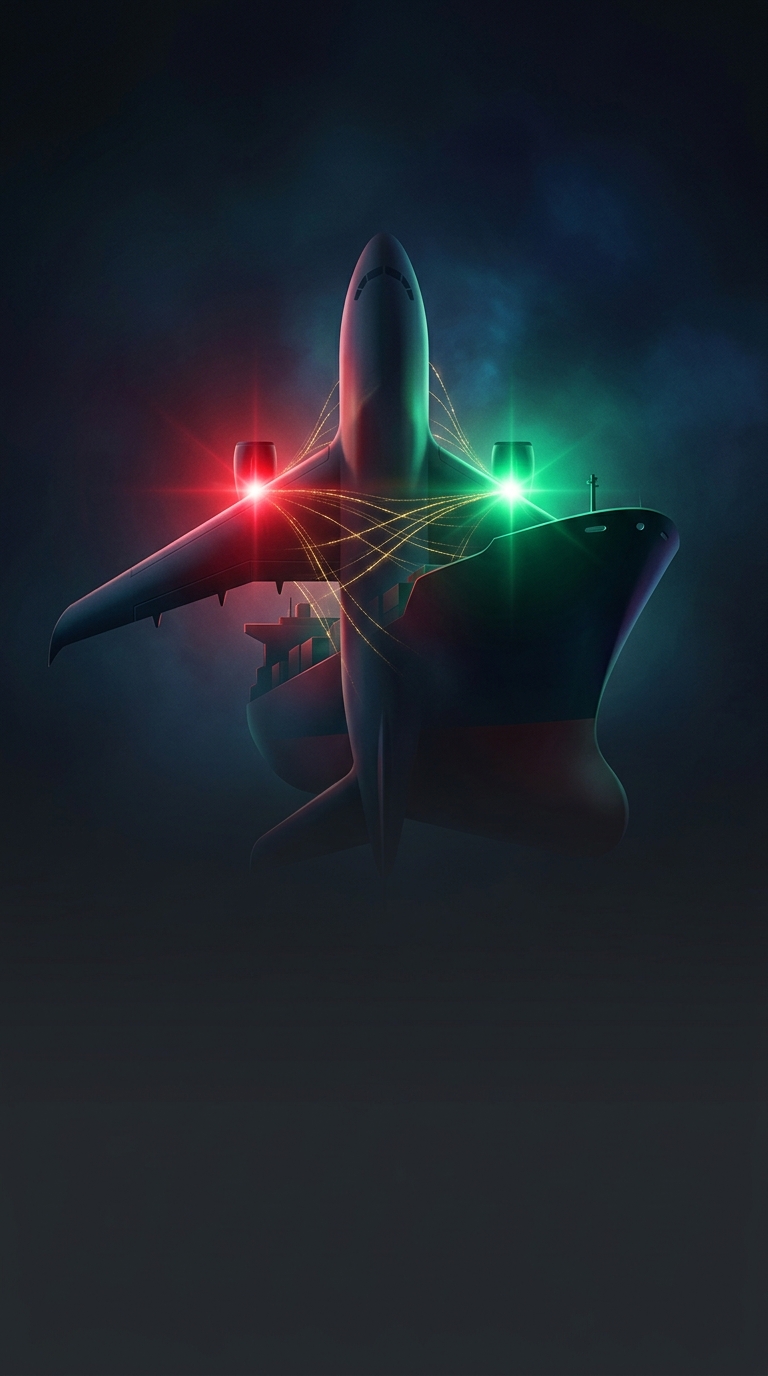
Two colors make a vehicle’s orientation visible
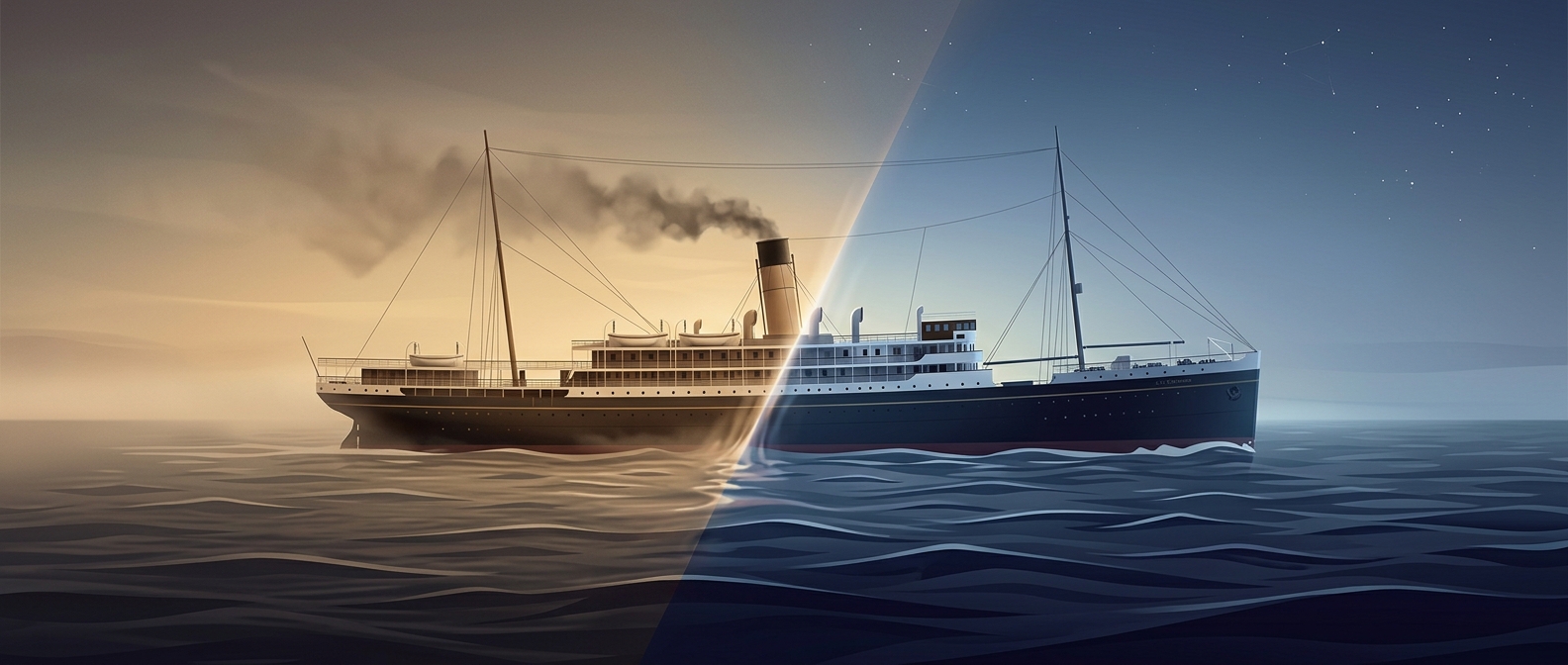
At night, distance and darkness can make it hard to tell which way a moving vehicle is pointed. Red and green lights solve that problem by marking its left and right sides in a consistent way: red is on the left, green on the right, when viewed from the vehicle’s direction of travel. In ships, those sides are called port and starboard.
The lights are aimed outward through defined viewing angles, rather than shining equally in every direction. So an observer can tell which side is facing them. If you see a ship’s red light, you are looking toward its port side; green means you are looking toward its starboard side. Seeing both colored lights can indicate that the vessel is approaching roughly head-on.
A shared rule, adapted to different vehicles
On a ship, the colored lamps sit at the sides, while separate white lights help show the vessel’s position and direction. On an airplane, red and green lights are mounted near the wingtips, with a white light often marking the rear. The arrangement is different, but the basic idea is the same: give other pilots, sailors, and observers clues about orientation without needing to see the vehicle’s shape clearly.
The colors are useful because they reduce ambiguity at the moment it matters. A white light alone might reveal that something is there, but not which way it is moving. A red or green light adds a quick directional clue, helping crews judge how another vehicle is positioned and whether their paths may cross. That simple color code lets aircraft and ships share crowded nighttime routes more safely.