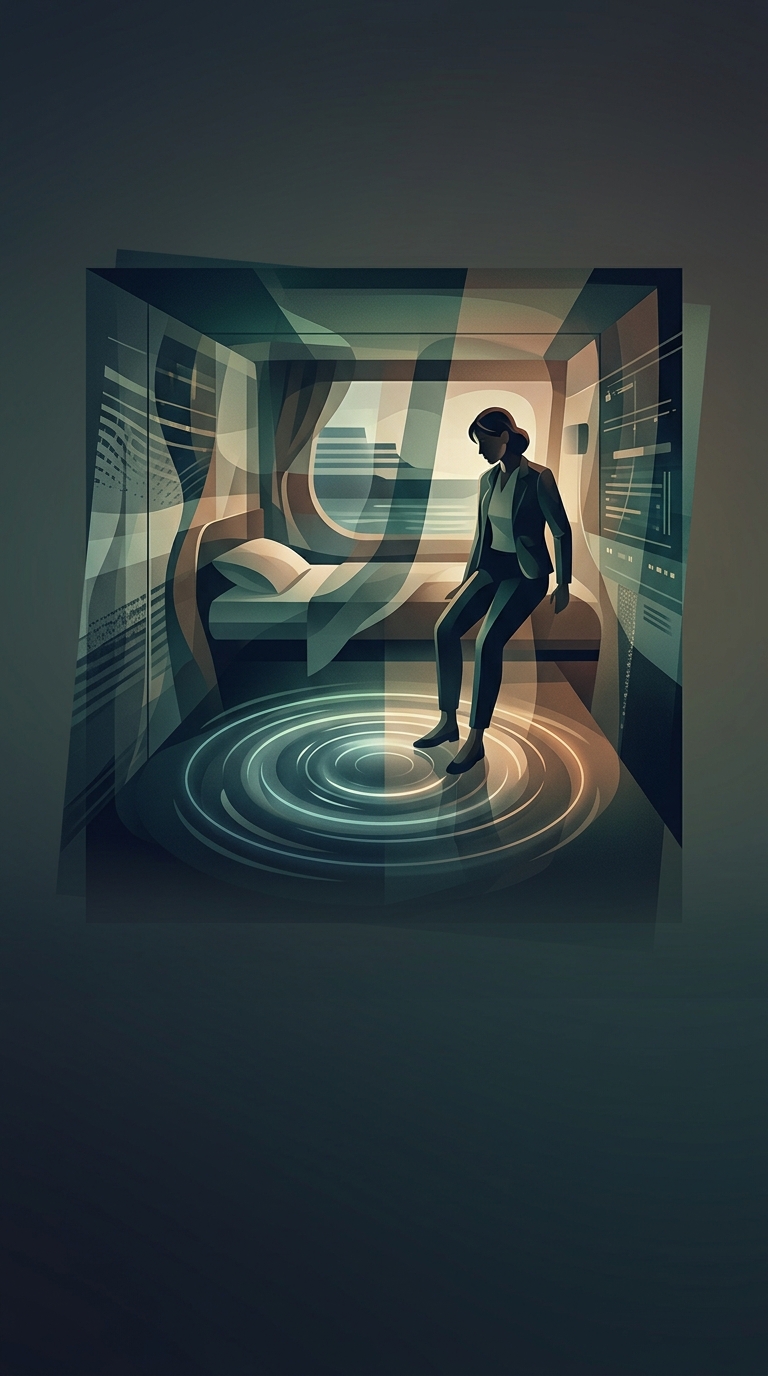
Why an Interior Cabin Can Feel Worse at Sea
A ship moves in several directions at once: it can roll from side to side, pitch bow to stern, and heave up and down. The balance organs in your inner ear register those motions even when you are lying still. But inside a cabin with no view outside, your eyes may see a room that appears motionless. That mismatch—movement sensed by the body, but not seen—can contribute to nausea and dizziness.
The Horizon Gives Your Brain a Reference
In a lounge or dining room with broad windows, a visible horizon helps the brain interpret the ship’s movement. It does not stop the motion, but it supplies a visual cue that can make the sensations easier to reconcile. In an interior cabin, there may be no such reference, and reading or looking at a nearby screen can reinforce the impression that everything is still while the inner ear says otherwise.
That is why some passengers feel notably worse in their cabins than in spaces where they can see outside. It is not a rule: people vary, and a window does not guarantee relief. Nor is the cabin necessarily where the ship moves most. Motion is generally more pronounced higher up and farther from the ship’s center, so cabin location matters too.
A Small Change in View Can Matter
When seasickness starts, going somewhere with a view of the horizon—and looking toward it rather than down at a book or phone—can give the brain more useful information about the ship’s motion. The contrast is striking: the same rolling vessel may feel more manageable when you can see it moving, and more disorienting when your cabin hides that movement from view.