A web of lines, each with a different job
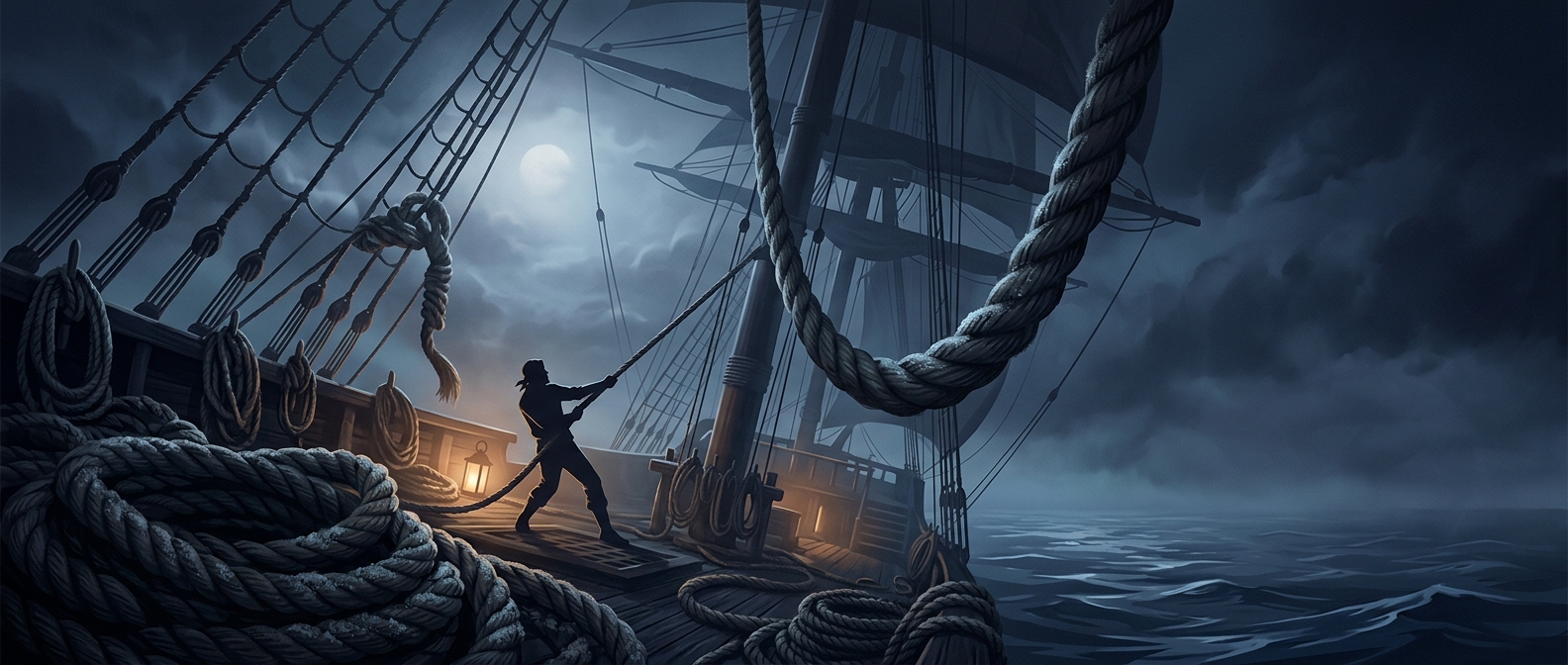
A sailing ship’s rigging was not one rope system but many overlapping ones. Some lines held the masts steady against the pull of the sails; others moved sails and spars, or changed a sail’s angle to catch the wind. Because each line served a particular purpose, a large ship could carry an intricate network running from high above the deck down to sailors’ hands.
The loads could be enormous. Wind pushed against broad sheets of canvas, and the sail transferred that force into its ropes, fittings, and mast. Lines that supported the structure had to endure constant strain, while working lines also had to slide, tighten, and be released on command. A rope could be strong yet still wear through where it rubbed against wood or another line.
Why blocks made the system workable
A block is a pulley: a grooved wheel held in a frame, with a rope running around it. Several blocks used together let sailors pull a longer length of rope with less force, though the line had to travel farther. That tradeoff mattered when a crew needed to raise or adjust heavy canvas using human muscle. Blocks could also redirect a pull, letting sailors work from a safer or more convenient position on deck.
The ropes therefore made the ship adjustable as well as strong. Sailors could alter the shape and angle of sails as wind and weather changed, rather than relying on a fixed arrangement. In a storm, they could reduce exposed sail area by securing or lowering canvas—a demanding task made possible by the rigging’s many separate controls.
Rope was part of the ship’s maintenance burden
Rigging needed continual inspection because chafing, damp, and weather could weaken it gradually. A damaged line was not merely a loose end: it could compromise a sail, a mast support, or the crew’s ability to control the ship. The practical consequence was that a sailing vessel carried a vast working system that had to be understood, operated, and repaired. Its mobility depended not just on wind, but on keeping that network of lines ready to turn wind into controlled motion.