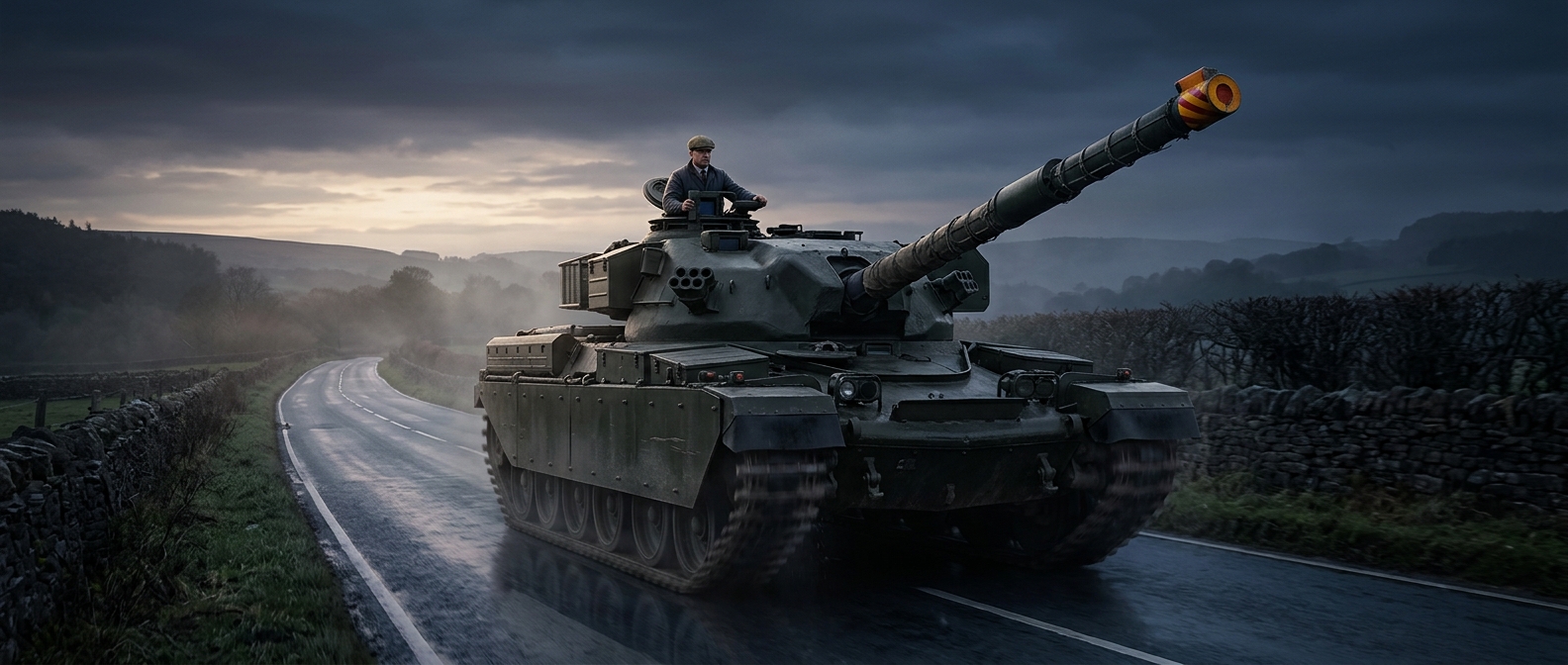
A tank needs more than permission to leave the field
In Britain, a vehicle is not automatically barred from public roads because it is a tank. But “legal to drive” means the particular vehicle must meet the requirements for road use, including registration and the appropriate equipment. The distinction is between a vehicle’s unusual design and whether it has been prepared and approved to travel on a public highway.
One important adaptation is fitted to the tracks. Bare metal track links can gouge or scar ordinary road surfaces, so road-going tanks use protective pads over the parts that contact the ground. The pads reduce damage; they do not make a tank light or nimble.
The road still sets the limits
Tracks spread a vehicle’s weight across a broad contact area, which helps it move over soft ground. On pavement, though, the tank’s mass, width and slow, cumbersome handling create different problems. A narrow street or a tight turn can be a bigger obstacle than the road surface itself, and a route suitable for cars may not be suitable for a tracked vehicle.
That is why road equipment is only part of the story: a tank must also be registered and used in a way that complies with the rules applicable to that vehicle. The practical result is a striking exception, not an everyday traffic option. A tank can make a supermarket trip legally possible, but its tracks, dimensions and bulk make the journey anything but discreet.