Why bagpipes can be a problem on a Scottish bus
A bus is a small, enclosed space where passengers cannot easily move away from a loud sound. Bagpipes are built to carry: a steady flow of air keeps several reeds sounding together, producing a strong, continuous tone rather than a brief burst of music. Inside a crowded bus, that sound can dominate conversation and make it harder for passengers to hear the driver or announcements.
A driver’s discretion protects the ride
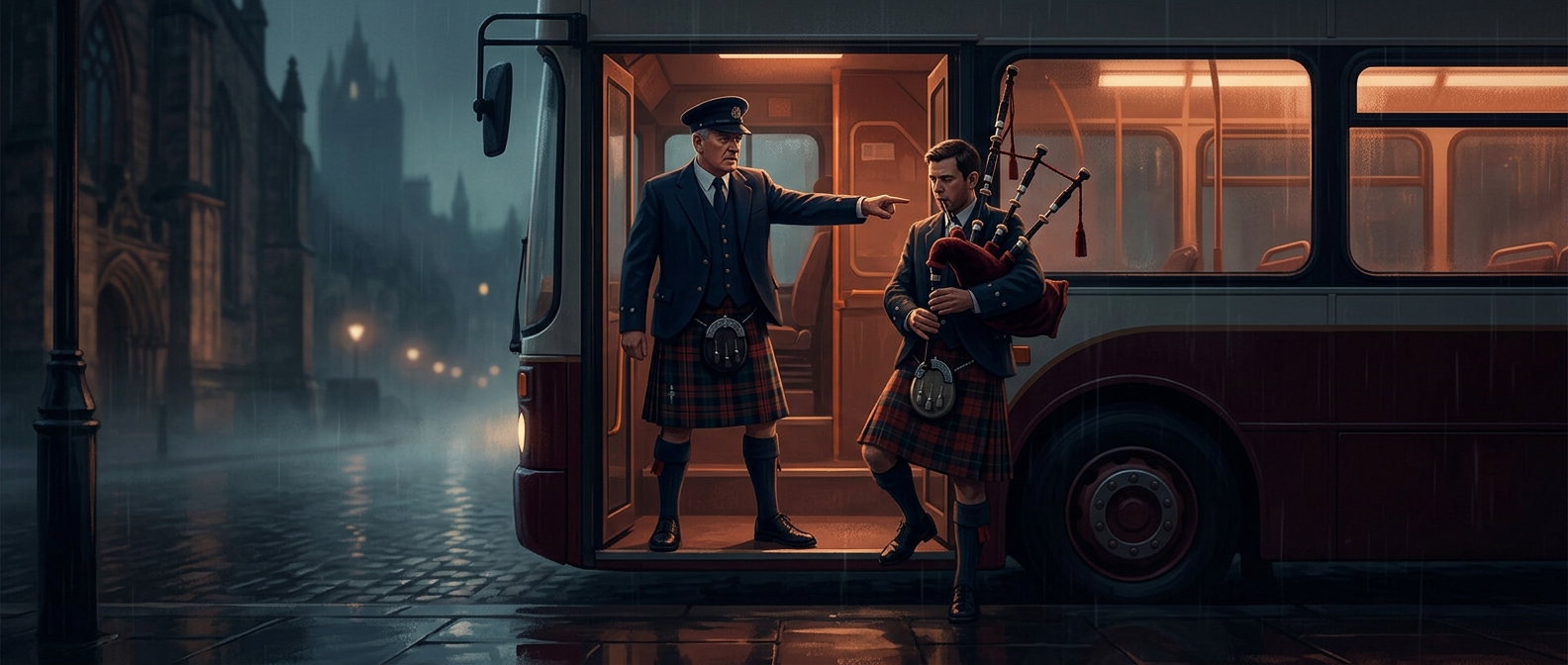
Transit rules allow drivers to refuse passengers who intend to busk with bagpipes. Busking means performing in a public place, often to entertain passersby or collect money. On a bus, however, passengers are a captive audience, and the driver is responsible for keeping the journey safe and manageable.
That makes the rule practical, not a judgment about bagpipes as music. A driver may need to communicate clearly, while passengers may be standing close together with few ways to escape an overwhelming performance. The key issue is the combination of sustained volume and a confined cabin. The pipes can be welcome in an open street, yet unsuitable on a vehicle where everyone has to share the same small space.