Why a Horse-Drawn Wagon Could Become a Street Hazard
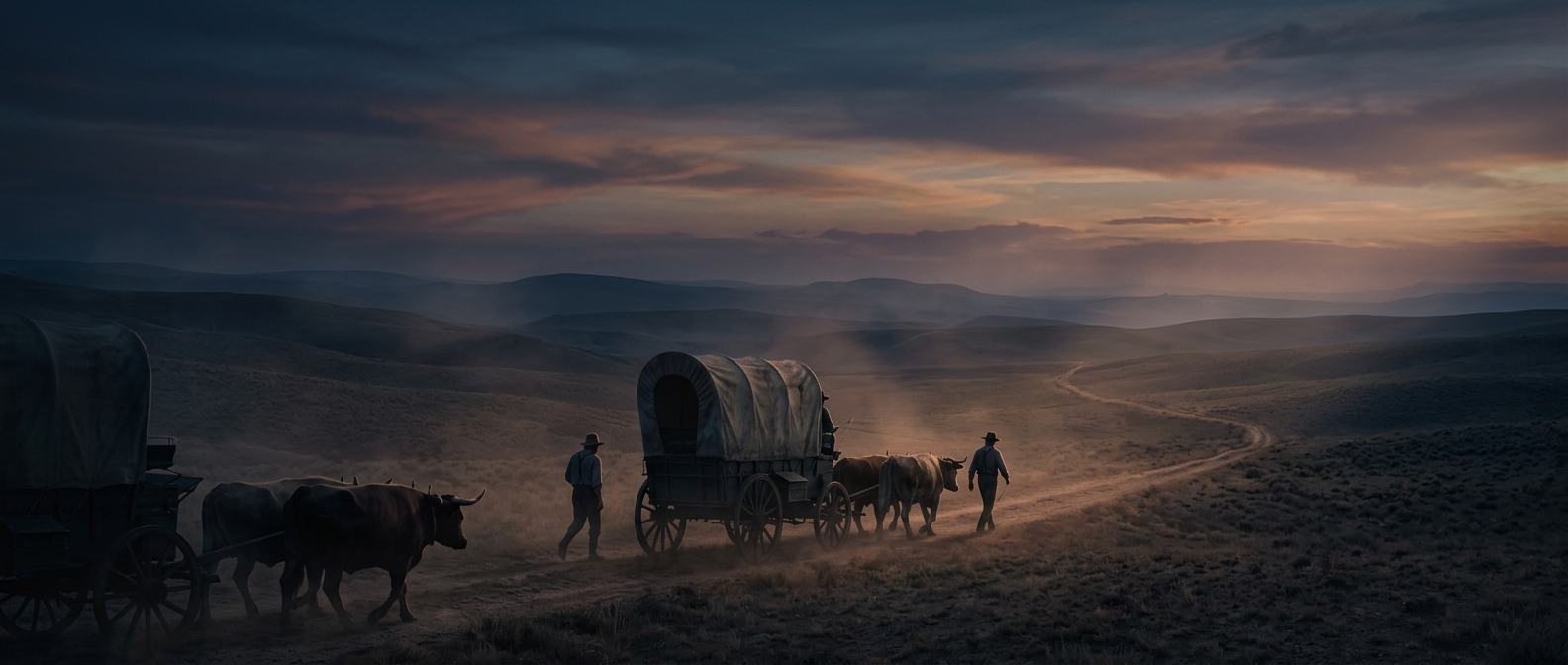
A wagon did not need an engine to gather dangerous speed. Once a loaded vehicle started rolling downhill or a team of horses began pulling hard, its weight and momentum made it difficult to stop quickly. In a crowded settlement, that left little margin for pedestrians, other carts, or a sudden turn.
The danger was not speed alone but speed paired with limited control. Drivers could not brake as precisely as modern motorists, and a horse team needed room to respond. A reckless driver could therefore turn an ordinary street into a place where people had little time to get out of the way.
Making Recklessness Cost Something
New Amsterdam’s 1652 rule addressed that risk through a penalty. Instead of relying only on warnings or expecting a driver to judge what was safe, officials could attach a cost to reckless driving. That made the rule practical to enforce: a horse team’s power did not give its driver permission to treat public streets as a racecourse.
The measure reflects a basic transport problem that persists across eras. A street is shared space, and the person controlling a fast-moving vehicle can impose danger on everyone nearby. In New Amsterdam, the vehicle was a wagon and the power came from horses; the need to restrain reckless operation was already familiar.
A Rule for Streets, Not Just Drivers
The law’s significance lies in treating unsafe driving as a public concern rather than merely a private risk. When a driver lost control, the consequences could fall on bystanders who had no say in how the wagon was driven. Putting a price on reckless behavior gave the settlement a way to protect those people—and established an early North American precedent for regulating how fast-moving traffic used the street.