Why the travelers walked beside the wagon
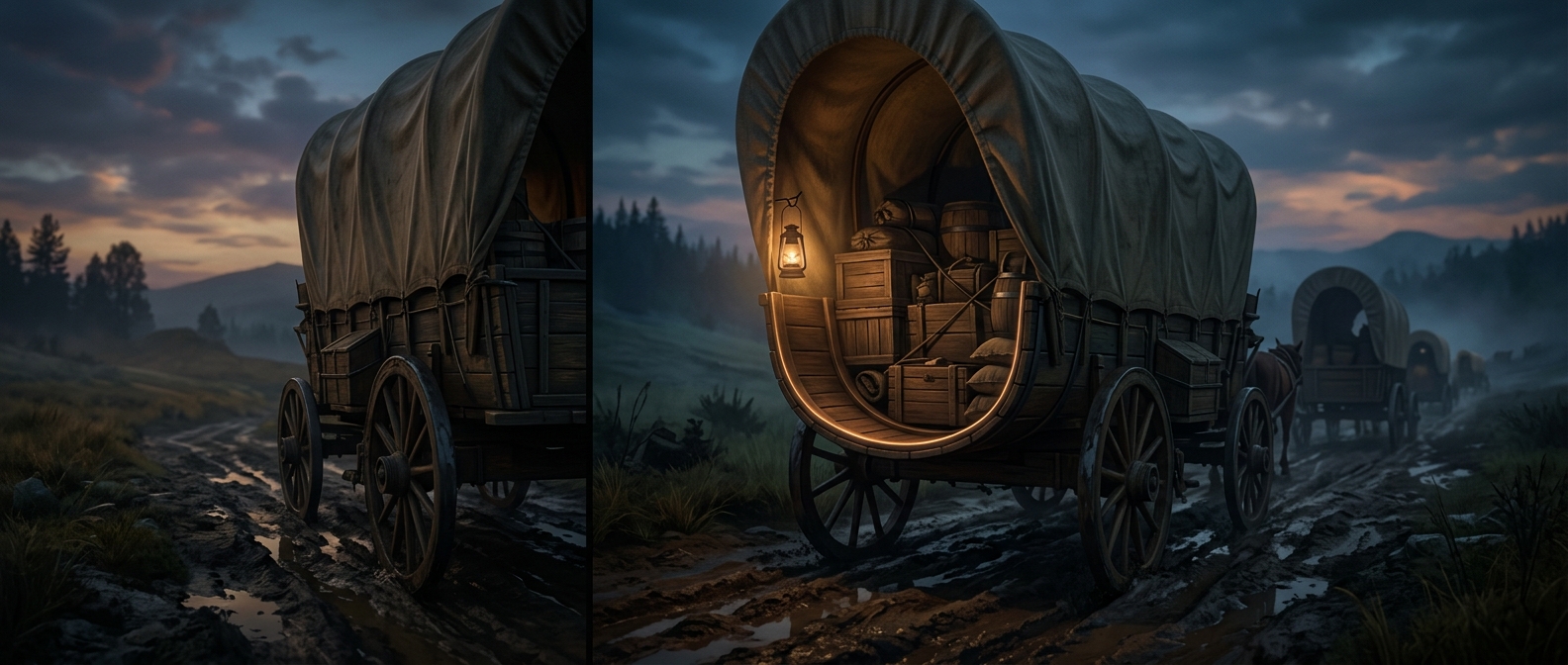
A loaded wagon was already a heavy job for the animals pulling it. Food, tools, bedding, and cooking gear all added weight; people riding inside would add more. On a rough trail, that extra mass mattered whenever wheels sank into soft ground, bumped over rocks, or had to climb a slope. The animals had to overcome not just the wagon’s weight but the resistance of its wheels against the terrain.
Walking kept the travelers’ own weight off the wagon. It did not make the journey easy: the people still had to cover the same ground on foot, often near the animals and cargo. But it reserved the wagon’s pulling capacity for supplies that could not conveniently travel any other way.
A rolling household, with strict limits
The wagon served as both transport and storage. Its cargo had to last between places where provisions or repairs might be available, so leaving food, tools, and household necessities behind was not a simple option. The practical choice was to carry those essentials and have the people walk.
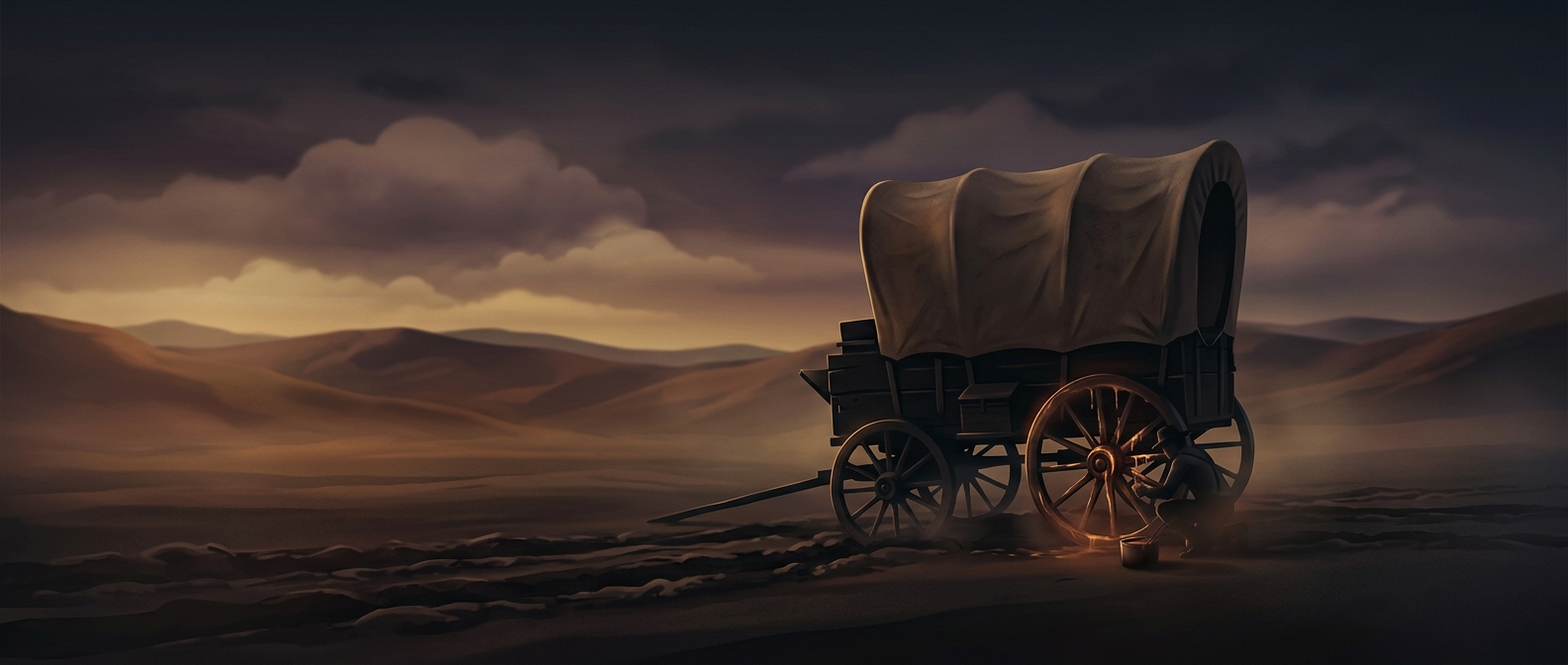
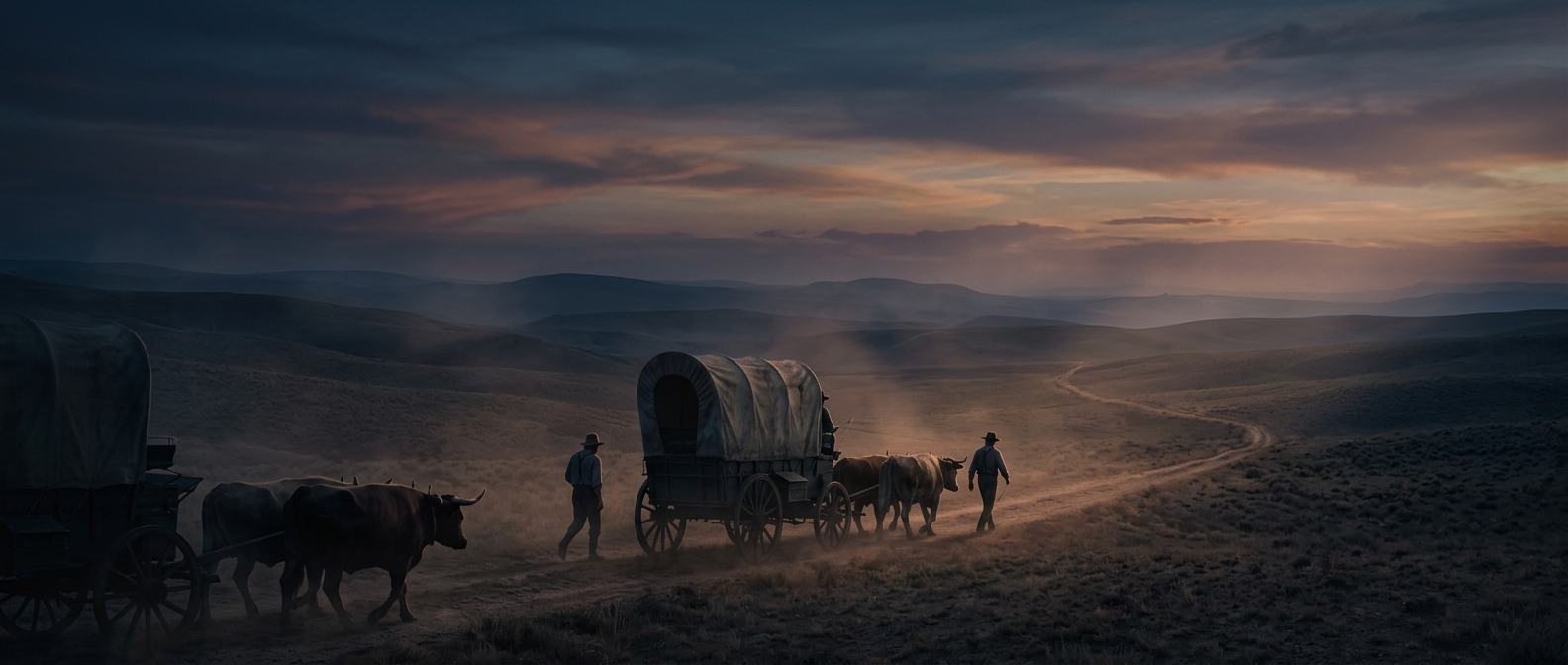
That arrangement also shaped the pace of travel. A wagon could not move faster than its team could pull it over the trail, and a difficult stretch could demand extra effort from both animals and people. Each mile was therefore a balancing act: carry enough to sustain the journey, but avoid burdening the team with weight that could be left off. The image of travelers on foot beside their wagon captures the central tradeoff of overland travel: the household moved together, but the animals did the hauling.