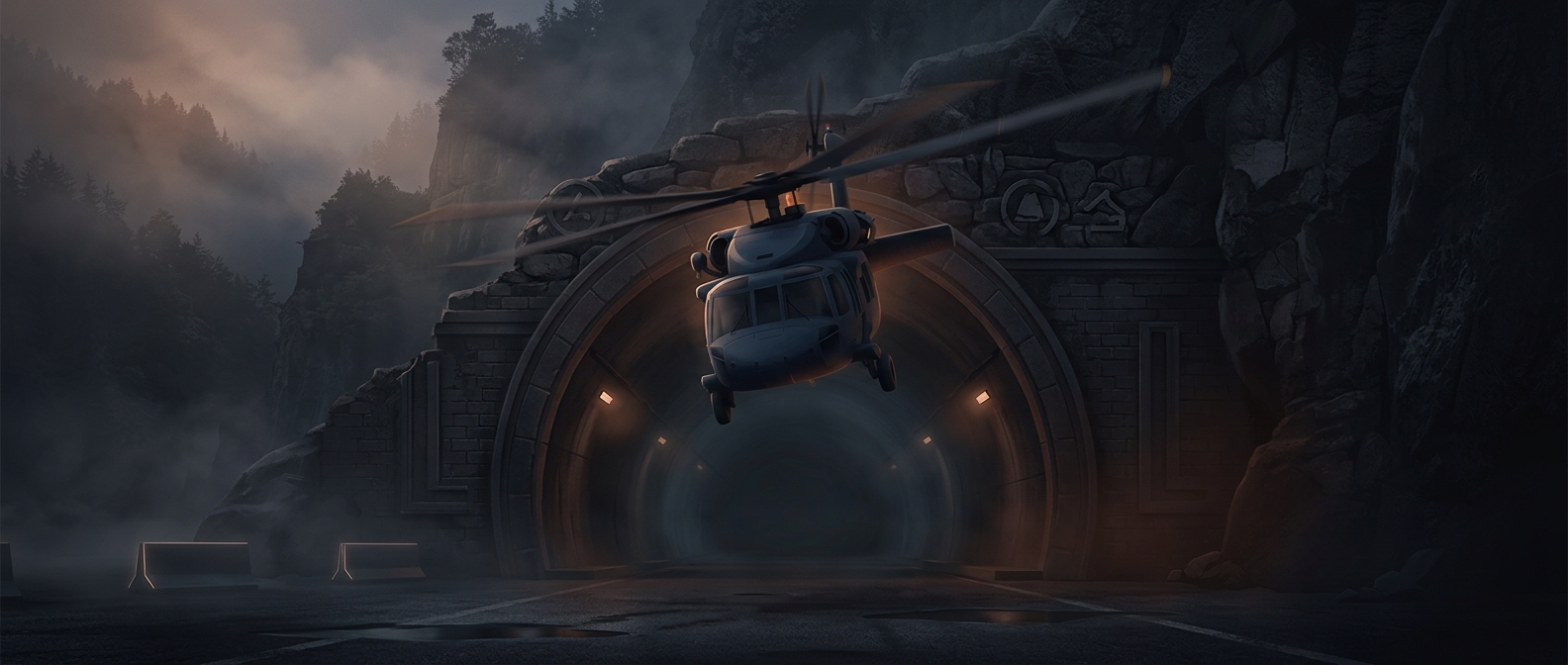
A Tunnel Gives a Helicopter Almost No Margin
A helicopter’s rotor is not just a propeller above the cabin: it sweeps a broad horizontal disk that must keep clear of walls, ceiling, and road. In the Lincoln Tunnel, the roadway is enclosed and sized for vehicles, leaving no practical space for that spinning disk to pass safely. Tilting or banking the aircraft would not solve the problem; it would bring the rotor closer to the tunnel’s surfaces while the helicopter still needs room to control its position.
Rotor Wash Makes the Enclosure Worse
The rotor pushes air downward to lift the helicopter. In open air, that flow can spread away. Inside a tunnel, it would strike the pavement and walls, then churn back around the aircraft. This disturbed airflow—often called rotor wash—could buffet the helicopter and make precise control harder, especially with little room to correct a drift.
The tunnel also offers no safe margin for an error. A car can stop or steer around trouble; a helicopter needs continuous clearance for its blades and a place to land if something goes wrong. Traffic, tunnel infrastructure, and the confined approach leave no suitable emergency landing area.
Built Around a Different Kind of Clearance
Tunnel design balances vehicle dimensions, structural space, ventilation, and safe traffic flow. It does not reserve an open vertical shaft for aircraft. Even if a helicopter could be imagined moving through the roadway, the spinning rotor and turbulent air make the tunnel an unsafe flight corridor, not merely a tight fit. That is why the Lincoln Tunnel is a route for road vehicles, while helicopters need open air and room to maneuver.