Why a Movie Needed a Projectionist at 30,000 Feet
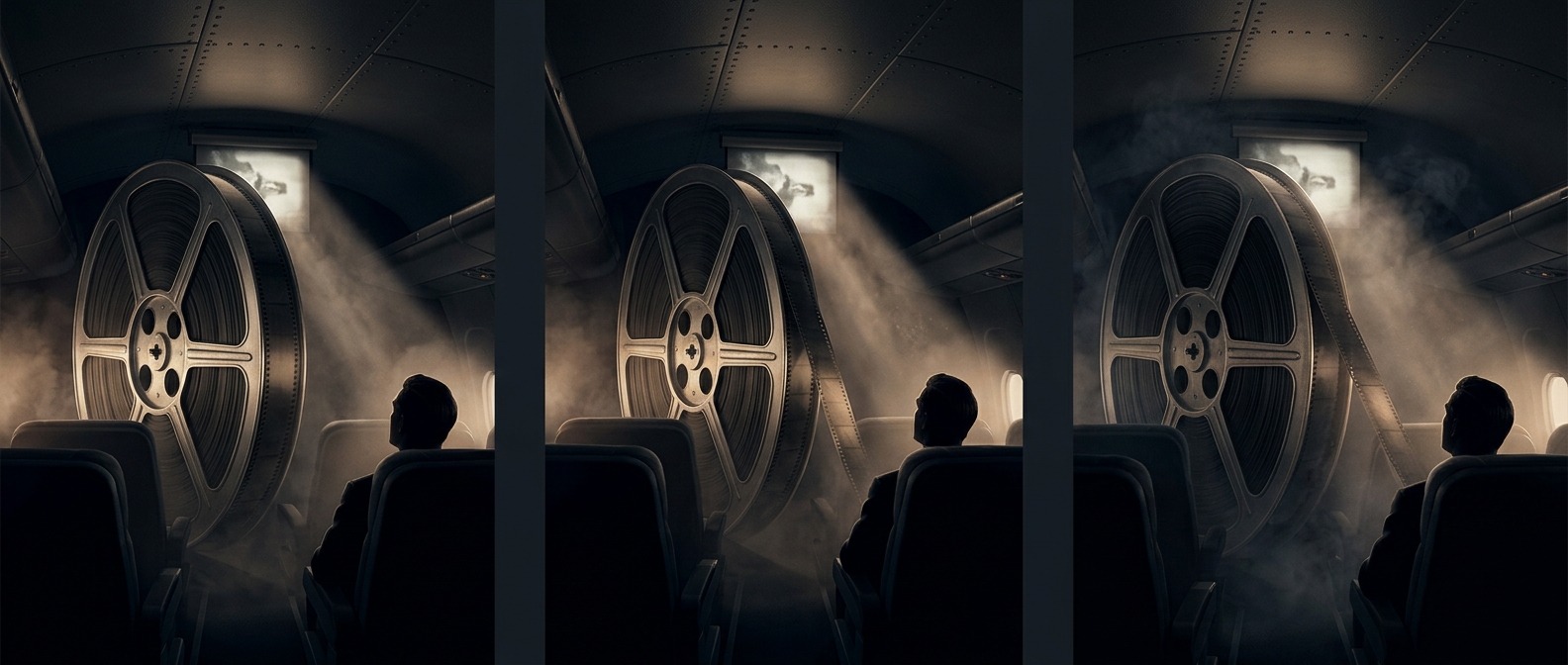
Before digital files made onboard entertainment easy to distribute, an airline movie was a physical object: a long strip of 16-millimeter film that had to be carried, threaded through a projector, and kept moving at a steady speed. The projector cast the image onto a screen at the front of the cabin, so passengers watched together rather than choosing separate screens.
A feature film could not fit on one small reel. As the film ran out, the projectionist had to switch to the next reel, matching the frames closely enough that the story continued without a distracting jump. That made the job part technician, part timekeeper: a missed change could interrupt the movie, while a snag or break could stop it altogether.
The Aircraft Made the Setup More Complicated
Projectors and reels took up space and added weight, both costly on an aircraft. The equipment also needed a secure mounting and a power supply, and its moving parts had to keep working amid vibration and the practical constraints of a crowded cabin. A fixed screen meant the whole cabin shared one program; passengers could not pause it, choose another film, or control the volume individually.
The arrangement turned a movie into a scheduled cabin event. The crew had to coordinate the screening with the flight, and passengers had to be in their seats and ready when it began. Every showing depended on a person physically handling the film as it played.
From Reels to Individual Screens
Later systems could distribute entertainment without asking a projectionist to change reels in front of a cabin. As screens and digital playback became more practical, airlines gained the option of offering programs on demand, letting passengers watch different things at different times.
The old setup is a reminder that in-flight entertainment once depended on a chain of tangible steps: pack the reels, load the projector, manage each change, and keep the picture running. A movie thousands of feet above the ground was, quite literally, a piece of film being pulled through a machine.