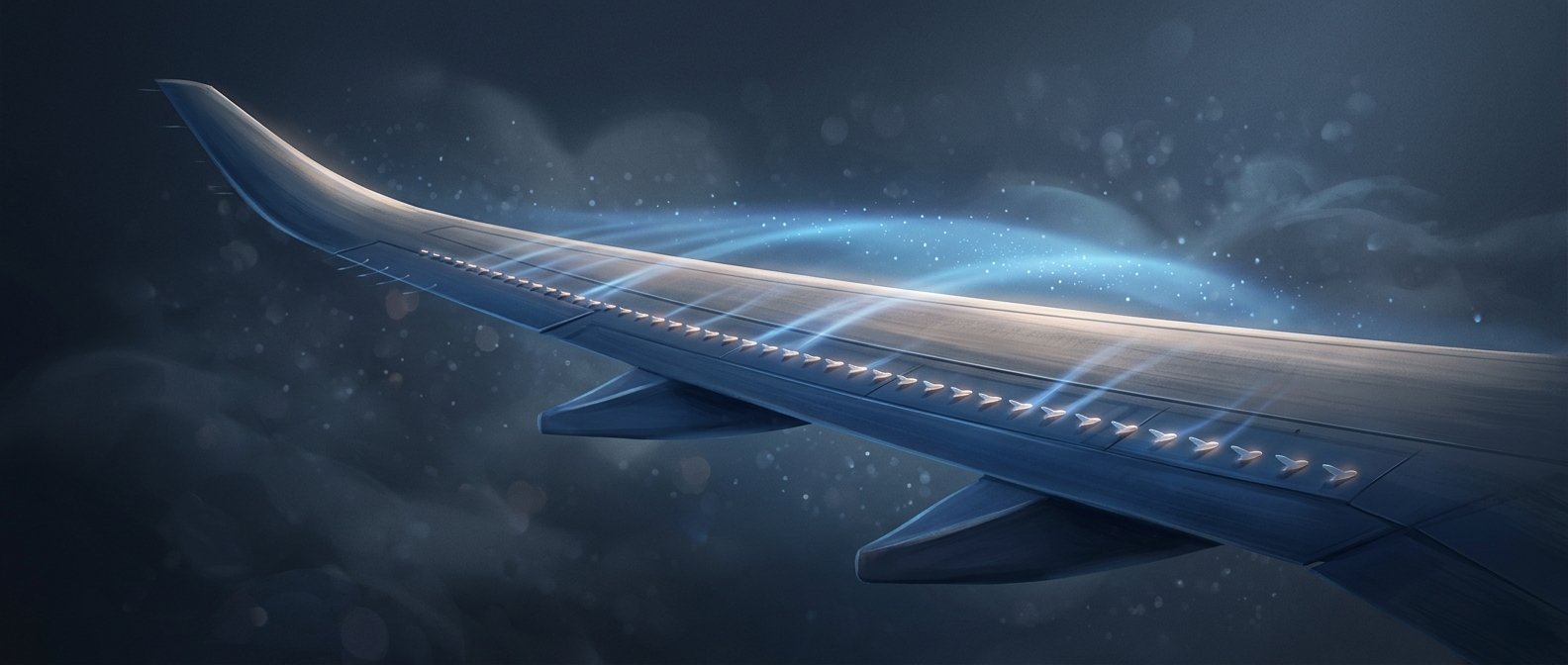
Why a wingtip creates drag
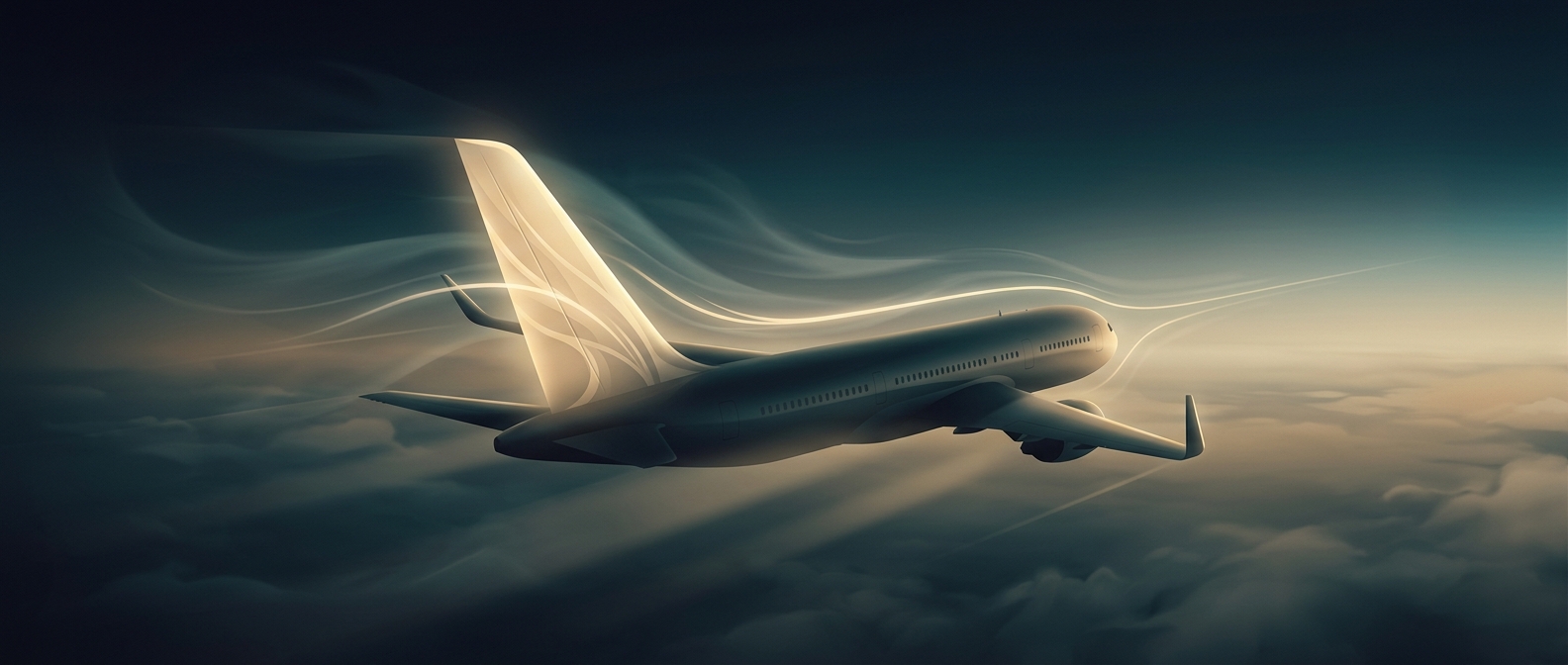
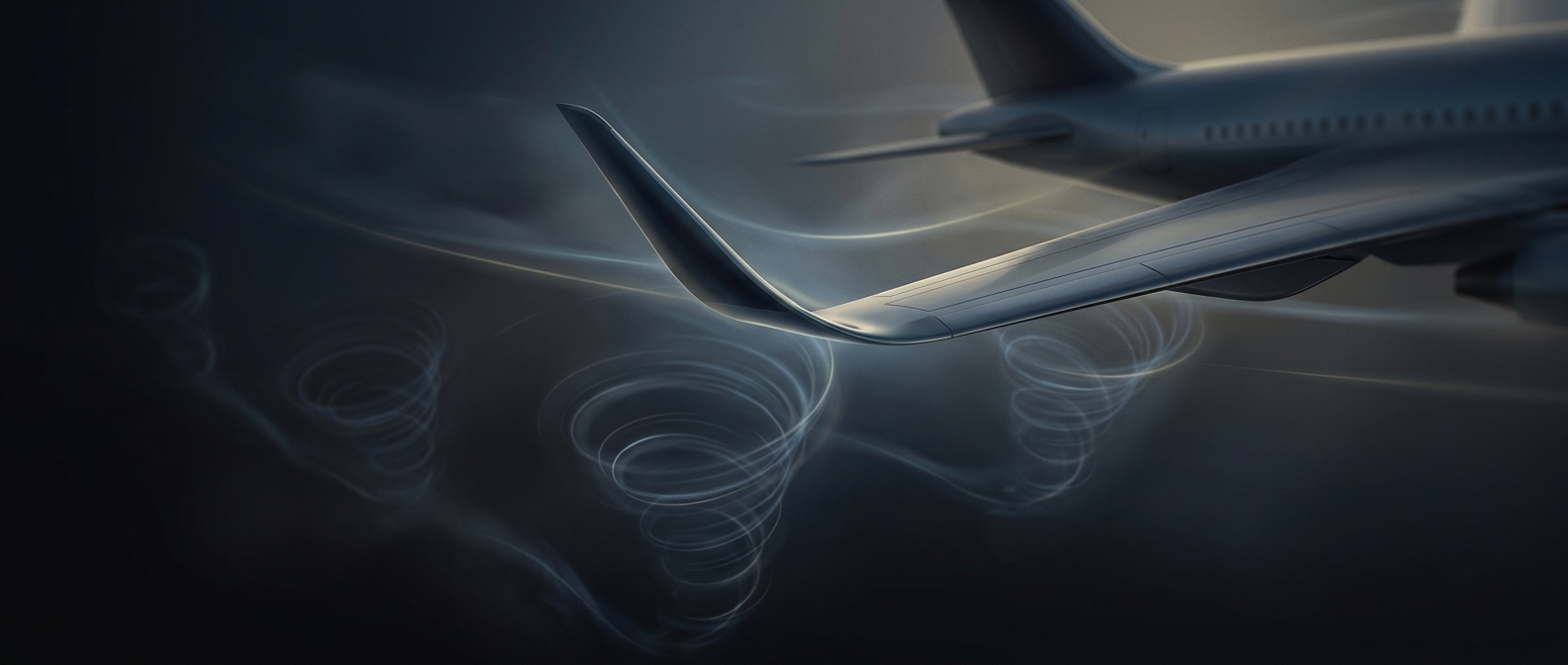
A wing makes lift by maintaining higher pressure beneath it than above it. Near the tip, air can slip around the edge from the high-pressure side to the low-pressure side, setting up a rotating wake called a wingtip vortex. The vortex pulls air downward behind the wing. That downwash tilts the wing’s lift slightly backward, creating induced drag—the aerodynamic price of producing lift.
What the small fin changes
A winglet gives some of that sideways-moving air a different path. Its angled surface redirects the flow and changes how the pressure difference is relieved at the tip. The result is a weaker, differently shaped vortex and less downwash-induced drag in the conditions the winglet is designed for. It does not make the vortex disappear; it reduces the drag associated with it.
The practical appeal is that a winglet can improve a wing’s effective span without extending the entire wing. A longer wing can also reduce induced drag, but it needs more structure to carry the extra bending load. A small upward extension offers another way to influence the airflow while avoiding a full-length increase.
Why not make every winglet bigger?
A winglet adds weight and surface area, and it creates its own aerodynamic forces and drag. Its shape and angle must therefore be matched to the aircraft’s wing and the way it flies. Designers balance the drag reduction against the extra structure and loads; the best winglet is not simply the tallest one.
That tradeoff explains why the fin can be small yet consequential: it works at the place where air escaping around the wingtip helps create drag, without requiring the whole wing to grow.