Why a Virtual World Can Turn Your Stomach
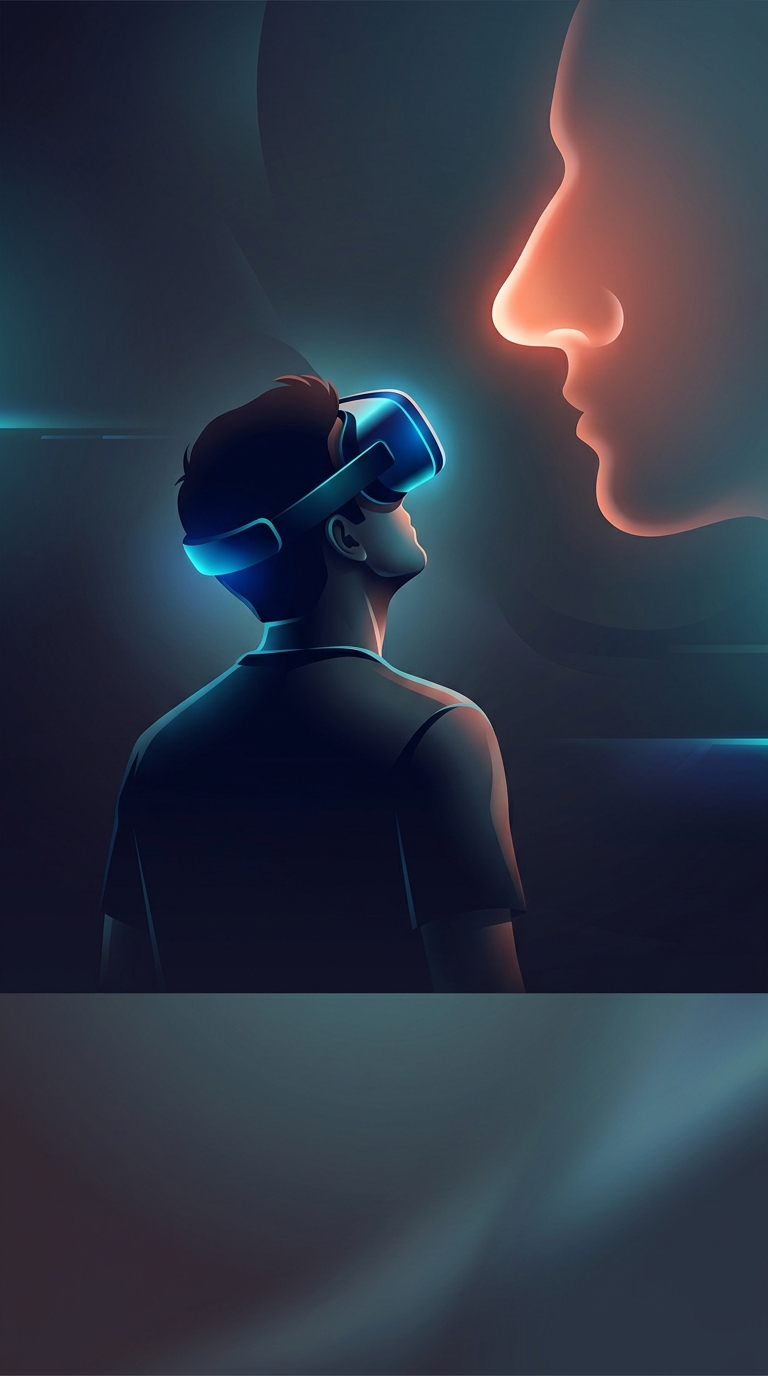
In virtual reality, your eyes may report that you are moving while your body remains still. The headset can show a room rushing past as you turn or walk, but your inner ear—the balance system that senses rotation and acceleration—detects little or no corresponding movement. This mismatch can make the brain treat the experience like a confusing motion signal, producing nausea, dizziness, or disorientation.
The effect is often called sensory conflict: the senses provide accounts of movement that do not agree. It is related to ordinary motion sickness, though a headset creates the mismatch through images rather than a moving vehicle.
Why Speed and Optics Matter
A headset has to update its image quickly as the wearer moves. If the view lags behind a head turn, the world appears to drag or jump, even though the wearer’s body has already changed position. That delay is called latency. A higher refresh rate—how often the display redraws its image—can make motion look smoother, while low latency helps the image keep pace with the head.
Optics matter too. Lenses must direct a separate image to each eye so the brain can infer depth, and the displayed scene must remain aligned as the wearer looks around. Distortion or poorly matched visual cues can make the simulated space feel unstable. Improving one part of the system is not always enough: a crisp image can still feel wrong if it arrives late.
The Tradeoff Is Between Illusion and Comfort
Engineers are trying to make the visual world behave more like the physical one, but a headset cannot give the inner ear the same movement cues as actually walking or turning. Designers therefore have to manage how much motion they show, how quickly the display responds, and how the view changes when the wearer moves. Some experiences limit visual movement or let users control their own pace, reducing the gap between what the eyes see and what the body feels.
That is why comfort is not a cosmetic feature added after the virtual world is built. The illusion works only when the headset’s images stay convincing without asking the body to believe movement it cannot feel.