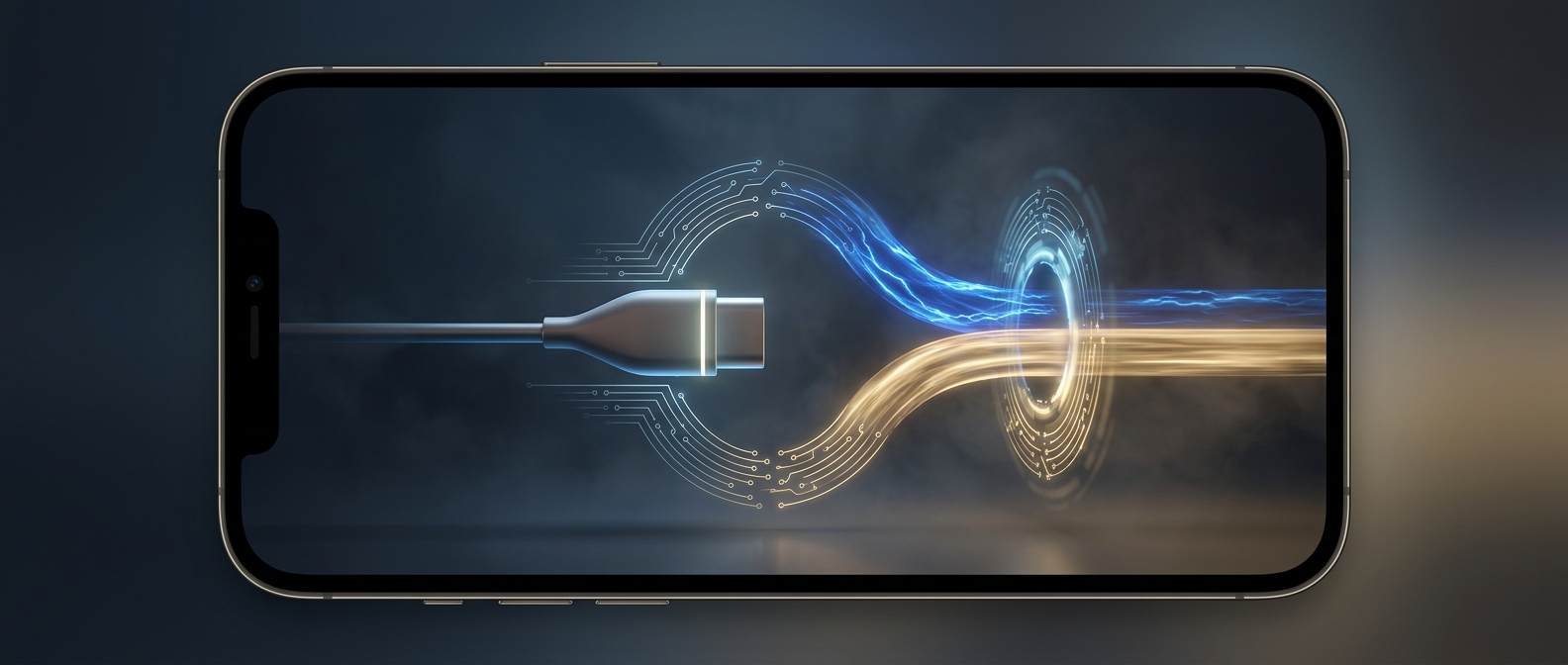
Why a multiport charger may interrupt a connection
Many compact chargers share one power supply among several ports. Adding a device changes the charger’s load, and its control circuitry may need to redistribute the available power. On some models, that means briefly switching off the outputs before bringing them back at new power levels.
The USB-C handshake has to start again
With USB-C Power Delivery, a charger and a device negotiate how much power to use. The charger advertises available options; the device requests one it can accept. If the charger resets its outputs to change the allocation, the first device loses power and must negotiate again when the port comes back. To the device, that short interruption can look like unplugging and reconnecting the cable.
This behavior depends on the charger’s design. Some models can adjust power without interrupting every port; others restart their outputs when the load changes. A laptop may pause charging or briefly switch to its battery, while a phone may simply show a charging indicator again.
Why the interruption can be useful
The reset lets the charger assign power within its limits rather than promising each port a fixed share it cannot sustain. Check the charger’s port labels or instructions for its combined-power behavior: plugging in a second device can affect not only the new device’s charging speed, but also whether the first connection stays uninterrupted.